Football Daily | South Korea’s golden boys and a brouhaha over military service
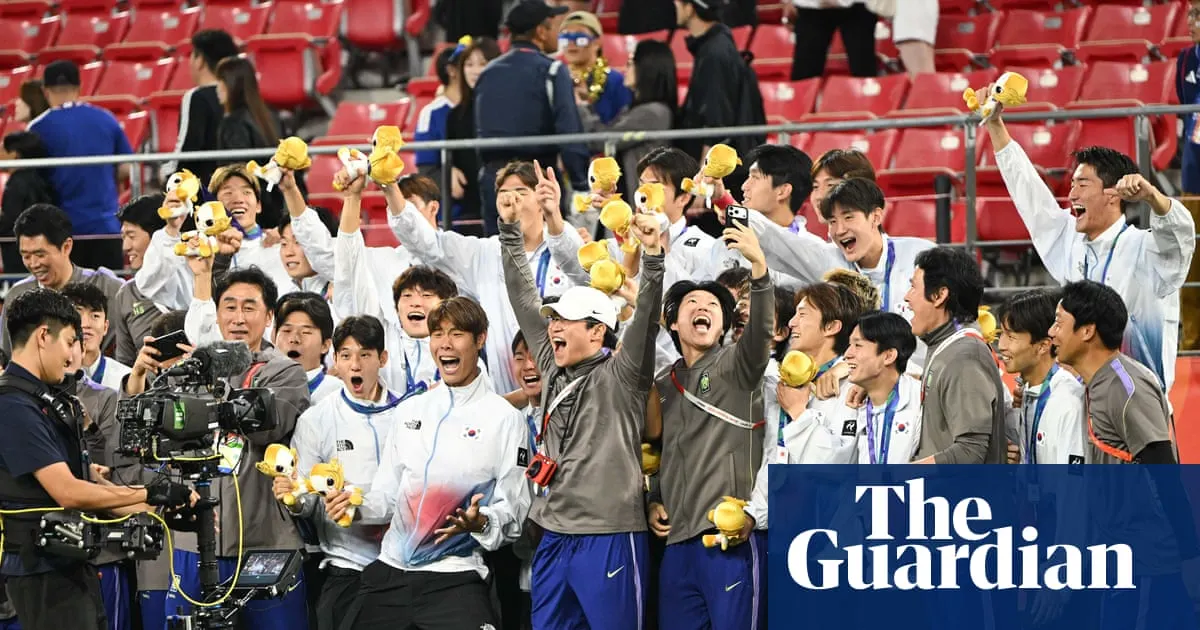
South Korea's football players caused outrage after winning gold at the Asian Games by publicly celebrating their exemption from military service. Captain Lee Gi-hyuk and teammates Yang Min-hyuk and Park Seung-soo faced significant backlash from a public that views conscription as a duty to be honoured, as well as from those completing their own mandatory service. The controversy has prompted South Korea's Ministry of National Defence to accelerate plans to abolish the sports exemption policy that has existed for over 50 years, potentially ending a privilege that has benefited athletes for generations.
South Korea requires all able-bodied men to complete 18 to 21 months of military service before turning 35. Athletes who achieve medals at major competitions have historically been exempted from this duty as a reward for bringing honour to the nation. Lee issued an apology, acknowledging he became "caught up in the happiness, adrenaline and excitement of the moment," but the damage was done. The medal-winning players will still be required to complete three weeks of basic training and 544 hours of community service, though the broader exemption may now be scrapped entirely.
- South Korean gold medallists celebrated avoiding military service, sparking public outrage.
- Government plans to scrap the controversial 50-year-old sports exemption policy.
- Players must still complete basic training and 544 hours of community service.
New here? Start with this
South Korea requires all able-bodied men to complete mandatory military service, typically 18 to 21 months before the age of 35. Since the 1970s, the country has exempted athletes who win medals at major international competitions, such as the Asian Games, treating this as a reward for bringing national prestige. This policy has allowed successful sports stars to avoid service whilst their peers complete their duty.
The controversy arose when the football team's captain Lee Gi-hyuk and two teammates publicly celebrated their exemption after winning gold at the Asian Games. The public response was critical, particularly amongst those currently serving or who had completed their own mandatory service, viewing the celebration as disrespectful to a duty they saw as essential. Lee subsequently apologised, attributing his actions to the excitement of the moment.
The incident has prompted South Korea's Ministry of National Defence to accelerate plans to end the sports exemption policy that has lasted over 50 years. The medal-winning players will still complete three weeks of basic training and 544 hours of community service, but this exemption that has long benefited elite athletes may now be abolished entirely.
Both sides, in good faith
The strongest fair case each way — we don't pick a winner.
The case for
Elite athletes represent the nation on the world stage and bring it honour through their achievements, a contribution South Korea has recognised for over 50 years as justifying exemption from military service. Sporting excellence at the highest level requires extraordinary sacrifice and dedication over many years, and securing Olympic and major tournament medals serves national interests just as military service does. The exemption acknowledges that such athletes have already made substantial sacrifices for their country.
The case against
Military service represents a fundamental civic duty that should be shared equally by all able-bodied citizens, regardless of accomplishments in other fields. Allowing exemptions based on sporting success creates unfair hierarchies of obligation and undermines the principle of equal responsibility, whilst those actually serving perceive their sacrifice as diminished when athletes openly celebrate avoiding this duty. For national cohesion and fairness, the obligation should apply uniformly to all.