Putin marks his 74th birthday with ‘massive’ air strike on Kyiv: ‘The whole city is in a state of fear’
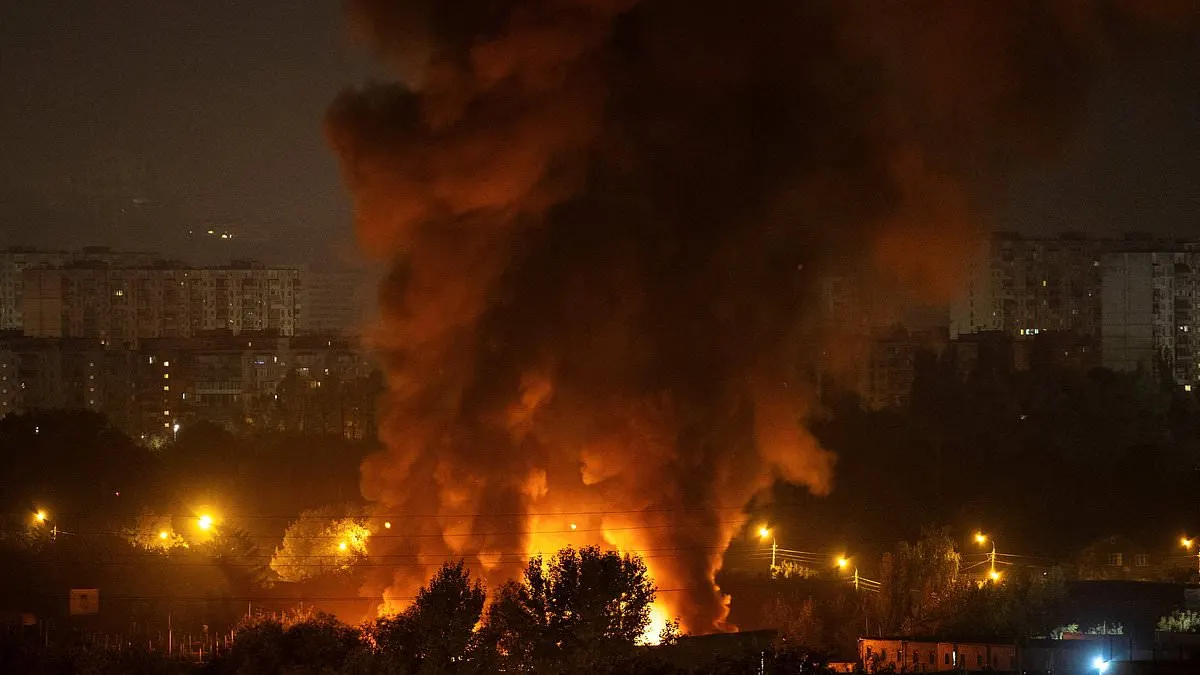
Russia launched a large missile and drone attack on Kyiv on Wednesday, killing two people in the capital and prompting residents to shelter underground. The strikes came as Ukraine faces increasingly frequent attacks ahead of winter, raising concerns about the safety of civilians and the resilience of energy and transport infrastructure.
Russia’s defence ministry said it targeted military-industrial sites in Kyiv and several other regions, as well as port and ship-repair facilities in Odesa. Kyiv Mayor Vitali Klitschko reported that two people were rescued from a fire in the Darnytskyi neighbourhood and two bodies were found; in Sumy region, separate drone attacks killed two men and wounded dozens, including three children. Scheduled power cuts were also imposed in Kyiv to ease pressure on the damaged grid.
- Russian strikes killed two people in Kyiv.
- Residents took shelter as air raid warnings sounded.
- Attacks also hit infrastructure and other Ukrainian regions.
New here? Start with this
Russia invaded Ukraine in February 2022 and the two countries have been at war ever since. Ukraine, supported by Western military aid and funding, is defending itself against Russian forces seeking to seize Ukrainian territory. The conflict has caused enormous loss of life, widespread destruction, and forced millions of people to flee their homes.
As winter approaches each year, Russia regularly escalates attacks on Ukrainian cities using missiles and drones. These strikes often target power plants and other energy infrastructure, potentially leaving civilians without heating and electricity during the coldest months. Kyiv, Ukraine's largest city, has been struck repeatedly throughout the war, forcing residents to take shelter.
Despite years of warfare and devastating attacks, Ukraine continues to resist with military support from Western nations. The conflict shows no sign of ending soon and remains a major concern for international peace and security. Many Ukrainians face hardship from damaged homes, lack of power for heating, and ongoing danger from military operations.
Both sides, in good faith
The strongest fair case each way — we don't pick a winner.
The case for
Russia argues that as an active belligerent, it may lawfully target dual-use infrastructure—including power plants and transport networks—that contribute to Ukraine's war-making capacity. Such strikes are consistent with international military doctrine and aim to degrade an opponent's capacity to wage war. While civilian casualties are regrettable, they are an unavoidable consequence of warfare in populated areas.
The case against
International humanitarian law requires proportionality between anticipated civilian harm and military advantage. Power infrastructure serves primarily civilian functions, and winter attacks designed to destroy civilian heating capacity inflict suffering far exceeding any military objective. This systematic campaign to destroy civilian survival capacities violates the principle of distinction between combatants and civilians and potentially constitutes war crimes.