Badenoch says witnessing lynchings in Nigeria shaped her views on cancel culture
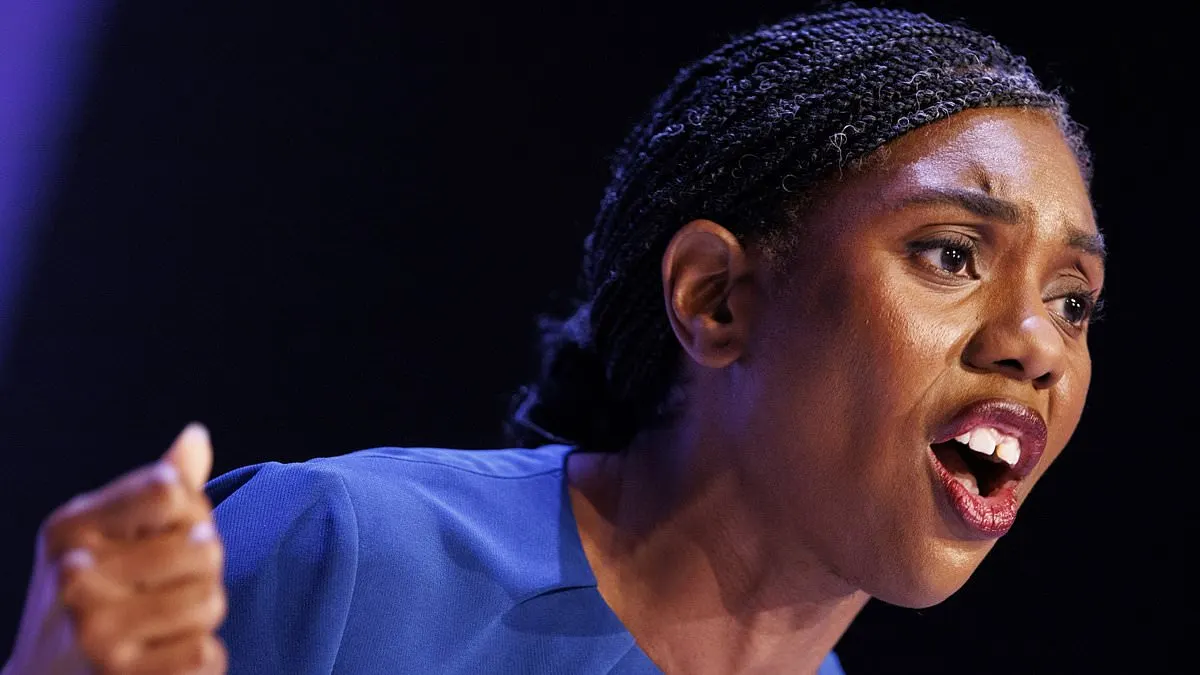
Kemi Badenoch said she witnessed at least two lynchings during her childhood in Nigeria, experiences she says shaped her views on standing up to online “cancel culture”. Speaking at the Cliveden Literary Festival, the Conservative leader compared the fear and group pressure of lynch mobs with what she described as similar tactics used on social media.
Badenoch was born in the UK and spent much of her childhood in Nigeria during the 1980s and 1990s. She made the remarks during a discussion of what she called “ideological capture” in British institutions, praising JK Rowling and headteacher Katharine Birbalsingh for resisting public pressure. She also reiterated that ethnicity and ancestry are a spectrum, while saying sex is not.
- Badenoch says she saw at least two lynchings as a child in Nigeria.
- She links those memories to her opposition to online mob behaviour.
- Her comments came during a discussion of pressure on British institutions.
New here? Start with this
Kemi Badenoch is the leader of the Conservative Party. She was born in the UK but spent much of her childhood in Nigeria during the 1980s and 1990s, an experience she has previously said influences her thinking about public life and society.
"Cancel culture" describes when public figures are subjected to intense public pressure and damage to their careers following controversial statements or actions, particularly through social media campaigns. Debate over this phenomenon divides people, with some viewing it as legitimate accountability and others seeing it as a threat to free speech.
The relationship between free expression and social consequences has become increasingly important in British political debate. Badenoch's perspectives on this issue have significance because she leads a major political party and her views could influence how institutions address questions of accountability and acceptable speech.
Both sides, in good faith
The strongest fair case each way — we don't pick a winner.
The case for
Badenoch's argument concerns the psychology of mob pressure and fear of dissent rather than equating social media to murder. Witnessing violence rooted in group conformity could reasonably inform concerns about how social pressure—whether physical or online—silences people and creates climates where speaking against the crowd becomes genuinely costly. The parallel explores mechanisms of coercion and conformity that exist across contexts, and her concern about institutional "ideological capture" reflects a principled worry about whether diverse viewpoints can survive in environments where dissent invites coordinated pressure.
The case against
Comparing online criticism to lynching trivialises historical racial violence that killed people, conflating murder with professional or social consequences for speech. The analogy treats "cancel culture" as equivalent to extrajudicial killing, which many see as rhetorical overreach that weaponises her personal trauma to delegitimise valid accountability. Critics argue that what Badenoch describes is often simply free speech in action—people using their own voices to criticise others—rather than mob coercion, and that framing legitimate criticism as threatening conformity serves to protect powerful figures from scrutiny rather than to defend genuine free expression.
Read the full article at the source →
Originally published by Daily Mail as “Kemi Badenoch reveals she watched lynch mobs kill people when she was a child in Nigeria”.