Gabrielle Goliath’s installation mourns murder, genocide and violence in London
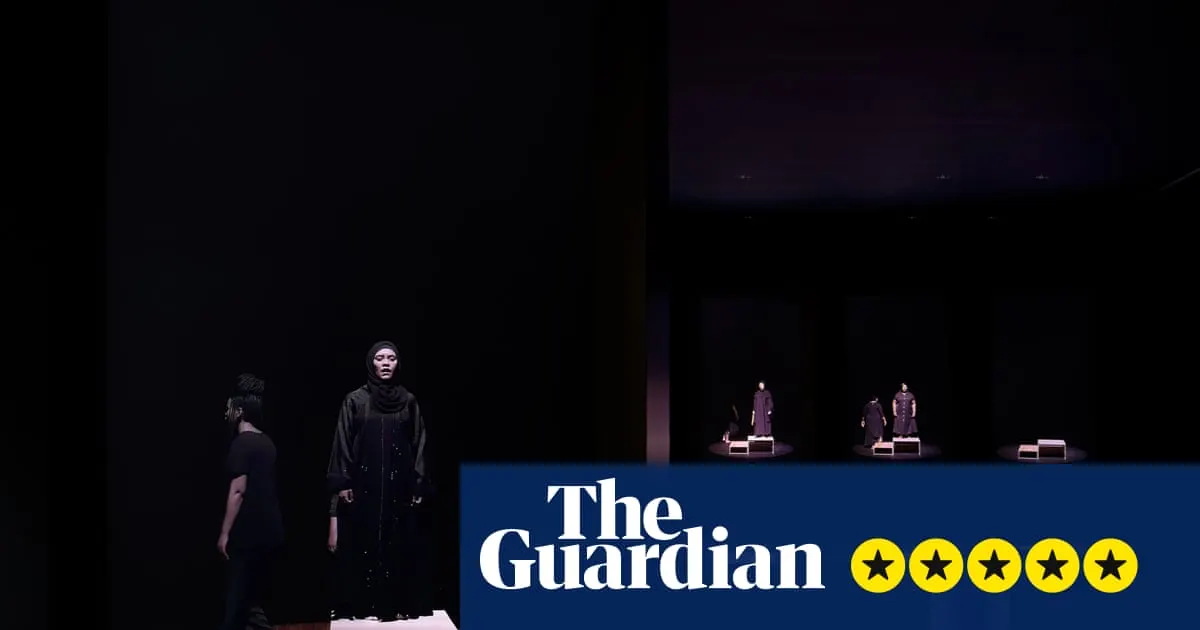
Gabrielle Goliath's Elegy, a video and audio installation now at Ibraaz in London, features three films of women singing a single endless note in commemoration of murders, genocide and violence. Originally selected to represent South Africa at this summer's Venice Biennale, the work was cancelled by South Africa's sports, arts and culture minister Gayton McKenzie, who deemed it "highly divisive" because it referenced Palestinian deaths in Gaza—a decision Goliath contested in South Africa's high court, which dismissed her case.
The installation comprises three separate films honouring distinct victims and atrocities: Ipeleng Christine Moholane, a woman murdered in South Africa in 2015; the Ovaherero and Nama people who died during German colonial genocide in Namibia between 1904 and 1908; and poet Hiba Abu Nada and thousands of Palestinians killed in Gaza since 2023. Presented in pitch darkness with only screens visible, the work strips away imagery to focus on raw emotion, creating an angry and uncomfortable space that functions as a furious call to action and demand for justice.
- Artist's work censored from Venice Biennale for referencing Palestinian deaths
- Installation mourns femicide, colonial genocide and Palestinian casualties
- Powerful artwork strips imagery to focus on anger, emotion and activism
New here? Start with this
Gabrielle Goliath is a South African artist whose installation Elegy is now showing at Ibraaz gallery in London. The work combines video and audio, featuring women singing a continuous single note in commemoration of violence and atrocity.
The installation was originally selected to represent South Africa at the Venice Biennale, one of the world's most prestigious art exhibitions, but the South African government cancelled Goliath's participation before the exhibition opened. The minister for sports, arts and culture, Gayton McKenzie, deemed the work "highly divisive" because it referenced Palestinian deaths in Gaza; Goliath took the cancellation to South Africa's high court, but her legal challenge was dismissed.
The three films in the installation each commemorate different victims and atrocities: Ipeleng Christine Moholane, a woman murdered in South Africa in 2015; the Ovaherero and Nama people, who died in German colonial genocide in Namibia between 1904 and 1908; and Palestinians killed in Gaza since 2023, including poet Hiba Abu Nada. The work is presented in complete darkness, with only video screens visible, focusing attention entirely on the sound of the singing.
Both sides, in good faith
The strongest fair case each way — we don't pick a winner.
The case for
Supporters of the work argue that art must be free to confront uncomfortable truths without requiring government approval of its message. They contend that suffering should not be hierarchised based on political palatability—doing so renders some deaths commemorable whilst others vanish invisibly, which itself constitutes injustice. Free artistic expression and international venues for difficult moral conversations exist precisely to enable encounters that would otherwise be silenced by consensus-building.
The case against
Those supporting the minister's decision acknowledge that all suffering deserves recognition, but argue that conflating distinct historical atrocities with an ongoing contested conflict can distort moral meaning and impose a particular political stance. They contend that national representation at international venues carries curatorial responsibility to avoid presenting contested modern political positions as settled moral equivalents to documented historical genocide, particularly where reasonable people genuinely disagree about responsibility and context.
Read the full article at the source →
Originally published by The Guardian as “Gabrielle Goliath: Elegy review – devastating lament is a furious, single-note call to action”.