Trump urges Fetterman to join Republicans amid party-switch speculation
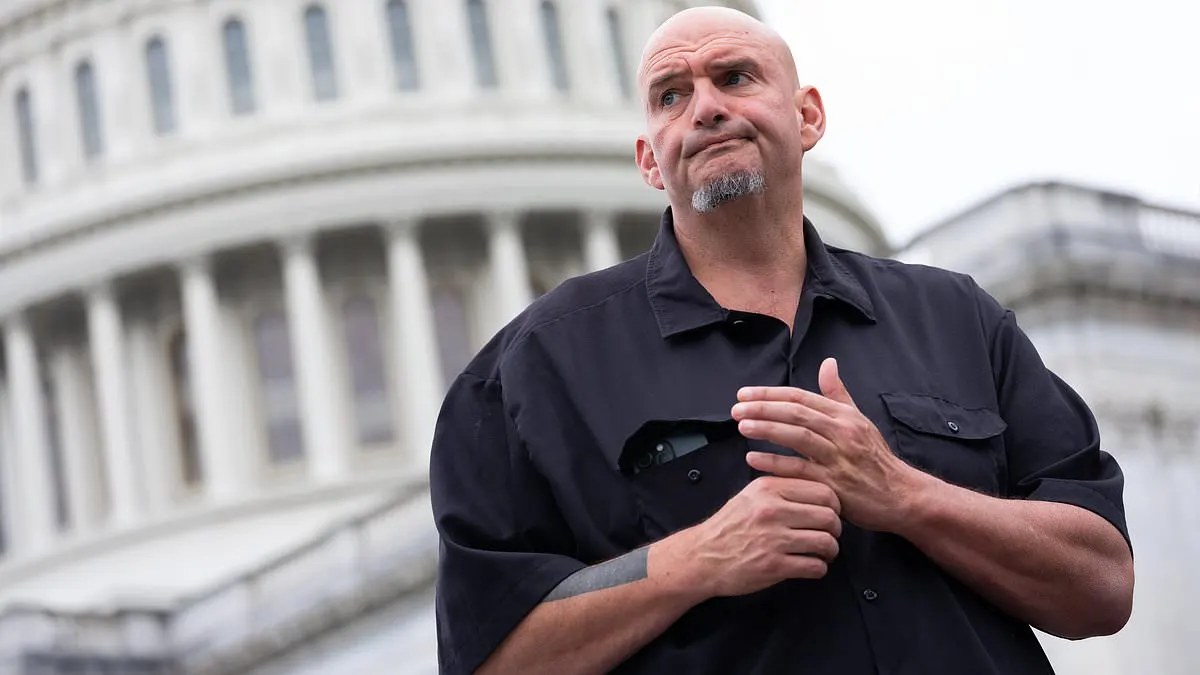
President Trump has publicly urged Pennsylvania Democrat John Fetterman to join the Republican Party, praising him as having "great common sense" and suggesting he would perform better as a Republican. The appeal comes as Republicans' Senate control appears to weaken and reflects Fetterman's striking popularity among GOP voters—a 72 per cent favourability rating—despite his Democratic registration. The pressure on Fetterman to switch may intensify if Democrats gain Senate control in the coming elections.
A Quinnipiac University poll revealed sharp contrasts in how Fetterman is viewed: whilst 72 per cent of Republicans favour him, only 13 per cent of Democrats do, with 69 per cent viewing him unfavourably. Recent high-profile moments have fuelled the speculation, including his appearance at a Republican midterm convention where he praised fellow Pennsylvania Senator Dave McCormick and his mistaken claim during a Texas Tribune festival that he is a "lifelong Republican." However, Fetterman has repeatedly rejected switching parties, committing to remain a Democrat and serve as the "51st vote" if the Senate flips in November, though he has indicated he would leave only if the party officially became anti-Israel.
- Trump publicly urges Democrat Fetterman to join Republicans
- Fetterman far more popular with GOP voters (72%) than Democrats (13%)
- Fetterman rejects party switch despite Republican courtship
New here? Start with this
John Fetterman is a Democratic senator from Pennsylvania who represents an unusual political phenomenon. Despite being elected as a Democrat, he has become significantly more popular with Republican voters than with voters from his own party. This sharp divide in how he is viewed across party lines is atypical in modern American politics.
The balance of power in the United States Senate is currently narrow, with Democrats and Republicans holding nearly equal numbers of seats. Which party holds the majority determines control of the chamber and its legislative agenda. This means individual senators' party affiliations and voting patterns carry substantial political weight.
Fetterman has stated multiple times that he intends to remain a Democrat and serve his constituents within his party. He has previously dismissed suggestions that he might change his party affiliation. His continued membership in the Democratic Party could prove significant depending on the composition of the Senate after future elections.
Both sides, in good faith
The strongest fair case each way — we don't pick a winner.
The case for
Fetterman enjoys a 72 per cent favourability rating among Republicans compared to just 13 per cent among Democrats, suggesting a fundamental misalignment between his political identity and his party's base. This is not merely policy disagreement but a stark divergence in how different constituencies regard him. A politician is most effective when representing the voters who genuinely support him, and remaining in a party where the grassroots actively opposes him undermines both his ability to govern and authentic democratic representation.
The case against
Fetterman was elected explicitly as a Democrat by voters who placed their trust in that party designation and its associated principles. Switching parties would constitute a betrayal of that democratic mandate and the constituents who relied upon his stated political identity. Party affiliation involves meaningful commitment to core values and constituents; moderate voices within their own parties strengthen democratic discourse rather than abandoning it. Fetterman's own repeated and firm rejections of party-switching suggest a principled commitment that goes beyond temporary political calculations.
Art Culture Government Politics World
Read the full article at the source →
Originally published by Daily Mail as “Trump heaps fresh praise on John Fetterman amid calls to join the GOP”.