WhatsApp adds a guest option for joining calls without an account
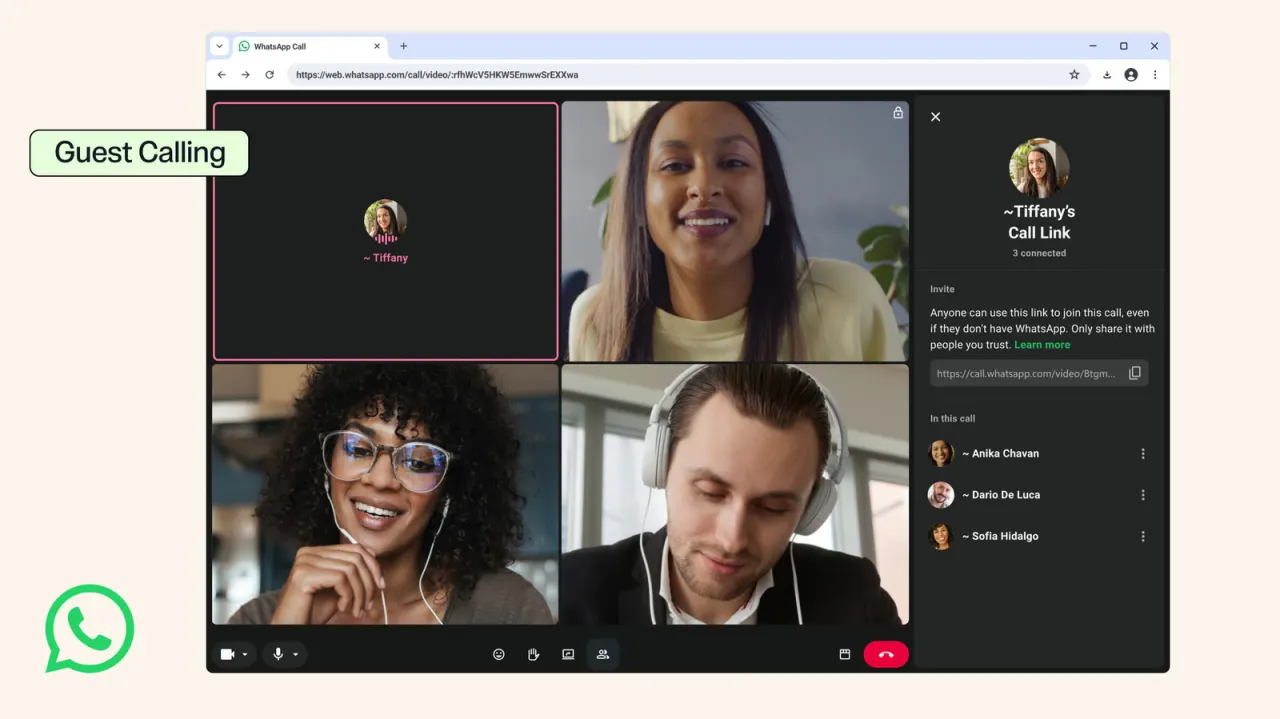
WhatsApp is adding guest calling, allowing people without an account to join calls through a browser. The feature could make it easier to include occasional users, while the host retains control over who joins.
Guests can join one-to-one or group calls only after accepting an invitation and being approved by the host. They cannot start calls, see other participants’ phone numbers, message or add members, but can share their screen, raise a hand and react; there is no time limit. WhatsApp also plans calendar integration with Google and Outlook later this year, so calls can be created from those calendars.
- People without WhatsApp accounts can join calls as guests.
- Hosts must approve guests, who can use core call tools.
- Google and Outlook calendar integration is planned later this year.
New here? Start with this
WhatsApp is a messaging and calling service owned by Meta and used by people around the world. Its calls normally involve people with WhatsApp accounts, so someone who uses another service or does not have an account may be harder to include.
Call links let a host invite others to join a call, while the host can manage who enters. Browser access can make it simpler for occasional users to take part without installing the app or signing up. Calendar links are another way to arrange calls through services such as Google Calendar and Outlook.
Both sides, in good faith
The strongest fair case each way — we don't pick a winner.
The case for
Guest calling could make it easier to include relatives, colleagues or other occasional callers who do not use WhatsApp, without asking them to create an account. Host approval and limits on what guests can do may offer a practical balance between easier access and control over a call.
The case against
Allowing people without accounts into calls could weaken the privacy and security benefits users expect from a service built around known account holders, even with host approval and restricted guest permissions. Browser access and planned calendar integration may also make invitations easier to circulate beyond their intended audience, so users could reasonably prefer calls to remain limited to account holders.