Browser emulator recreates the original iPhone’s 2007 interface, with limited features
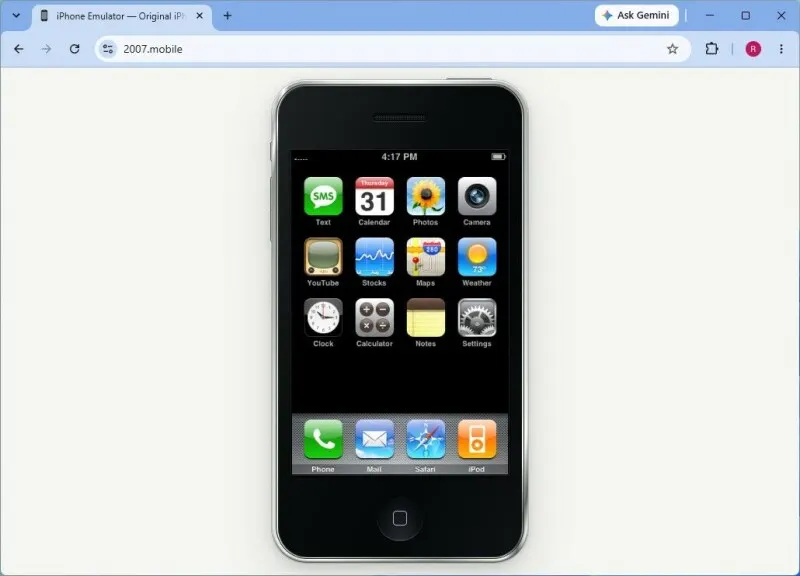
A browser based emulator recreates the original iPhone as it appeared in 2007, offering a nostalgic glimpse of its early interface. It matters as a simple way to revisit the device before the added features and complexity of later iOS versions.
The emulator is incomplete: Calculator works, Contacts struggles and online features such as browsing today’s web do not function. Apple introduced the App Store in 2008, so the original phone had no third party apps; fuller alternatives exist, but are less convenient to run.
- A browser emulator recreates the original 2007 iPhone.
- Some basic apps work, but online features do not.
- It offers a convenient, limited nostalgia trip.
New here? Start with this
Apple’s first iPhone went on sale in 2007, combining a mobile phone, music player and internet access in one touchscreen device. Its software, now called iOS, had a simpler interface and fewer features than later versions.
Apple added its App Store in 2008, allowing people to install apps made by other developers. The early iPhone therefore relied on a small set of built-in tools, and some of its online functions are tied to services and websites that have since changed.
The device’s launch marked a shift towards touchscreen smartphones that people could use for calls, music and basic internet tasks. Revisiting its interface can show how the phone experience has changed as software and online services have grown.
Art Culture Gadgets Geopolitics Politics Technology
Read the full article at the source →
Originally published by The Register as “Fire up that iPhone 1 emulation and party like it’s 2007”.