‘I would do it again’ – Kaepernick reflects on price of protest, 10 years on
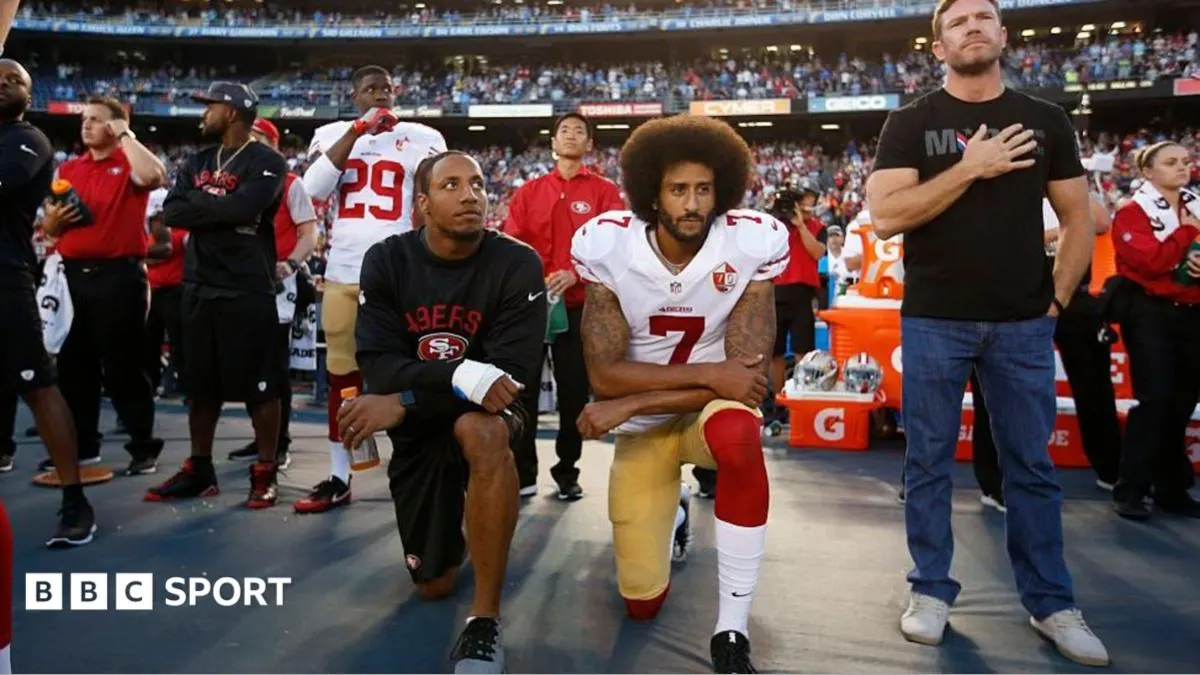
Colin Kaepernick says he has no regrets about kneeling during the US national anthem in 2016 to protest racial injustice and police brutality, and would do it again despite believing it cost him his NFL career. In an interview marking 10 years since the protest began, he reflects on its personal consequences and the way it helped make athlete activism more visible.
Kaepernick first knelt in a pre-season game with the San Francisco 49ers, then repeated the protest before 11 regular-season games. The gesture drew support and condemnation, including from Donald Trump, and Kaepernick never joined another NFL team after leaving the 49ers in 2017; he later settled a grievance with team owners in 2019. He says he was moved when England’s football teams and athletes elsewhere took the knee, while stressing that racism remains a global challenge.
In short
- Kaepernick says he would kneel again.
- He believes the protest cost him his NFL career.
- The gesture inspired athletes, including England footballers.
Steelman: both sides, in good faith
The strongest fair case each way — we don't pick a winner.
The case for
Kaepernick’s protest drew attention to racial injustice and police brutality at a time when many felt these issues were being ignored. Supporters argue that peaceful, visible protest is a legitimate way to challenge institutions, and that the personal and professional cost he describes does not diminish the value of speaking out.
The case against
Critics argue that using the national anthem, a symbol of shared service and national unity for many people, made the protest alienating and shifted attention away from its stated cause. They may accept the right to protest while believing that the setting was disrespectful or counterproductive, and that athletes’ public platforms carry responsibilities to audiences with differing views.
Explained simply
The US national anthem is played before many American football games, and players traditionally stand while it is performed. In 2016, San Francisco 49ers quarterback Colin Kaepernick began kneeling during it to protest racial injustice and police brutality in the United States.
The protest drew both support and criticism, including from Donald Trump, then a prominent political figure. Kaepernick left the 49ers in 2017 and did not play for another NFL team; he later settled a grievance with team owners. His protest also became part of a wider debate about athletes speaking out on social and political issues.
Players and teams in other countries, including England, later took a knee in support of anti-racism efforts. The gesture brought attention to racism beyond the US, while debates about how athletes should use their public platforms continue.