White Dwarfs Aren’t Just White. Scientists Discover Dying Stars Turning Pink and Green
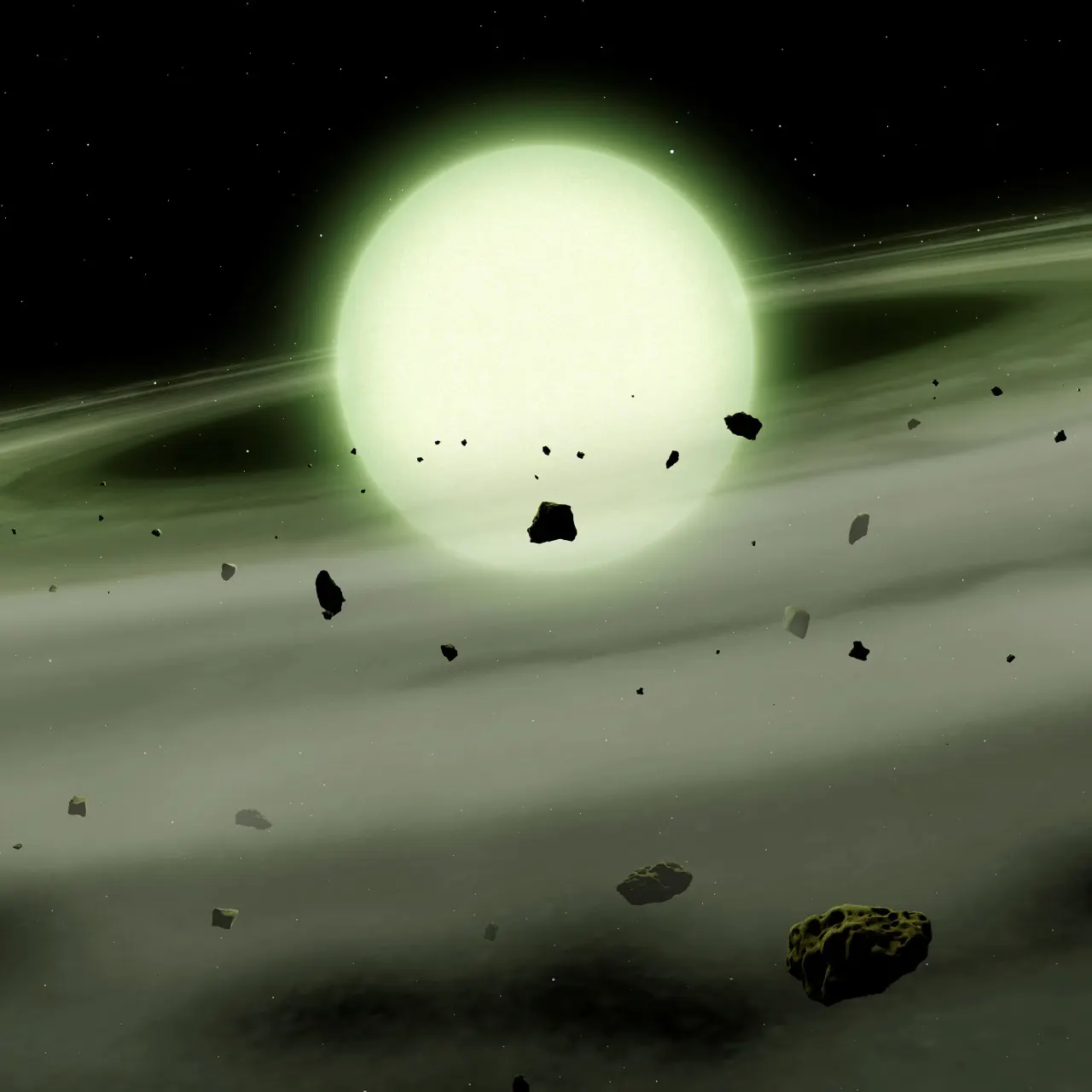
Researchers have found that some white dwarfs, the dense remnants of dying stars, can appear pink, purple, yellow or green. The findings show that these stars are more varied in colour than their name suggests, and may help explain how their atmospheres reflect both extreme density and material left over from planetary systems.
The study examined 152 white dwarfs within 65 light-years of Earth; five showed unusual colours, implying roughly one in 30 may do so. Dense helium plasma can make trace elements such as carbon, calcium and sodium absorb light differently, while debris from shattered asteroids can enrich a star’s atmosphere. One example, WD J1330+6435, is about 4,000°C and appears light chartreuse; researchers say the hottest white dwarfs are easier to observe, which may have skewed earlier samples towards blue stars.
In short
- Some white dwarfs shine pink, purple, yellow or green.
- Five of 152 nearby white dwarfs showed unusual colours.
- Dense atmospheres and planetary debris affect their light.
Explained simply
A white dwarf is the compact core left behind when a star like the Sun runs out of fuel and sheds its outer layers. It packs a large amount of matter into a space about the size of Earth, and can remain visible for billions of years as it cools.
A white dwarf’s colour depends partly on its temperature and the gases in its atmosphere. Under the intense pressure of a white dwarf, helium can change how small amounts of elements such as carbon, calcium and sodium absorb light; debris from shattered asteroids can also add elements to the atmosphere.
White dwarfs are often described as white or blue, but those colours may reflect which stars are easiest to observe. Studying their colours can help researchers understand the conditions in their atmospheres and material left behind by planetary systems.
Celebrity Entertainment Research Science