Entertainment news and discussion on TalkFuse.
Rising cost of living tops voters’ concerns as midterm ballots cast
Developed over time first seen 15 hours ago
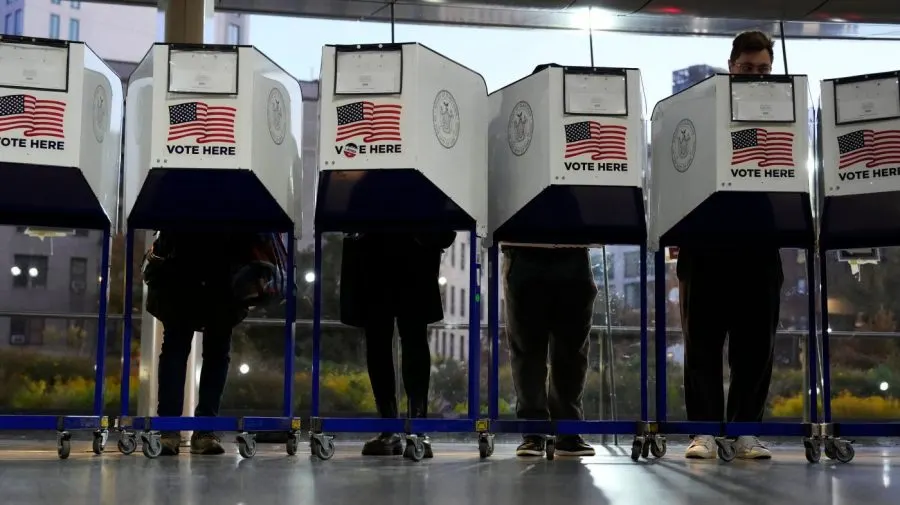
The cost of living was the leading factor in voters’ decisions as Americans cast ballots in the 3 November midterm elections, according to a Reuters/Ipsos survey conducted in the final days of the campaign. Among registered voters, 48% chose it as their most important consideration, compared with 26% who chose democracy and 13% immigration. The finding puts household finances at the centre of an election that will determine control of Congress.
- Sources
- 3
- Outlets
- 3
- Left · Centre · Right
- 0 · 0 · 1
In short
- Cost of living led voters’ stated priorities.
- Nearly half said their finances had worsened during Trump’s second term.
- The poll indicates pressure on Republicans, but does not predict the result.
How this story developed
- 4 hours ago The cost of living was the leading factor in voters’ decisions as Americans cast ballots in the 3 November midterm elections, according to a Reuters/Ipsos survey conducted in the final days of the campaign.
Full account
As voters cast ballots in the 2026 US midterm elections, economic pressures are prominent in their thinking. A survey cited in one of the reports found that 85% regard the economy as one of the country’s most important issues when deciding how to vote, while 84% name the cost of living. Health care also ranks highly, at 69%, followed by the war with Iran at 64%. Immigration and crime each feature for 45%; fewer voters identify artificial intelligence (35%) or transgender issues (12%) as priorities.
Concern about the economy crosses party lines, though other priorities vary. Republican voters are more likely to identify crime and immigration as important, while Democratic voters more often point to health care. The survey also suggests broad appetite for change in how the country is run: eight in ten voters want either substantial change or a complete upheaval. Around half of Democrats and four in ten independents favour upheaval; among Republicans, 45% prefer substantial change.
The mood is largely pessimistic. About two-thirds of voters say they feel pessimistic about US politics, and nearly half are pessimistic about the future of democracy. In the congressional control questions, 47% favour Democrats taking the House and 46% favouring Democratic control of the Senate, against 38% who prefer Republicans to retain control of both chambers; 15% are unsure. The report also records 36% approval and 64% disapproval of President Donald Trump’s performance. His ratings are particularly weak on the economy and living costs: 74% disapprove of his handling of the economy and 79% of his handling of the cost of living. Crime is a comparatively stronger area, with 45% approving of his handling of it.
A separate Reuters/Ipsos poll, conducted from 29 October to 2 November, puts Trump’s overall approval at 32%. On its generic congressional ballot, 52% of likely voters say they would vote for or lean towards the Democratic candidate in their district, compared with 44% for the Republican. Together, the reports show economic concerns alongside a strong desire for political change, but they use different measures and report different levels of presidential approval.
Where outlets differ
From the full account, which is AI-written from the sources:
The Reuters/Ipsos report gives a 32% presidential approval rating, while the other report records 36% approval and 64% disapproval. The supplied material does not identify the second report’s pollster or field dates, so the figures should not be treated as directly comparable.
Reuters/Ipsos reports voting intention among likely voters on a generic congressional ballot: 52% Democratic and 44% Republican. The other report asks which party voters would prefer to control each chamber, giving Democrats 47% for the House and 46% for the Senate, and Republicans 38% for both; these are different questions and measures.
The Reuters/Ipsos material supplied here summarises its topline findings and polling method, but does not include issue-priority figures. The second report provides detailed issue rankings, attitudes towards political change and outlook, and issue-specific assessments of Trump.
Coverage · 3 sources
Americas Celebrity Elections Entertainment Government Politics World