World news and discussion on TalkFuse.
Two Australians confirmed among dozens dead after devastating high-speed train crash in Spain
Developing story first seen 2 hours ago
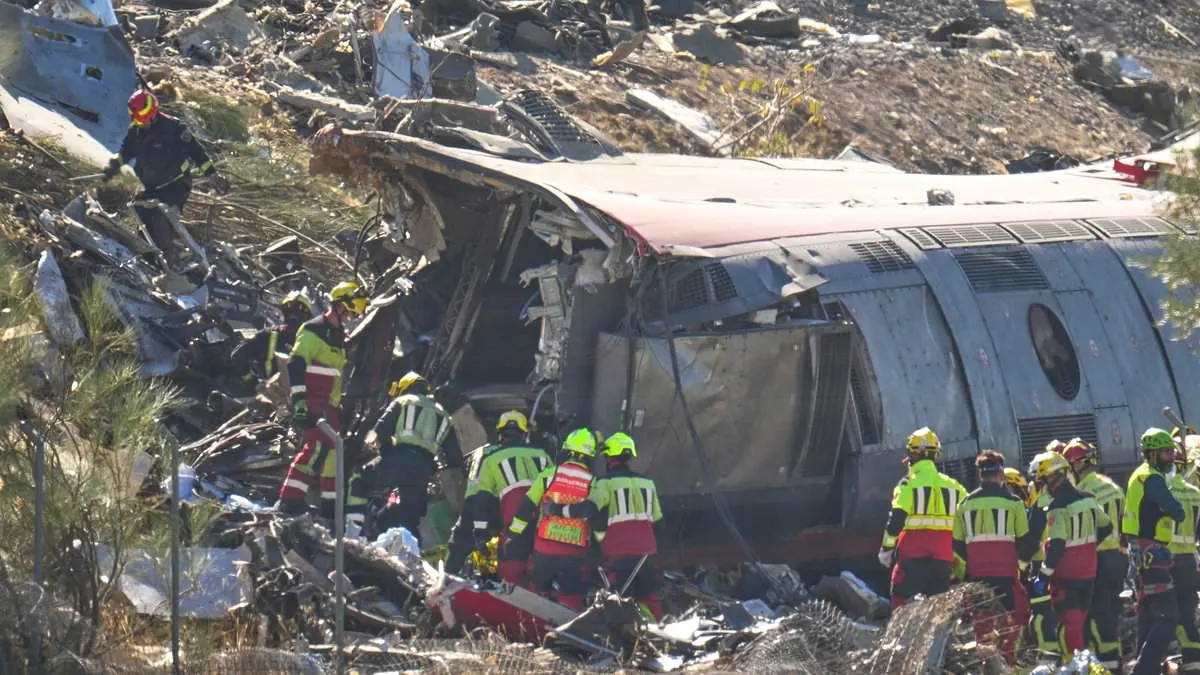
Authorities have identified all 69 people killed in the train crash in central Spain, confirming that two Australians were among the victims. Their families and the relevant consular offices have been notified, and Australia is providing consular assistance to the families.
More than 500 people were aboard when two high-speed trains collided in Toledo province, about 150 kilometres south of Madrid; almost 200 were injured. The dead included 54 Spanish citizens and 15 foreign nationals. Spain’s transport minister said a security system failure and an order to restart a train may have contributed, while Prime Minister Pedro Sánchez has pledged an investigation and improvements to rail safety.
- Sources
- 3
- Outlets
- 3
- Left · Centre · Right
- 1 · 0 · 1
In short
- Two Australians were among the 69 confirmed dead.
- All victims have been identified and families notified.
- The crash has renewed scrutiny of Spain’s rail safety.
How this story developed
- 10 minutes ago Authorities have confirmed that two Australians were among 69 people killed when two high-speed trains collided in central Spain. The identification of all victims has been completed and their families notified, while the crash has renewed scrutiny of the country’s rail safety.
- 54 minutes ago Authorities have identified all 69 people killed in the train crash in central Spain, confirming that two Australians were among the victims. Their families and the relevant consular offices have been notified, and Australia is providing consular assistance to the families.
Full account
Two Australians have been confirmed among the 69 people killed when two high-speed trains collided in Spain last week. Spanish authorities said all the victims had now been identified and their families, along with the relevant consular offices for foreign nationals, had been informed. The Australians have not been named. Australia’s Department of Foreign Affairs and Trade said it was providing consular support to their families and offered condolences, citing privacy obligations as it declined to comment further.
The collision happened in Toledo province, south of Madrid, when a Renfe train struck a stationary Iryo service. Reports describe the site as near Urda, with one locating it between Urda and Los Yébenes; estimates of the distance from Madrid also vary. The crash killed 54 Spanish citizens and 15 foreign nationals. Those identified among the foreign victims included four Americans, two Australians and two Japanese citizens, as well as people from France, Canada, Argentina, Mexico, Portugal, Tunisia and the Czech Republic. Nearly 200 people were reported injured.
Accounts say an automatic safety system failure stopped trains on a section of the Madrid–Seville line, but a control centre then authorised the Renfe train to resume while the Iryo train remained stationary. The circumstances have prompted questions about railway safety, particularly as this was Spain’s second fatal train collision in less than a year: a January crash in Andalusia killed 46 people. The reports also describe relatives facing a difficult wait while forensic teams worked to identify those killed.
Transport Minister Óscar Puente said the collision appeared to involve an inexplicable decision to allow the train to move despite a stop signal. He later announced his intention to resign, saying a minister could not remain in office after two accidents of such severity in less than a year, and said he would withdraw as a parliamentary election candidate. He did not give a date for leaving his post. Puente had also outlined proposed safety measures, including automatic alerts for control centres and requiring a second operator to confirm decisions when safety systems fail. Prime Minister Pedro Sánchez pledged an investigation and steps to rebuild confidence in the rail network.
Where outlets differ
From the full account, which is AI-written from the sources:
The reports differ on the collision’s location: one places it between Urda and Los Yébenes, while another says it was outside Urda. They also give differing estimates of the site’s distance from Madrid, at about 130km and 150km.
The first report focuses on the completed identification process and gives the victims’ breakdown by sex. The second describes the final three identifications, relatives’ wait and Australian political responses, including Penny Wong’s message and comments by MP Jason Clare. The third centres on Puente’s resignation announcement and proposed safety measures.
The first report attributes Puente’s account of the cause to a failed safety system and an inexplicable control-centre instruction, and says the train should have remained stopped or travelled at reduced speed. The second and third describe the system failure and control-centre authorisation, while the third adds Puente’s decision to resign and the planned operational changes. The supplied reports do not provide a final investigation finding.
Left-leaning outlets 1
Right-leaning outlets 1
- Two Australians confirmed among dozens dead after devastating high-speed train crash in SpainDaily Mail
Only here: dozens, devastating
Every side used: australians, confirmed, dead, spain, high, speed
Headline columns compared word for word; nothing in them is AI-written.
Explained simply
High-speed rail carries passengers over long distances using trains designed to travel much faster than conventional services. Spain has an extensive high-speed network, with railway operators and a central control centre responsible for managing train movements and safety systems.
Spain’s transport minister has said a safety system failure and an instruction from the control centre may be relevant to the crash. Prime Minister Pedro Sánchez has promised an investigation into what happened and possible improvements to rail safety.
The crash has renewed attention on how rail systems prevent collisions and how responsibility is shared between operators and central control. The investigation will help establish the sequence of events and whether any safety measures need to change.
Coverage · 3 sources
Bias meters
From 2 rated sources, 1 unrated.