World news and discussion on TalkFuse.
Is India Extending Its Control Over Islamic Practice In Kashmir?
Developed over time first seen 1 day ago
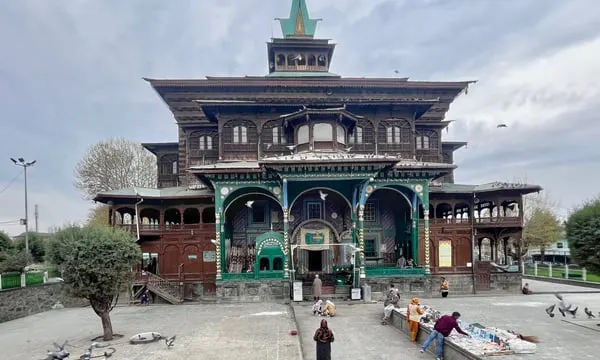
A proposal to introduce uniform Friday sermons in mosques overseen by the Jammu and Kashmir Waqf Board has renewed concern about official influence over Islamic practice in Indian-administered Kashmir. A recording of a board meeting captured discussion of a committee of imams and senior scholars choosing sermon topics. Chief Minister Omar Abdullah and Muslim religious leaders objected, arguing that decisions about preaching belong to clerics and their communities. After the backlash, board chair Darakshan Andrabi said no directive had been issued and that imams would decide what to preach.
- Sources
- 3
- Outlets
- 3
- Left · Centre · Right
- 1 · 0 · 0
In short
- Uniform Friday sermons were discussed by the Waqf Board.
- Political and religious leaders opposed the proposal.
- The board says no directive was issued and imams retain discretion.
How this story developed
- 4 hours ago A proposal to introduce uniform Friday sermons in mosques overseen by the Jammu and Kashmir Waqf Board has renewed concern about official influence over Islamic practice in Indian-administered Kashmir.
Full account
A proposal discussed within the Jammu and Kashmir Waqf Board to standardise Friday sermons in mosques has prompted strong objections from political figures and Muslim religious leaders. The idea, raised at a meeting over the weekend, was for a committee of imams and senior scholars to select subjects for sermons delivered on Fridays and other important religious occasions. Critics say that a uniform programme would allow a state-linked body to influence religious practice across the Valley.
The board is chaired by Darakshan Andrabi, a local politician associated with the Bharatiya Janata Party. She has defended the proposal as a way to address social concerns, including drug abuse, and said religious scholars would decide the sermon content without government officials. But accounts of the meeting differ over how far the plan had advanced. A scholar who joined online told Al Jazeera that Andrabi instructed attendees to use a pre-approved sermon, while other accounts describe discussion of a committee and topics rather than a decision to impose a script.
Chief Minister Omar Abdullah condemned the proposal as political interference in Muslim religious affairs and called on Andrabi to stop it. Mirwaiz Umar Farooq and the Muttahida Majlis-e-Ulema, an umbrella group of religious and socio-religious organisations, also rejected the idea. They argued that religious guidance belongs to imams, scholars and established institutions, and that sermons should reflect Islamic scholarship and the needs of local communities. Former chief minister Mehbooba Mufti likewise questioned a uniform approach, saying Friday sermons respond to circumstances in particular places as well as broader concerns.
Following the backlash, Andrabi said no formal directions had been issued. She described the idea as a discussion among imams and scholars associated with the Waqf, who should be able to work independently. The dispute has unfolded against the backdrop of major changes to Jammu and Kashmir’s political status: in 2019, the Indian government ended the region’s semi-autonomous status and divided it into two federally governed territories. For opponents, that context sharpens concerns about state influence over Muslim institutions; the board’s stated rationale, by contrast, is to address social problems through religious communication.
Where outlets differ
From the full account, which is AI-written from the sources:
The first report says the board chairperson later clarified that no directions had been passed and characterises the proposal as a discussion. Al Jazeera reports the board announced a move and quotes an online meeting participant who said Andrabi instructed attendees to use a pre-approved sermon, while also reporting her claim that scholars would determine its content.
Al Jazeera gives more attention to the board’s stated aim of addressing social issues such as drug abuse, the meeting’s scale and the region’s post-2019 political arrangements. The first report foregrounds the objections of local political and religious figures and their arguments about religious authority and the role of local circumstances in sermons.
Coverage · 3 sources
Asia Government Politics World