World news and discussion on TalkFuse.
2026 US midterms: Visualize the first takeaways with our graphs and maps
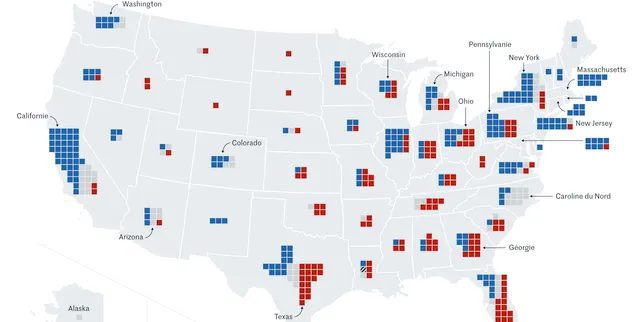
Democrats appear to have won control of both chambers of Congress in the 3 November 2026 midterm elections, giving Donald Trump a divided government for the final two years of his term. The article presents the early results through graphs and maps, describing a larger-than-expected Democratic swing and a major setback for Republicans.
Results were still incomplete when the article was published, with two Senate seats and 74 House seats undecided; Louisiana was due to hold a run-off on 12 December. Democrats won at least 20 of the 35 Senate seats contested, including unexpected victories in states such as Texas, Maine and Kansas. They also made gains in the House, while Republican candidates generally fell below Trump’s 2024 vote share and the party’s redistricting efforts failed to deliver some expected seats.
In short
- Democrats took control of both chambers.
- Key results were still outstanding.
- Republican redistricting gains fell short.
Explained simply
Midterm elections take place halfway through a US president’s four-year term. Voters choose all 435 members of the House of Representatives and roughly a third of the 100-seat Senate; together, the two chambers make up Congress, which passes federal laws and approves government spending.
The president’s party often loses seats in midterms, but the results vary. Control of Congress matters because both chambers have a role in passing legislation, and the Senate also confirms many senior government appointments. When the opposing party controls one or both chambers, it can affect the president’s ability to advance policies.
The main parties are the Democrats and Republicans. Donald Trump, a Republican, began his current term in January 2025; House members serve two-year terms, while senators serve six-year terms, so only some Senate seats are contested at each midterm.
Americas Elections Government Politics World