Technology news and discussion on TalkFuse.
New software sharpens Webb images to reveal faint exoplanets beside stars
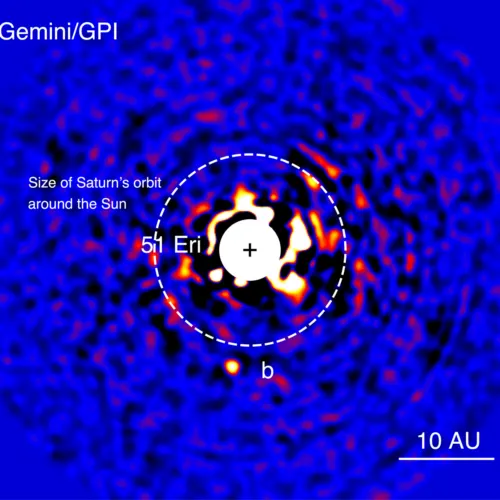
Researchers have developed FLIP, software that uses a physical model of the James Webb Space Telescope to reduce noise in images of exoplanets. By better accounting for changes in the telescope’s behaviour and pointing between observations, the method could help astronomers distinguish faint planets from the much brighter stars beside them.
FLIP models the telescope’s NIRCam instrument using 106 adjustable parameters, then uses gradient descent to tune them against observations. The initial optimisation takes just over half an hour on a modern graphics processor and is refined using the image being analysed. Tests on Webb observations of three stars increased the signal-to-noise ratio by 1.5 to 2 times; at a wavelength useful for detecting carbon dioxide, researchers could identify one of the planets.
In short
- FLIP reduces noise in Webb images of exoplanets.
- It models NIRCam with 106 adjustable parameters.
- Tests improved signal-to-noise by 1.5 to 2 times.
Read the full article at the source →
Originally published by Ars Technica as “Software squeezes more data out of Webb Telescope for imaging exoplanets”.