World news and discussion on TalkFuse.
Flávio Bolsonaro battles to remain relevant as he speaks at rightwing conference at Mar-a-Lago
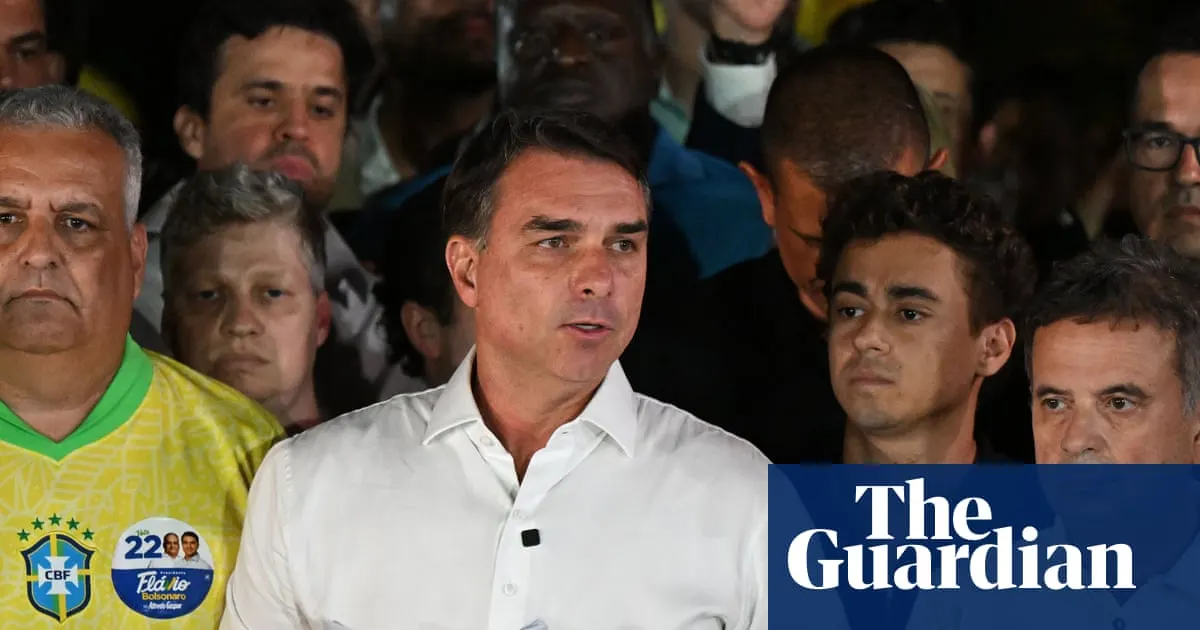
Flávio Bolsonaro, who lost Brazil’s presidential election to incumbent Luiz Inácio Lula da Silva by more than four million votes, appeared publicly at a rightwing conference at Donald Trump’s Mar-a-Lago property. He said the defeat was not “the end for Brazil” as he sought to retain political relevance after leaving the country.
In an interview, Bolsonaro made unsubstantiated claims of election fraud and said he fled Brazil without help, though reports have suggested others assisted him. He faces police investigations and is due to lose parliamentary immunity when his term ends early next year. Analysts say his departure weakened his claim to lead the opposition, while members of his family remain active in politics; he says he may run in future elections but expects to remain in the US for now.
In short
- Flávio Bolsonaro spoke at a rightwing conference in Florida.
- He lost Brazil’s election by more than four million votes.
- Analysts say leaving Brazil weakened his political standing.
Steelman: both sides, in good faith
The strongest fair case each way — we don't pick a winner.
The case for
Bolsonaro’s supporters could argue that his election defeat does not erase his right to remain politically active or criticise the government, and that speaking abroad lets him maintain contact with allies while facing investigations at home. They may see his continued involvement as a way to represent voters who want a strong opposition and to keep open the possibility of a future candidacy.
The case against
Critics could argue that leaving Brazil weakens Bolsonaro’s credibility as an opposition leader, particularly when he says he may seek office again, and risks making his political role seem detached from the people he hopes to represent. They may also contend that repeating unsubstantiated fraud claims undermines confidence in democratic institutions, while his investigations warrant scrutiny rather than political deference.
Americas Elections Politics World