Entertainment news and discussion on TalkFuse.
Webb detects water and carbon dioxide ice around young star Beta Pictoris
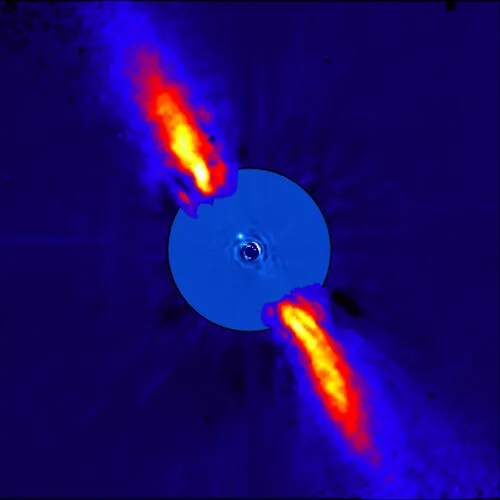
The James Webb Space Telescope has detected water and carbon dioxide ice in the debris disk around Beta Pictoris, a young star where planets are still forming. The discovery helps explain how ice can persist despite the star’s ultraviolet radiation and suggests that ingredients for water-rich worlds may be common around young stars.
Beta Pictoris is about 20 million years old and 64 light-years away; its disk is replenished by collisions among comets and other small bodies. Spectra from two regions about 100 astronomical units from the star showed the two ices are mixed, a form that models suggest can survive radiation better than pure ice grains. Carbon dioxide makes up about 11 per cent of the ice, within the range measured in Solar System comets.
In short
- Webb detected water and carbon dioxide ice around Beta Pictoris.
- The ices are mixed, helping them withstand stellar radiation.
- The composition resembles ice found in Solar System comets.
Read the full article at the source →
Originally published by Ars Technica as “James Webb telescope finds ice older than the star it orbits”.