Science news and discussion on TalkFuse.
Queensland physicists send a message through brick using gravity
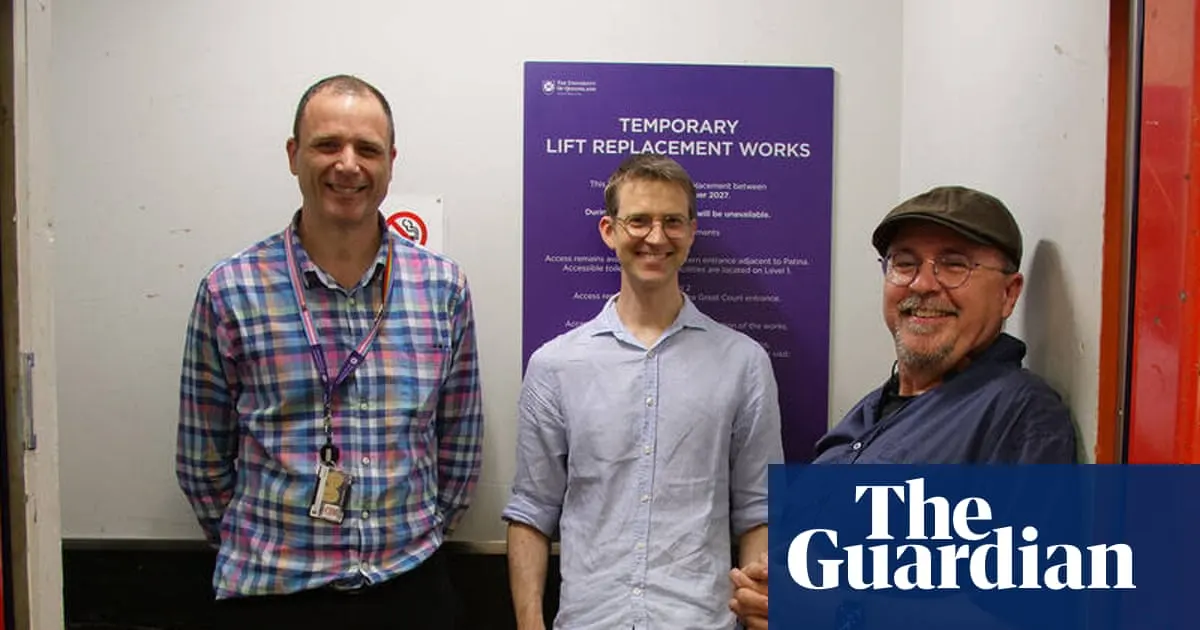
University of Queensland physicists sent the word “gravity” through a brick wall by detecting tiny changes in the gravitational field as an elevator moved. The proof-of-concept shows that gravity could carry a wireless message through ordinary material, which blocks or weakens many conventional signals.
A gravimeter in a nearby men’s bathroom tracked the elevator’s 1.8-tonne counterweight, using its two positions as binary 0s and 1s. At one bit per minute, the seven-letter word took nearly an hour to transmit, so the researchers say the method is not practically useful yet. They suggest more sensitive quantum sensors might enable communication over up to 500 metres and at 15 times the speed.
In short
- Physicists sent “gravity” through a brick wall using an elevator.
- The message took nearly an hour at one bit per minute.
- More sensitive sensors could extend the range and speed.
Explained simply
Gravity is the force that pulls objects with mass towards one another. Its effects can be measured as changes in a gravitational field, though these are extremely small for everyday movements such as an elevator travelling between floors.
The University of Queensland researchers used a gravimeter, an instrument that measures those changes, to track a heavy elevator counterweight. They treated its two positions as the two values used to encode a message, showing how gravity might carry information through materials that interfere with radio signals.
The experiment was a slow proof of concept, rather than a practical way to communicate: sending one bit took about a minute. The researchers say more sensitive quantum sensors could make the method faster and work over longer distances, but that would require further development.
Research Science Software Technology World
Read the full article at the source →
Originally published by The Guardian as “An elevator, a brick wall and a bathroom: scientists use gravity to send ‘practically unblockable’ message”.