Politics news and discussion on TalkFuse.
UN court rules Myanmar committed genocide against Rohingya in landmark case
Developing story first seen 12 hours ago
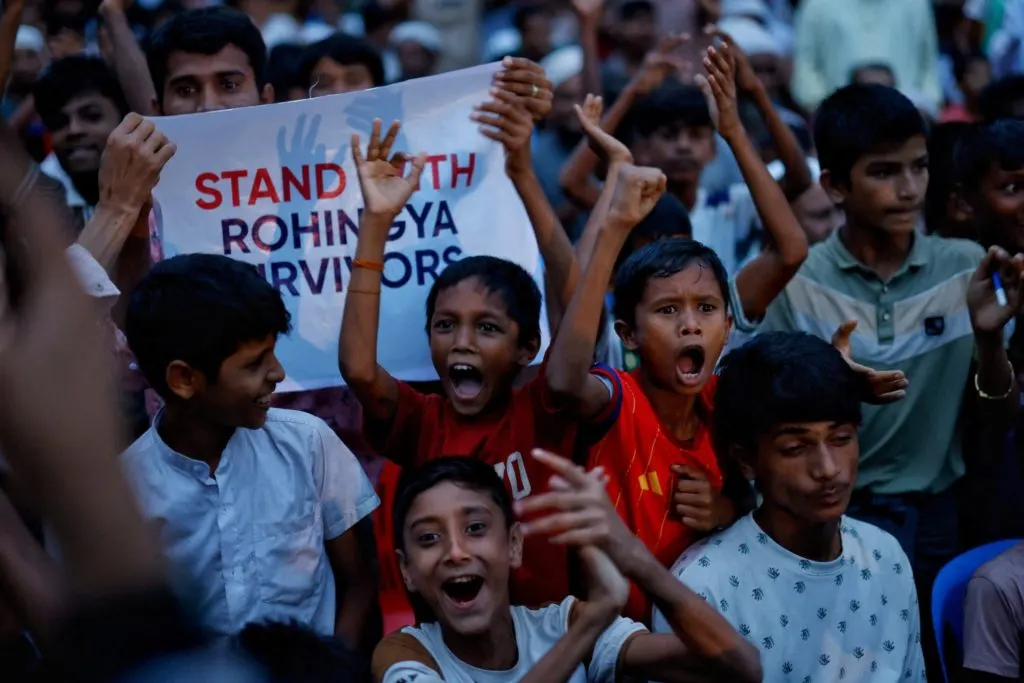
The International Court of Justice has ruled that Myanmar committed genocide against the Rohingya, a Muslim minority, in a landmark 9-6 decision. It is the first time the UN court has held a state responsible for genocide, giving survivors formal recognition while raising questions about what the judgment will change for them.
Gambia brought the case seven years ago over the military’s actions in Rakhine State. The article says troops burned villages, carried out systematic rape and killed nearly 7,000 Rohingya by conservative estimates; more than 1.2 million refugees have since left Myanmar. Survivors welcomed the decision, but many remain unable to return home.
- Sources
- 3
- Outlets
- 3
- Left · Centre · Right
- 1 · 2 · 0
In short
- UN court rules Myanmar committed genocide against the Rohingya.
- The 9-6 decision is the court’s first such finding against a state.
- More than 1.2 million Rohingya refugees have left Myanmar.
How this story developed
- 2 hours ago The report broadened its focus to the judgment’s implications for international law and the Rohingya’s future.
- 2 hours ago The account added that the court’s decision gives survivors formal recognition, while many remain unable to return to Myanmar.
- 4 hours ago The report reiterated the ruling and the scale of the military campaign, noting that villages were burned, people were raped and nearly 7,000 Rohingya were killed by conservative estimates.
- 10 hours ago The ICJ found Myanmar responsible for genocide against the Rohingya in a 9–6 ruling, while refugees said they still could not return home.
Full account
The International Court of Justice has found that Myanmar committed genocide against the Rohingya, in a 9–6 ruling that marks the first time the UN’s highest court has held a state responsible for genocide. The case was brought by The Gambia and concluded seven years after it began. The judges said Myanmar’s actions in northern Rakhine State could only reasonably be explained by an intention to destroy a substantial part of the Rohingya population.
The case concerned the military’s so-called clearance operations, launched in response to attacks by Rohingya insurgents. The operations drove hundreds of thousands of people from Myanmar into Bangladesh. Accounts cited in the reports describe villages being burned, people killed and women raped. Myanmar had defended its actions as counter-terrorism measures; the court rejected that account as an explanation for the evidence of genocidal intent.
For Rohingya survivors and refugees, the decision brought recognition as well as a legal finding. Activist Yasmin Ullah said the ruling affirmed that the community’s experiences were real and could be heard. In Bangladesh, refugees watched the announcement, while Gambia’s representative said the victory belonged to the Rohingya, who had survived and testified.
The ruling may also shape how future genocide allegations are assessed. Human rights lawyer Reed Brody said that a security objective or armed conflict does not by itself rule out genocidal intent, and suggested the reasoning could have implications beyond Myanmar, including in proceedings concerning Gaza. The judgment is a landmark in international accountability, though it does not by itself resolve the Rohingya’s displacement or secure their future.
Where outlets differ
From the full account, which is AI-written from the sources:
The first report centres on the court’s decision and the responses of Rohingya survivors and refugees, including testimony about the violence and its personal consequences. The second focuses on legal analysis: how genocidal intent was assessed, why Myanmar’s counter-terrorism argument did not prevail, and what the ruling could mean for other cases. It also foregrounds The Gambia’s role and wider concerns about international accountability.
Left-leaning outlets 1
Only here: judgment
Centre outlets 2
- UN court rules Myanmar committed genocide against Rohingya in landmark casePBS NewsHour
- ICJ ruling on Myanmar genocide: ‘Historic victory for Rohingya, landmark for international justice’France 24
Only here: rules, case, ruling, historic, victory
Every side used: landmark, court, myanmar, committed, genocide, rohingya
Headline columns compared word for word; nothing in them is AI-written.
Explained simply
The Rohingya are a mostly Muslim minority who have faced discrimination in Myanmar, particularly in Rakhine State. Many have been denied citizenship and the rights that come with it.
Gambia brought the case against Myanmar at the International Court of Justice, the UN’s court for disputes between countries. It followed military operations in 2017 that killed thousands of Rohingya, destroyed villages and drove hundreds of thousands of people across the border.
The case matters because it concerns whether a state can be held responsible under the international treaty banning genocide. Many Rohingya refugees remain outside Myanmar, and the court’s decision does not by itself ensure they can safely return.
Coverage · 3 sources
Bias meters
From 3 rated sources.
- PBS NewsHourCentreUN court rules Myanmar committed genocide against Rohingya in landmark case
- France 24CentreICJ ruling on Myanmar genocide: ‘Historic victory for Rohingya, landmark for international justice’
- HuffPostLeftIn A Landmark Judgment, Top U.N. Court Says Myanmar Committed Genocide Against The Rohingya
Read the full article at the source →
Originally published by PBS NewsHour as “International Court of Justice finds Myanmar guilty of genocide against Rohingya”.