World news and discussion on TalkFuse.
‘Coordinated’ plot to shuttle African migrants into Spain in ‘mass invasion’ revealed
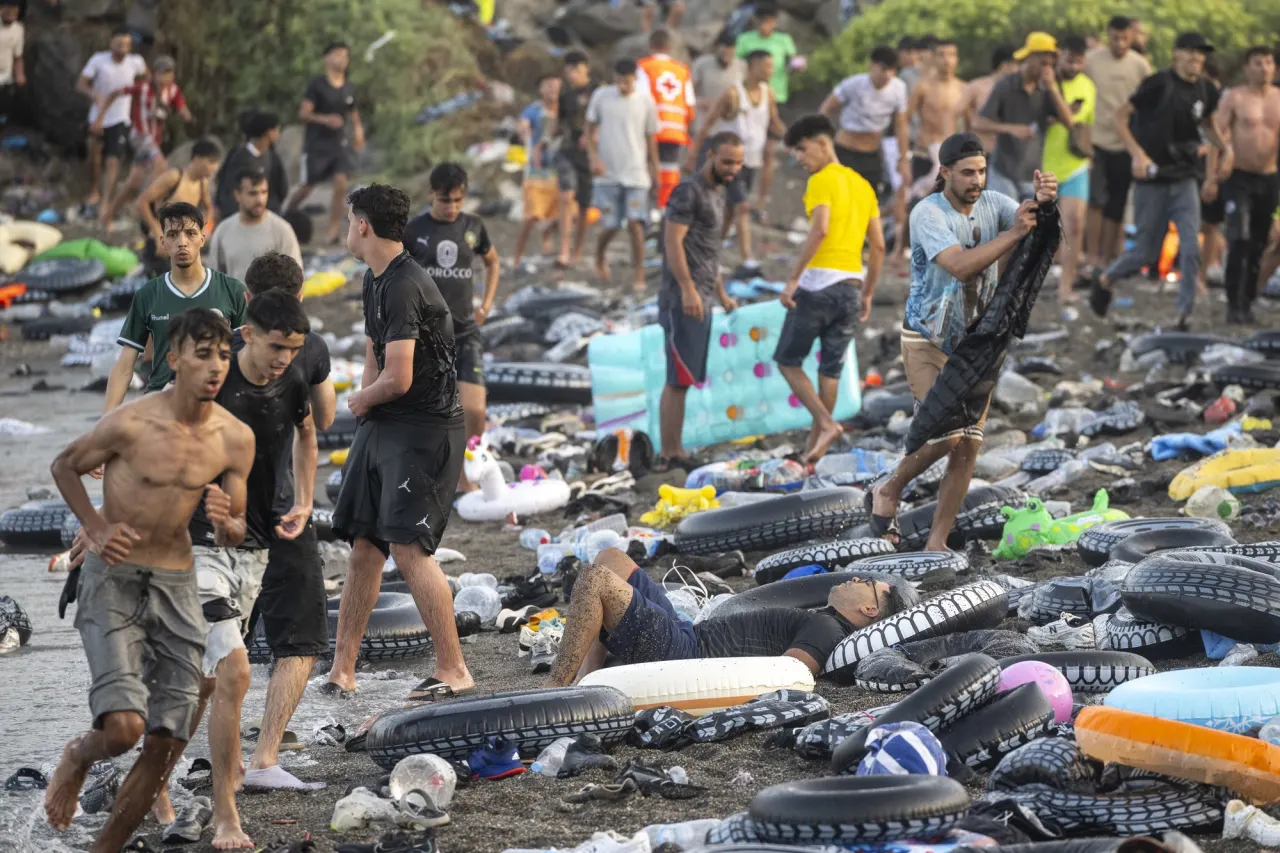
A Spanish police report has identified signs of advance planning behind a large crossing from Morocco into Ceuta, where migrants used identical inflatable rings to reach the Spanish enclave. The findings matter because bulk purchasing and organised distribution could indicate the crossing was coordinated, although the report does not establish who organised it.
Police estimated that up to 10,000 rings were used, while aerial images led the report to suggest as many as 30,000 may have been involved; officials cautioned that some could have been reused. The report said the specific inflatables were scarce locally and could take up to 90 days to arrive, and it rejected claims that Moroccan officials arranged the influx to extract money from Spain. Separately, the article says the Canary Islands declared an emergency after 2,200 arrivals, including nearly 1,500 on Saturday.
In short
- Identical inflatables may point to advance planning for the Ceuta crossing.
- Police estimate up to 10,000 were used; the report suggests as many as 30,000.
- The report rejected claims that Moroccan officials arranged the influx.
Steelman: both sides, in good faith
The strongest fair case each way — we don't pick a winner.
The case for
The identical rings, their reported scarcity in local shops and the scale of the crossing provide reasonable grounds to suspect advance coordination, even though the report does not identify an organiser. If supplies were deliberately bought and distributed, authorities would have a legitimate reason to investigate whether networks facilitated the crossing and to plan for the resulting strain on border and reception services.
The case against
The evidence described does not establish who obtained or distributed the rings, or prove that the crossing was centrally organised; estimates also vary, and some rings may have been reused. Treating these signs as proof of a coordinated “mass invasion” risks overstating what the report shows and turning migrants’ arrival into a political claim before the unanswered questions are resolved.
Explained simply
Ceuta is a small Spanish territory on the North African coast, next to Morocco. Its land border and nearby sea route make it a point of entry to Spain for people travelling from Africa.
People attempting the crossing may face dangerous conditions, and Spanish and Moroccan authorities deal with border control and migrant arrivals. The police report says many people used similar inflatable rings, but it does not identify who, if anyone, arranged their supply.
The issue matters because evidence of planning could affect how authorities understand and respond to crossings. It also sits within wider migration pressures on Spain, including arrivals in the Canary Islands.