Ocean rift zone saw spreading happen in a sudden burst
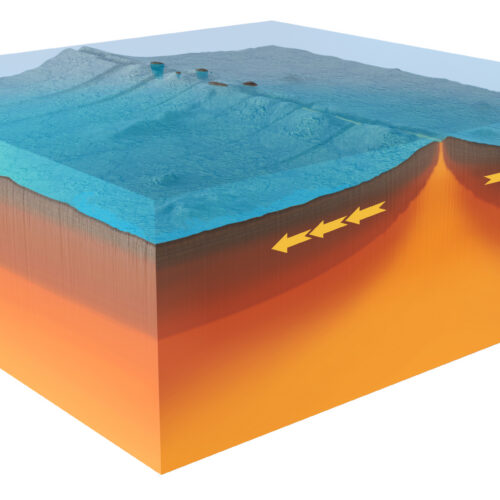
French scientists have captured a mid-ocean ridge in the act of spreading, revealing that the process driving the seafloor apart can happen in sudden, dramatic bursts rather than steadily. Having installed underwater monitoring equipment on the boundary between the Australian and Antarctic plates just two months earlier, the team recorded a major event in April 2024 in which most of the spreading occurred within a short window, with some key changes producing no obvious seismic signal. The findings matter because, while geologists understand what newly formed ocean crust looks like, they have lacked a detailed picture of the process that creates it.
The remote site lies roughly halfway between Australia and Madagascar, where the rift cuts through the Amsterdam–Saint Paul Plateau and spreads at an average rate of a little over 60 millimetres a year. During the event, clusters of seismic activity spread more than 8 kilometres south and 9 kilometres north — typical of the formation of dykes, or intrusions of molten rock — while the central valley subsided by 4.2 metres over six days as a magma reservoir apparently drained, and nearby water temperatures rose. Later three-dimensional mapping found some patches of seafloor over 90 metres higher than before, with an estimated 150 million cubic metres of new material added. Modelling that sampled 10 million configurations found only about 2,200 that fit the data, pointing to the collapse of a horizontal magma body called a sill; the team estimates the burst achieved the equivalent of 38 years of normal spreading and suggests this stop-start pattern may be typical of how mid-ocean ridges grow.
- Seafloor spreading can occur in sudden bursts, not just gradually.
- One April 2024 event equalled 38 years of average spreading.
- The central valley sank 4.2 metres as magma drained beneath it.