Culture news and discussion on TalkFuse.
5 races that will tell the story of the midterms
Developed over time first seen 4 days ago
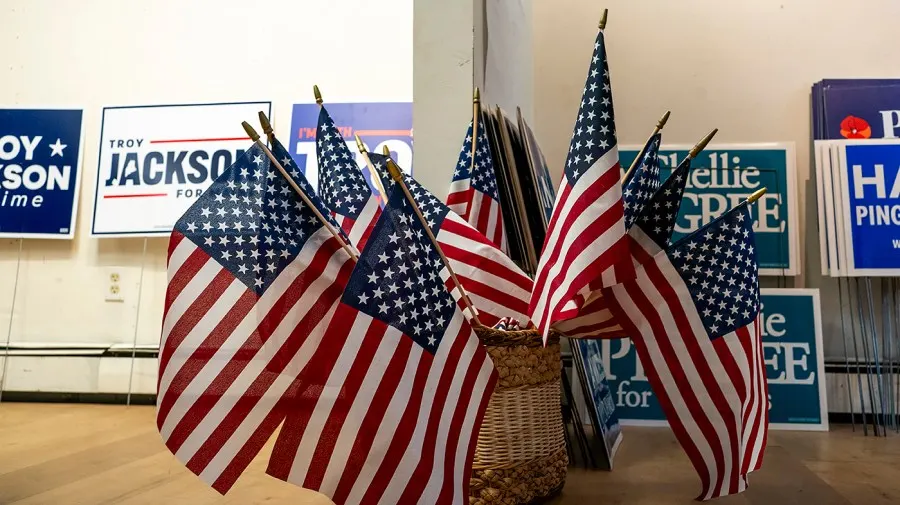
A handful of close contests will help explain the 2026 US midterms beyond the question of which party controls Congress. The Senate races in Maine, Ohio, Texas, Alaska and Michigan offer different tests: whether a Republican can retain a seat in a state that backed the Democratic presidential candidate in 2024, whether Democrats can win in traditionally Republican territory, and whether they can defend a seat in a closely divided state. Together, the results will show how far each party’s support extends beyond its safest ground.
The wider election is also a judgement on President Donald Trump’s second term, with the cost of living and immigration prominent in campaigns. Republicans entered election day holding narrow majorities in both chambers, while Democrats needed a net gain of four seats in each to take control. Individual races may therefore matter greatly to the balance of power, but their margins and patterns of support will also help explain whether the national mood translated consistently into votes across different states.
- Sources
- 3
- Outlets
- 3
- Left · Centre · Right
- 0 · 1 · 2
In short
- Five Senate battlegrounds offer distinct tests of each party’s reach.
- Democrats need a net gain of four seats in each chamber for control.
- The results will show how voters weighed the economy, immigration and Trump’s presidency.
How this story developed
- 3 hours ago A handful of close contests will help explain the 2026 US midterms beyond the question of which party controls Congress.
- The Hill 5 races that will tell the story of the midterms
- Reuters Explainer-Three issues defining the 2026 US midterm elections
- The Hill and Decision Desk HQ 2026 election results, polling, and predictions
Full account
The 3 November midterms will decide whether Republicans retain their narrow majorities in the House and Senate, or Democrats gain control of either chamber. Five contests are likely to offer a particularly clear view of the forces shaping the result: the president’s standing, the cost of living, healthcare, immigration and the strength of the parties’ competing messages. The outcome overall will depend on a relatively small set of closely fought races.
Donald Trump has put himself at the centre of the campaign, urging voters to treat the election as a judgement on him and holding rallies in several states. That may energise his supporters, while giving opponents a reason to turn out. Reuters reported his approval at 31% in a Reuters/Ipsos poll, a low for his presidency. The Hill’s election centre takes a broader, data-focused approach, offering polling averages and forecasts for House and Senate contests rather than highlighting particular campaign issues or races.
Affordability is a major test for both parties. Reuters reported that half of registered voters in a recent poll named the cost of living as their most important voting consideration, with healthcare, petrol, food and housing among the bills they want lawmakers to address. Democrats say the administration has failed to bring costs down and are campaigning on household expenses. Republicans point to their tax-cut legislation, though it included large reductions in Medicaid and other health spending. Higher fuel prices and continuing rises in grocery and home prices add to the pressure voters face.
Healthcare could sharpen that debate. Democrats previously sought to extend health-insurance subsidies for millions of Americans, and Reuters notes that the effort ended in a government shutdown. The parties’ records and proposals may matter in competitive districts and states, where voters weigh coverage and costs alongside broader concerns about the economy. Immigration is another defining issue: the Trump administration has made border enforcement a priority, and preliminary government figures cited by Reuters indicated a substantial drop in apprehensions at the south-west border compared with the Biden administration.
Taken together, the close races will show whether Trump’s influence and Republican arguments on immigration can outweigh public concern about prices and health costs—or whether Democrats can turn those concerns into enough votes to gain ground. Reuters foregrounds these national themes and their possible electoral consequences. The Hill page supplied here is chiefly an election-results and polling hub, with live race tracking, poll averages and forecasts; it does not itself identify five specific races or provide comparable reporting on the issues.
Where outlets differ
From the full account, which is AI-written from the sources:
Reuters describes the political backdrop, including Trump’s approval, affordability, healthcare and immigration, and says a small number of competitive contests will be decisive. The supplied report does not name five races, despite the headline.
The Hill material is an election-centre landing page describing forecasts, live results and poll averages. It does not offer a reported account of the issues or identify particular contests, so it cannot be used to corroborate Reuters’s issue analysis.
Reuters’s account includes specific poll figures and economic comparisons; The Hill page instead points readers to regularly updated polling and forecast tools, without giving equivalent figures in the supplied text.
Centre outlets 1
Only here: explainer, three, issues, defining, midterm
Right-leaning outlets 2
- 5 races that will tell the story of the midtermsThe Hill
- 2026 election results, polling, and predictionsThe Hill and Decision Desk HQ
Only here: races, tell, story, midterms, election
Headline columns compared word for word; nothing in them is AI-written.
Steelman: both sides, in good faith
The strongest fair case each way — we don't pick a winner.
The case for
A strong showing across these contests could be seen as evidence that a party’s message is reaching beyond its safest states, while victories in particular races may reflect candidates’ ability to address local concerns. Because control of Congress is close, the results would also show whether voters want to give the president’s party room to govern or provide the opposition with more influence and oversight. The range of states and seat types makes these races useful tests of how national issues such as living costs and immigration are playing across different electorates.
The case against
These five contests cannot by themselves establish a single national verdict: state-level concerns, candidate quality and campaign circumstances may shape each result differently. Close margins can also be read in more than one way, and the races offer only a partial picture of voters’ views across the country. Treating them as a clear measure of support for or against the president, or of how far either party’s appeal extends, risks drawing broader conclusions than the results warrant.
Explained simply
The US Congress has two chambers: the House of Representatives and the Senate. Senators serve six-year terms, and each state has two; the House has elections every two years. Midterms take place halfway through a president’s four-year term, so they can affect how easily the president’s party passes laws and how Congress scrutinises the administration.
Republicans and Democrats are the two main US political parties. The Senate contests in Maine, Ohio, Texas, Alaska and Michigan are seen as useful tests because the states differ in their usual voting patterns, and close races can show where each party has support. The results may also reflect voters’ views of President Donald Trump’s second term, including issues such as living costs and immigration.
Coverage · 3 sources
Bias meters
From 3 rated sources.
Americas Art Culture Elections Government Politics World