A Dragon Age Trilogy remaster probably won’t happen as no one still employed at BioWare knows how the engine works, claims producer
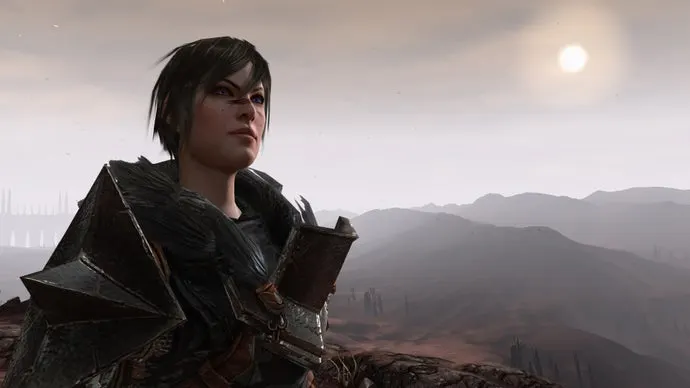
Former BioWare producer Mark Darrah has cast doubt on the prospect of a remastered Dragon Age trilogy, claiming that nobody currently at the studio understands the ageing Aurora engine used to build the original games. This matters because it highlights a broader risk of proprietary in-house technology: when staff leave or are laid off, as many were during EA's cuts, institutional knowledge needed to maintain or update old projects can be lost for good, potentially putting a commercially promising project permanently out of reach.
Speaking to FRVR, Darrah said a "champion edition" covering Dragon Age: Origins, Dragon Age 2 and Dragon Age: Inquisition had been discussed while he was still at BioWare, but ran into problems because the games don't share Mass Effect's Unreal Engine foundation, which allowed that trilogy to receive 2021's Legendary Edition remaster. Origins and Dragon Age 2 instead use BioWare's own Eclipse and Lycium engines, both built on the Aurora engine also used for the original Witcher and Star Wars: Knights of the Old Republic, while Inquisition runs on Frostbite and would be far easier to update. Darrah, who left BioWare in 2020, said any remaster would require an entirely new team, which he doubts EA would assemble, even though he believes such a release would sell well.
In short
- Ex-BioWare producer says no remaining staff understand old Aurora engine
- This makes a Dragon Age trilogy remaster unlikely, unlike Mass Effect's
- Only Inquisition, built on Frostbite, would be easier to remaster
Steelman: both sides, in good faith
The strongest fair case each way — we don't pick a winner.
The case for
Commercial viability—which Darrah himself acknowledges—should justify investing in solving technical barriers through reassembled teams, external studios, or recovered documentation, particularly given the Mass Effect Legendary Edition's proven success. Declining such a project prioritises conservative risk-aversion over serving a dedicated fanbase with clear market demand.
The case against
Darrah's insider assessment reveals genuine economic barriers: completely rebuilding these games from scratch would cost nearly as much as developing new titles, with unpredictable technical problems causing schedule and budget overruns. Even commercially viable projects may rationally be declined when finite resources could more reliably fund original content or sequels with greater upside potential.
Explained simply
Dragon Age is a fantasy role-playing game franchise created by BioWare, a video game studio owned by Electronic Arts. Game studios sometimes release remasters of their older titles, which update them to run on modern systems and hardware, making them available to new audiences whilst generating revenue from existing fan bases. A remastered Dragon Age trilogy would combine the original games into a single updated release.
BioWare developed its Dragon Age games using different technical foundations known as engines. The older Dragon Age games used BioWare's proprietary Aurora engine, built in-house rather than licensed from another company, which makes them harder to update. By contrast, BioWare's Mass Effect trilogy was built on licensed Unreal Engine, allowing it to be successfully remastered for modern systems in 2021.
BioWare has experienced significant staff departures in recent years through layoffs and resignations. When developers with specialised knowledge of specific engines leave a studio, that knowledge can be difficult to replace, particularly if it was never fully documented. This creates a risk: even commercially viable projects can become impractical to pursue if the expertise needed to work with the underlying technology is no longer present at the company.
Entertainment Gaming Software Technology