A rather unorthodox priest: Father sprinkles holy water over fence during bitter war with accountant neighbour over disputed strip of land less than a metre wide between their homes
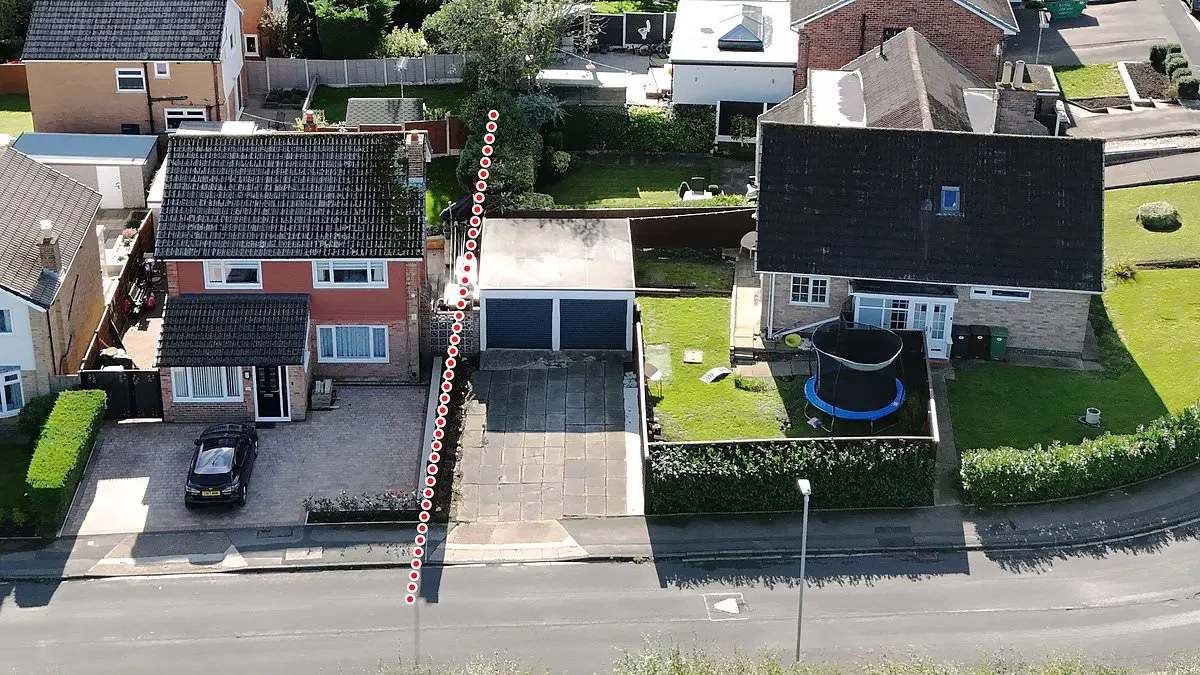
Father Anatoli Vihrov, a Russian Orthodox priest in Guiseley, West Yorkshire, is in a long-running dispute with neighbour Shamaem Burrows over a strip of land less than a metre wide between their homes. The row has drawn police involvement, an arrest and mutual accusations of intimidation, while both households have installed cameras facing each other’s properties.
Burrows says the Vihrovs encroached on her land during garden renovations and points to 1974 title deeds; she was arrested and charged with damaging a bush. The Vihrovs deny taking her land and say a professional boundary survey supports their claim that most of the disputed strip is theirs. Footage shows Father Vihrov sprinkling holy water on the fence, which his wife described as a blessing intended to restore peace.
- Neighbours dispute ownership of a strip less than a metre wide.
- A priest’s holy water blessing was captured on CCTV.
- The feud has led to police involvement and an arrest.
New here? Start with this
Property boundaries are usually recorded in title deeds and shown on plans, but those records may not settle exactly where a boundary lies on the ground. Neighbours can disagree over small strips of land, especially after building or garden work, and may turn to surveys or legal advice to establish what they own.
This dispute involves Father Anatoli Vihrov, a Russian Orthodox priest, and his neighbour Shamaem Burrows, an accountant, in Guiseley, West Yorkshire. Each side disputes the other’s account of the boundary, and the disagreement has led to police involvement and cameras aimed at the neighbouring properties.
The row matters because it shows how a narrow boundary disagreement can affect daily life and lead to legal consequences. The available accounts describe competing claims based on title deeds and a professional survey.
Both sides, in good faith
The strongest fair case each way — we don't pick a winner.
The case for
Burrows’s case is that the boundary should be determined by the legal title and the 1974 deeds, and that the Vihrovs’ renovations encroached on land belonging to her. From this perspective, challenging the work and documenting the dispute are reasonable ways to protect property rights, though the allegations and arrest do not by themselves establish what happened.
The case against
The Vihrovs say they did not take Burrows’s land and that a professional survey supports their claim to most of the disputed strip. From their perspective, relying on that survey and treating the fence as a boundary on their own property are reasonable, while the dispute’s mutual accusations and police involvement show why a clear, impartial resolution would matter to both households.