World news and discussion on TalkFuse.
Vollmann’s four-volume novel traces US power and its moral decline
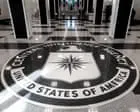
William T Vollmann’s four-volume novel *A Table for Fortune* uses the history of one CIA analyst and his family to examine American power, liberty and the country’s record abroad. The review describes it as a hugely ambitious portrait of the United States, tracing how its ideals and belief in exceptionalism have shaped policy and contributed to its decline.
Written over 15 years and spanning 3,000 pages, the novel focuses on CIA analyst DAVE, recruited in 1967, and covers roughly five decades of US foreign policy, with 9/11 at its centre. Its sardonic portrayal of agency life ranges across conflicts and intelligence practices, while DAVE’s son Matthew offers a parallel perspective on injustice and the search for America’s moral purpose. The review argues that the CIA becomes more morally compromised after 9/11, with greater reliance on assassination and torture and increased concern with pleasing the executive branch.
In short
- Vollmann’s 3,000-page novel examines America through the CIA and one family.
- Its four volumes cover five decades of US foreign policy.
- The review portrays the agency as increasingly compromised after 9/11.
Steelman: both sides, in good faith
The strongest fair case each way — we don't pick a winner.
The case for
The novel’s account can be read as a case that American claims to liberty and exceptionalism have often sat uneasily with actions abroad, and that post-9/11 reliance on assassination and torture deepened that contradiction. Following an analyst and his son across decades gives the critique a human and institutional dimension, while raising the question of whether power exercised without adequate restraint erodes the ideals it claims to defend.
The case against
A defender of US policy might argue that intelligence agencies operate amid serious threats and that choices made after 9/11 reflected attempts to protect the public in circumstances leaders judged exceptional. They could also contend that the United States’ ideals remain meaningful even when policy falls short, and that portraying a long, varied history chiefly as moral decline risks overlooking the constraints, debates and competing security responsibilities that shaped those decisions.
Explained simply
The CIA is the United States’ foreign intelligence agency, which gathers information about other countries and supports the government’s foreign policy. During the Cold War, the long rivalry between the US and the Soviet Union, it played a major role in American efforts to influence events overseas.
The novel follows DAVE, an analyst recruited in 1967, and his family across decades of US history, including the attacks of 11 September 2001. Through DAVE and his son Matthew, it explores the tension between America’s stated ideals of liberty and justice and the effects of its actions abroad.
The story matters because intelligence agencies can shape foreign policy while operating largely out of public view. Its focus on the CIA raises questions about how national security decisions are made and how they affect both people overseas and American institutions.
Americas Culture Government Politics Research Science World
Read the full article at the source →
Originally published by The Guardian as “A Table for Fortune by William T Vollmann review – a hugely ambitious 3,000-page portrait of America’s decline”.