After 8 years, Europe’s BepiColombo mission is on final approach to Mercury
Developed over time first seen 2 months ago
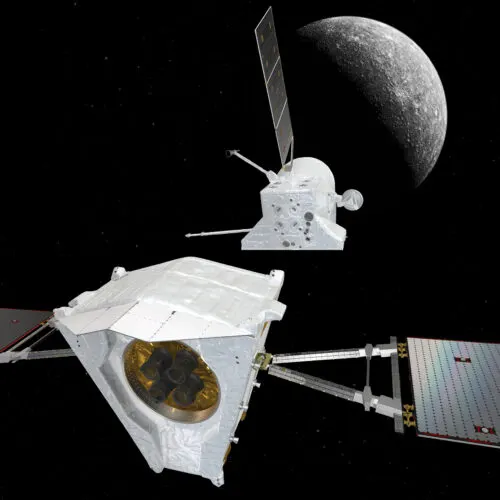
Europe's BepiColombo spacecraft has completed a major milestone in its eight-year journey to Mercury, successfully jettisoning its Mercury Transfer Module in a manoeuvre mission officials likened to the risk of launching a new spacecraft. The module, which had powered and propelled the probe via ion thrusters since its 2018 launch, was released on Thursday roughly 39 million miles from the Sun, clearing the way for the remaining orbiters to enter Mercury's orbit in November without the now-redundant hardware aboard.
The nearly $2 billion mission, led by the European Space Agency with Japanese and US involvement, is unusual in comprising three linked spacecraft; with the transfer module gone, the European and Japanese orbiters will travel on together until they separate from each other in December, shortly after reaching Mercury. Discarding the module required the remaining spacecraft to instantly assume all power, propulsion, pointing and thermal-control duties amid the extreme heat and radiation near the Sun, and early indications suggest the separation went to plan. Several onboard instruments and the mission's best cameras, previously obscured by the module during the transit, are now expected to capture their "first light" views as BepiColombo closes in on its final orbital insertion.
- Sources
- 2
- Outlets
- 2
- Left · Centre · Right
- 0 · 0 · 0
In short
- BepiColombo shed its propulsion module in a high-risk manoeuvre near Mercury
- Early signs show the separation succeeded after eight years of travel
- Best cameras will now get first clear views ahead of November orbit entry
How this story developed
- 2 months ago Europe's BepiColombo spacecraft has successfully jettisoned its Mercury Transfer Module, with early indications showing the risky separation manoeuvre went according to plan, mission officials said.
- 2 months ago Europe's BepiColombo spacecraft has passed a critical milestone in its eight-year journey to Mercury, jettisoning its Mercury Transfer Module ahead of entering orbit around the planet in November.
- 2 months ago Europe's BepiColombo spacecraft has completed a major milestone in its eight-year journey to Mercury, successfully jettisoning its Mercury Transfer Module in a manoeuvre mission officials likened to the risk of launching a new spacecraft.
Full account
The European Space Agency's BepiColombo probe has passed a critical milestone in its long journey to Mercury, shedding the propulsion module that has powered and steered it for almost eight years. The joint mission with Japan's space agency, JAXA, and contributions from the United States, is aiming to enter orbit around the Solar System's innermost and most difficult-to-reach planet later this year, after a cruise that began with its 2018 launch. Scientists behind the roughly $2 billion project say the ultimate goal is to understand how Mercury formed and why it ended up the way it is, including the make-up of its unusually large iron core and the origins of its magnetic field.
On 3 September, the spacecraft stack cast off its Mercury Transfer Module, the section that housed the solar-electric propulsion system and generated power throughout the voyage. Ground controllers watched anxiously for confirmation that the separation, which took place roughly 63 million kilometres from the Sun, had gone to plan; a preliminary signal was picked up within minutes, with full confirmation following a couple of hours later once the remaining orbiter began charging its batteries from its own solar panels. The manoeuvre was necessary because the transfer module, though vital for getting BepiColombo this far, would only have been dead weight once the spacecraft needed to slip into orbit around Mercury.
BepiColombo is unusual in being built as a stack of three spacecraft bolted together for the journey. Alongside the now-jettisoned transfer module, it comprises the European-built Mercury Planetary Orbiter and Japan's smaller Mercury Magnetospheric Orbiter, nicknamed Mio, which travelled shielded by a sunshade also supplied by Europe. The two science orbiters remain joined for now, but are due to arrive in an initial orbit around Mercury in November, after which Mio and its sunshield will separate in December. The European orbiter will then manoeuvre into its own tighter working orbit, with the mission's science campaign expected to begin the following spring.
Reaching Mercury has proved far more demanding than it might sound for such a relatively close neighbour: because the planet orbits the Sun so quickly, entering orbit around it takes more energy than sending a probe past far more distant Pluto. To manage this, BepiColombo has relied on an ion propulsion system, one of the most powerful ever flown, combined with an unprecedented series of gravity-assist flybys of Earth, Venus and Mercury itself to gradually shape its path. The spacecraft has already swept past Mercury six times since 2021 in preparation for the encounter still to come, and once operational, its instruments will spend at least a year, and potentially longer, studying the planet's magnetic environment, its interaction with the solar wind and the puzzle of its metallic interior.
Where outlets differ
From the full account, which is AI-written from the sources:
Source 1 (framed as a science-focused report, in the style of outlets such as Ars Technica) foregrounds the mission's scientific motivation and cost (around $2bn), and puts the achievement in context by comparing Mercury's energy demands to NASA's New Horizons mission to Pluto — details absent from Source 2.
Source 2 (in the style of The Register) is far more precise on timings and hardware specifics: exact separation time (3 September, ~1400 CEST), confirmation timeline via Doppler signal, and orbiter dimensions/mass and stabilisation methods (MPO 3-axis stabilised; Mio spin-stabilised at 15rpm) — none of which appear in Source 1.
Only Source 2 explicitly notes that arrival is about a year later than originally planned, attributing the delay to problems with the spacecraft's solar-electric propulsion system that forced a rethink of the trajectory; Source 1 does not mention any delay.
Source 2 gives specific future dates (orbit insertion 21 November, Mio separation 9–10 December, science operations from April 2027), whereas Source 1 speaks only in general terms of 'later this year' and 'a few months'.
Explained simply
Europe's BepiColombo mission, run jointly by the European Space Agency and Japan's space agency with US involvement, set off in 2018 to study Mercury, the smallest and least explored planet in our solar system. It is actually two separate spacecraft, one European and one Japanese, travelling together bolted to a support module that has provided their power and steering for the journey. Because Mercury sits so close to the Sun, reaching it and settling into orbit takes far more energy than getting to much more distant planets, which is why the trip has taken so long and relied on numerous flybys of other planets to adjust course.
The mission matters because Mercury has been visited by spacecraft only a handful of times, and BepiColombo is expected to gather much more detailed data on its surface, magnetic field and environment than previous missions. Its final approach involves letting go of the support module that has powered it throughout the voyage, a delicate step because the two remaining spacecraft must then immediately manage their own power, steering and temperature control in a region of intense heat and radiation near the Sun.