Culture news and discussion on TalkFuse.
After a 50-Year Split, Los Angeles’ TV Academy and New York’s National Academy of TV Arts & Sciences in Talks to Re-Merge
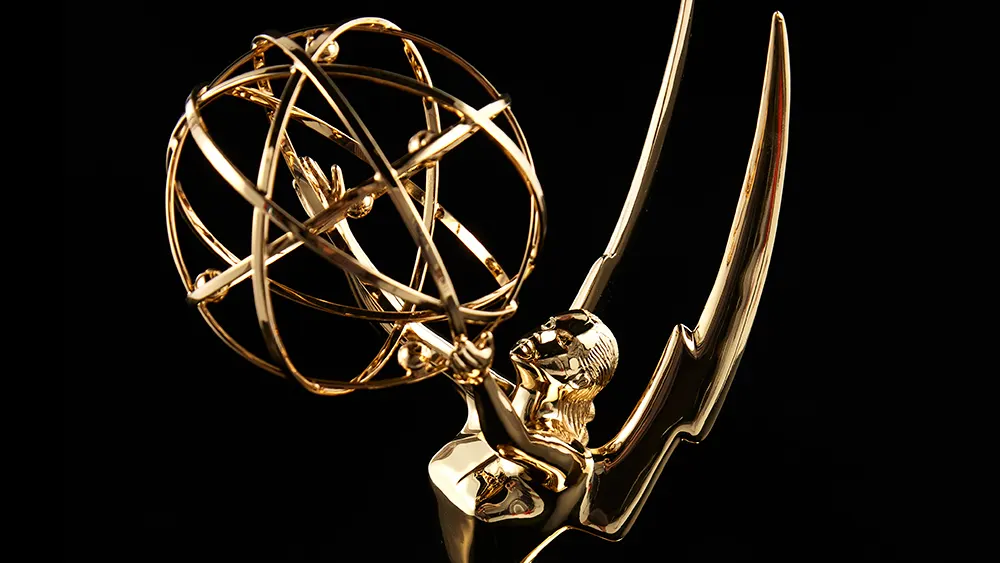
Los Angeles' Television Academy and New York's National Academy of Television Arts & Sciences (NATAS) have begun exploratory talks about reuniting, 50 years after they split into rival organisations. The two bodies announced on Monday that their boards had voted overwhelmingly to explore what a unified academy could achieve, citing potential benefits such as a clearer shared vision, stronger industry leadership, and improved support for members across the country. No deadline has been set for the discussions to conclude.
The academies divided in 1977 after tensions between the Hollywood-based chapter and the New York leadership boiled over, leading to a lawsuit and settlement that handed the Primetime Emmys to the newly formed Los Angeles-based ATAS (later renamed the Television Academy), while NATAS retained the daytime, news, sports and public service Emmys along with oversight of regional chapters. Decades of legal disputes followed, including a 2008 clash over NATAS's attempt to launch its own Broadband Emmys, before relations gradually thawed in the late 2010s under newer leadership. The Television Academy's board has now extended all sitting governors' terms by a year to allow continuity during the merger discussions.
In short
- LA and New York TV academies exploring reunification after 50-year split
- Split in 1977 divided Emmy Awards oversight between the two bodies
- No deadline set; governors' terms extended to allow for talks
Steelman: both sides, in good faith
The strongest fair case each way — we don't pick a winner.
The case for
The case for reunification centres on achieving stronger collective representation and resources for the entire television industry. A unified academy could eliminate decades of fragmentation, enabling consolidated leadership, enhanced member services, and a single authoritative voice on industry matters affecting all regions and formats. The philosophical divisions that sparked the 1977 split have substantially eased, and modern circumstances favour the efficiency and advocacy power that genuine unity would provide.
The case against
The case for maintaining separate structures reflects legitimate differences in how primetime, daytime, news, and sports television operate—each with distinct professional communities and business models best served by specialized representation. Geographic autonomy has allowed each academy to remain responsive to its region's particular industry needs rather than subordinated to centralised decision-making. The academies already cooperate effectively on key matters, demonstrating that their separate governance preserves regional voice and focused expertise that reunification might compromise.
Explained simply
The Television Academy and the National Academy of Television Arts & Sciences (NATAS) are the two organisations responsible for American television's most prestigious awards, the Emmys. The Los Angeles-based Television Academy awards the Primetime Emmys, while NATAS, based in New York, awards the daytime, news, sports and public service Emmys. Together they recognise excellence across the entire television industry.
The two organisations separated in 1977 following tensions between the Hollywood-based chapter and New York leadership. A legal settlement formalised the split, dividing the Emmys between them. Over the following decades, numerous legal disputes arose as each organisation attempted to expand beyond its original purpose.
The two academies have recently begun exploring the possibility of reuniting into a single organisation. This reflects improved relations in recent years and the belief that a unified body could provide clearer industry leadership and better support to members across the country. Such a merger would end one of American television's longest institutional divisions.
Art Business Celebrity Companies Culture Entertainment TV