AI reshapes radiologists’ work without replacing them
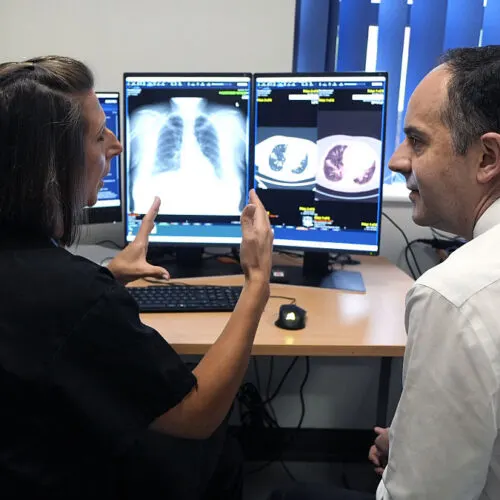
AI has become deeply embedded in radiology, but rather than replacing doctors as once predicted, it is reshaping how they work. In 2016, AI pioneer Geoffrey Hinton forecast that radiologists would be replaced by computers within five years; instead, the profession is growing, with practitioner numbers expected to rise by at least 26% over the next three decades. Radiology remains medicine's leading field for AI adoption, making it a bellwether for how AI-assisted decision-making might spread across healthcare and beyond.
AI tools now draft reports, flag urgent scans and can detect abnormalities invisible to the human eye, with one analysis of 43 trials finding AI-assisted colonoscopies detect more polyps than conventional ones. This matters because human error in reading diagnostic images runs at 3–5%, contributing to roughly 40 million mistakes worldwide each year. The challenge now is combining AI's precision with human judgement: unlike rule-based alerts doctors have long been able to override, many AI systems are "black box" neural networks that don't explain their reasoning, forcing radiologists to learn when to trust or overrule decisions they cannot fully interrogate.
- AI hasn't replaced radiologists; the profession is actually growing.
- Radiology leads medicine in AI adoption, with AI often matching or beating humans.
- "Black box" AI systems make it harder for doctors to judge when to override them.
New here? Start with this
Radiology is the branch of medicine that uses scans and other images to help diagnose illness. Radiologists are doctors who interpret those images and guide decisions about care. Their work has long involved computer tools, making the specialty an early adopter of artificial intelligence.
AI can help draft reports, highlight scans that may need urgent attention and identify signs of disease. These tools may help address mistakes in image reading, but they do not make clinical decisions in isolation: doctors still need to assess what a result means for each patient.
Some AI systems do not show how they reached a conclusion, which can make their results hard to assess. Radiology is therefore a useful example of a wider question for healthcare: how clinicians can combine computer analysis with their own judgement.
Both sides, in good faith
The strongest fair case each way — we don't pick a winner.
The case for
The radiology profession's expansion—not contraction—despite AI adoption provides concrete evidence that augmentation rather than replacement is underway. AI systems demonstrably detect abnormalities invisible to human eyes and address diagnostic error rates of 3-5% that cause millions of annual mistakes worldwide. Whilst improving explainability remains a worthwhile technical goal, the measurable patient benefits and professional growth justify continued measured adoption.
The case against
The deployment of unexplainable AI systems raises fundamental ethical concerns transcending technical performance. Radiologists must now base critical medical decisions on opaque algorithmic recommendations they cannot interrogate or fully understand, compromising the informed clinical judgment that underpins medical accountability. Explainability must be a prerequisite—not a technical afterthought—before healthcare AI systems expand further, as trust cannot substitute for genuine understanding of the reasoning behind consequential recommendations.
AI Business Economy Technology
Read the full article at the source →
Originally published by Ars Technica as “AI won’t replace radiologists, but it will dramatically change their jobs”.