Researchers entangle a glass bead with light using optical tweezers
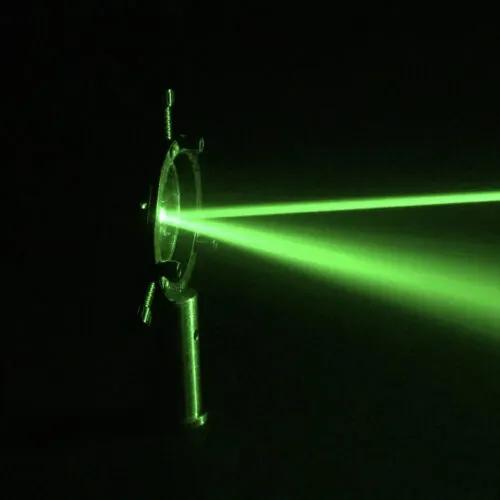
Researchers have successfully entangled a glass bead with a light beam, an unusual achievement in quantum physics. This is significant because larger objects typically lose quantum properties through environmental interaction, yet the team managed to maintain the entanglement—a breakthrough that challenges expectations about the limits of quantum behaviour in macroscopic objects.
The researchers used optical tweezers, consisting of carefully focused laser light, to suspend and cool the glass bead whilst maintaining its quantum entanglement with light. Quantum entanglement describes a fundamental correlation between two objects whereby measuring one instantly affects the other; this property normally survives only in microscopic particles, so achieving it with a bead represents important progress towards quantum effects at larger scales.
- Researchers entangled a glass bead with light using optical tweezers
- Large objects normally lose quantum properties, making this breakthrough unusual
- Suggests quantum effects may work at larger scales than previously thought
New here? Start with this
Quantum entanglement occurs when two objects become mysteriously linked, so that observing one instantly influences the other. This is one of the strangest predictions of quantum physics, though it has only ever been reliably created with microscopic particles, not with objects large enough to see.
Larger objects tend to lose their quantum properties when exposed to the outside world, which is why scientists have long struggled to create entanglement at bigger scales. A recent achievement—linking a glass bead with a light beam in quantum entanglement—therefore represents a significant step forward.
The researchers used optical tweezers, which are precisely focused laser beams that can trap and manipulate tiny objects, to hold and cool the glass bead whilst maintaining its quantum connection with light. This work suggests that quantum effects may persist in larger objects than previously thought, potentially opening new possibilities for quantum technologies.
Read the full article at the source →
Originally published by Ars Technica as “An experimental tour-de-force: Entanglement between glass bead and light”.