Andrew Garfield Hopes ‘The Uprising’ Makes Billionaires “Scared Sh*tless”: “They’re The Most Soul Sick”
Developed over time first seen 2 months ago
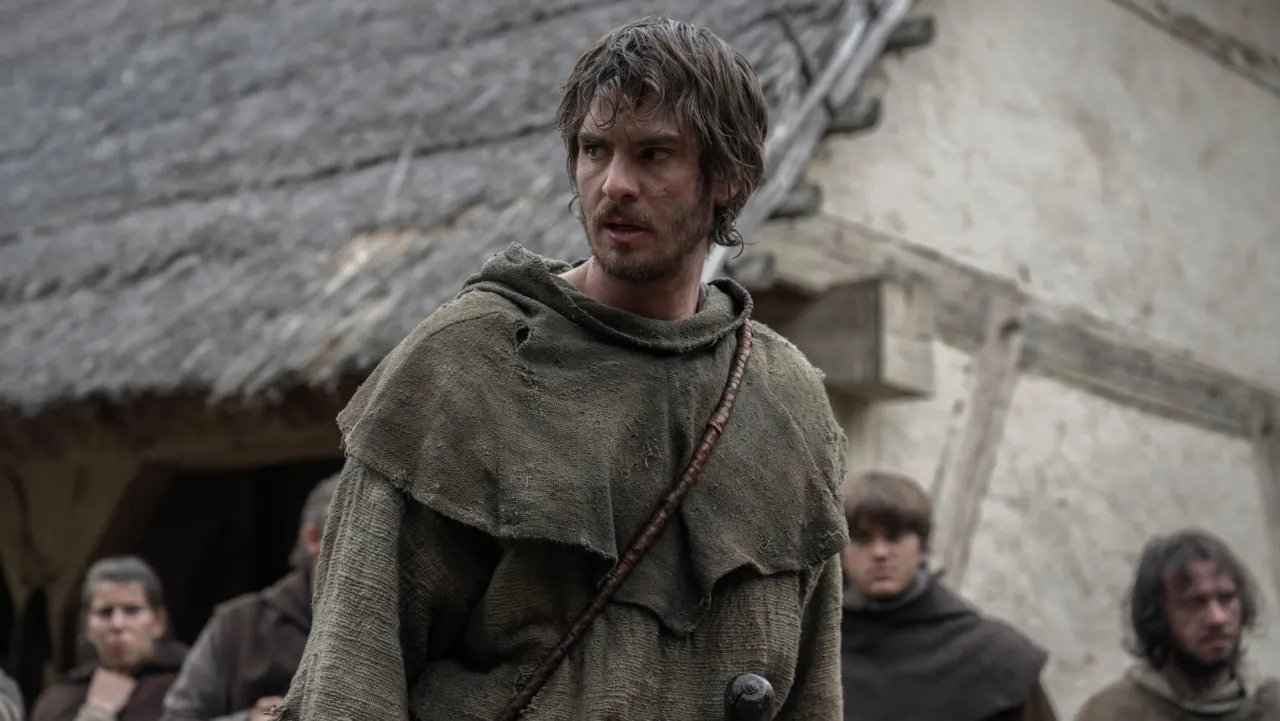
Andrew Garfield says he wants his new film "The Uprising" to leave billionaires "scared shitless", casting his retelling of the Robin Hood legend as a pointed warning to today's wealthy elite. Directed by Paul Greengrass and released in the US on 10 September, the film stars Garfield as Ploughman, a farmer-turned-rebel leader in 1831 England, drawing explicit parallels between historical uprisings against injustice and modern-day struggles under concentrated wealth.
Speaking at a screening Q&A, Garfield said he hoped the film would be "galvanizing" and prompt audiences to see their own struggles reflected in the characters' fight against oppression, in which Ploughman leads a rebellion against King Richard II (played by Woody Norman) over a punishing tax imposed in the wake of a devastating plague. He also seized on a line from the film, "there will be no peace until we are healed", with Greengrass calling it as true today as 600 years ago, and Garfield arguing billionaires might be "the most soul sick" and most in need of that healing.
- Sources
- 3
- Outlets
- 3
- Left · Centre · Right
- 0 · 0 · 0
In short
- Garfield wants "The Uprising" to unsettle billionaires with its message
- Greengrass film reimagines Robin Hood legend, out 10 September in the US
- Garfield plays a 1831 farmer leading a tax rebellion against the king
How this story developed
- 1 month ago Andrew Garfield says he wants his new film "The Uprising" to leave billionaires "scared shitless", casting his retelling of the Robin Hood legend as a pointed warning to today's wealthy elite.
- 1 month ago Andrew Garfield says he wants his new film "The Uprising" to leave billionaires "scared shitless", casting his retelling of the Robin Hood legend as a pointed warning to today's wealthy elite.
- 2 months ago Andrew Garfield says he hopes his new film "The Uprising" leaves billionaires "scared shitless", framing the retelling of the Robin Hood legend as a pointed warning to today's wealthy elite.
- 2 months ago Andrew Garfield says he hopes his new film "The Uprising" leaves billionaires "scared shitless", framing the retelling of the Robin Hood legend as a warning to today's wealthy elite.
- The Hollywood Reporter Why Andrew Garfield Says Billionaires Should Be “Scared Sh**less” by ‘The Uprising’
- IGN Andrew Garfield Says He Hopes Billionaires Are 'Scared S**tless' by His New Movie, The Uprising
- Deadline Andrew Garfield Hopes ‘The Uprising’ Makes Billionaires “Scared Sh*tless”: “They’re The Most Soul Sick”
Full account
Andrew Garfield has said he hopes his new film The Uprising leaves the world's billionaires unsettled, casting the medieval rebellion drama as a pointed message to today's ultra-wealthy. Directed by Paul Greengrass, the film reimagines the historical unrest that gave rise to the legend of Robin Hood, with Garfield playing a farmer known as Ploughman who raises an army against the Crown's punishing taxation in the aftermath of plague. Speaking at a Q&A alongside Greengrass, Garfield made clear he wants the film's audience to extend well beyond typical cinema-goers.
Asked what he hoped viewers would take from the film, Garfield said he first simply wanted people to watch it, but went further in describing his ambitions for its impact. He said he hoped the story would prove "galvanising", allowing audiences to see their own present-day hardships mirrored in the struggles of characters from centuries past, and that the film might even point toward some kind of collective response. Pushed on who exactly he had in mind, Garfield did not hold back, saying he hoped that any billionaires who saw the film would come away "scared shitless".
The conversation turned to a line from the film – that there can be no peace until people are healed – which Greengrass suggested was as relevant to modern society as it was some six centuries ago. Garfield built on the point by extending that need for healing to the very wealthy themselves, describing billionaires as potentially the most "soul sick" among us and suggesting they may be in the greatest need of the kind of reckoning the film depicts.
Garfield has made similar arguments in other recent interviews, drawing direct parallels between the brutal taxation, government incompetence and dehumanising treatment of the poor depicted in the film and conditions he sees persisting today in Britain, the United States and elsewhere. He has also described the film as something of a Rorschach test, acknowledging that viewers across the political spectrum might claim it reflects their own grievances, while distancing its themes from those invoked by right-wing nationalist figures such as Tommy Robinson. The two accounts of Garfield's comments differ slightly in focus: one centres on the reactions from a screening tied to the film's US release date, while the other draws in additional remarks Garfield made separately about the film's contemporary resonance and its potential to be read differently by audiences of varying political views. One report's description of the film's setting also appears inconsistent with the other's, underscoring that some surrounding factual details vary between sources even as Garfield's quotes are consistent across both.
Where outlets differ
From the full account, which is AI-written from the sources:
Source 1 (Deadline) centres on a single recent screening Q&A and notes the film's US premiere date of 10 September, while Source 2 (The Hollywood Reporter) draws additional context from a separate Esquire interview about modern parallels.
Only THR includes Garfield's remarks describing the film as a 'Rorschach test' and his comments distancing the film's themes from right-wing figures like Tommy Robinson.
Deadline includes a section of reader/audience comments debating whether films can genuinely influence real-world attitudes or politics; THR does not.
The two sources give inconsistent details about the film's historical setting/period, suggesting at least one contains an error not reconcilable from the excerpts alone.
Steelman: both sides, in good faith
The strongest fair case each way — we don't pick a winner.
The case for
Contemporary wealth inequality has reached unjust and unsustainable levels, with essential resources concentrated whilst billions lack access to adequate healthcare, housing, and education. Historical parallels to peasant uprisings illuminate genuine structural injustice, and art serves a vital function in awakening public consciousness to systemic inequities and the need for change. Whilst revolutionary rhetoric may make billionaires uncomfortable, that discomfort is secondary to addressing the material deprivation and powerlessness experienced by ordinary people.
The case against
Modern capitalism, for all its flaws, has generated unprecedented prosperity and opportunity compared to historical alternatives, dramatically improving living standards for billions. Wealth inequality, whilst worthy of policy attention, arises through voluntary market transactions rather than oppression, and genuine solutions lie in expanding opportunity, education, and competition rather than embracing revolutionary framings. Theatrical rhetoric invoking uprisings risks normalising instability and substitutes emotional appeals for substantive engagement with the difficult economic trade-offs any system must navigate.
Explained simply
Andrew Garfield is best known for roles in films such as "The Amazing Spider-Man" and "The Social Network", but has increasingly taken on politically charged projects. His new film, "The Uprising", is directed by Paul Greengrass, a filmmaker known for tackling real-world events, and reimagines the Robin Hood story with a rural rebellion set in 1831 England, when a harsh tax was imposed on ordinary people following a devastating plague.
The film stars Garfield as Ploughman, a farmer who becomes a rebel leader, and Woody Norman as King Richard II, the ruler he rises up against. Rather than being presented purely as a historical costume drama, the film is being publicly framed by its lead actor as a commentary on present-day inequality, with Garfield explicitly drawing a line between the injustices depicted on screen and the position of today's billionaires and wealthy elite.
The story matters because it touches on a wider, ongoing debate about wealth inequality and the role that celebrities and popular culture play in political discourse. It also raises questions about whether entertainment can genuinely influence public attitudes or behaviour, a point already contested by viewers responding to Garfield's comments.
Coverage · 3 sources
- DeadlineAndrew Garfield Hopes ‘The Uprising’ Makes Billionaires “Scared Sh*tless”: “They’re The Most Soul Sick”
- The Hollywood ReporterWhy Andrew Garfield Says Billionaires Should Be “Scared Sh**less” by ‘The Uprising’
- IGNAndrew Garfield Says He Hopes Billionaires Are 'Scared S**tless' by His New Movie, The Uprising