Burnham removes Treasury control of economic growth in regional overhaul
Developed over time first seen 2 months ago
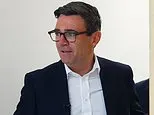
Andy Burnham, the Mayor of Greater Manchester, has stripped the Treasury of responsibility for driving economic growth as part of a shake-up intended to prove that "No10 North" — the initiative giving northern England a greater say in Whitehall decision-making — amounts to more than a symbolic gesture. Burnham has long campaigned for greater devolution and investment for the north of England, and the move is designed to counter accusations that Westminster's regional rebalancing efforts are little more than a "gimmick".
Precise details of how the new arrangement will function in practice remain limited, but the change forms part of Burnham's wider effort to assert greater control over economic policy-making at what has been a difficult period for him politically. The intervention coincides with separate scrutiny over £345,000 in donations he has accepted, as well as broader economic headlines including inflation rising to 2.9%.
- Burnham strips Treasury of economic growth powers under "No10 North"
- Move aims to show regional devolution push isn't just symbolic
- Comes amid scrutiny of £345,000 in donations to Burnham
New here? Start with this
Andy Burnham is the elected mayor of Greater Manchester and one of the most prominent regional leaders in England. He has campaigned for years for more power and investment to be shifted away from London and the Treasury towards the north of England, arguing that decisions about the region's economy should not rest solely with central government.
The change described here relates to "No10 North", a scheme meant to give northern England more say in how the government makes economic decisions. Critics have questioned whether such initiatives amount to real devolution of power or are largely symbolic, and Burnham's move to take growth responsibilities away from the Treasury is being presented as evidence that the shift is substantive.
This matters because it touches on a long-running debate about how power and money are distributed between London and the rest of England, often referred to as "levelling up" or devolution. It also comes at a sensitive time for Burnham, who is facing questions over political donations he has received, while the wider economic backdrop includes rising inflation and energy costs affecting households across the country.
Both sides, in good faith
The strongest fair case each way — we don't pick a winner.
The case for
Supporters of the move argue that genuine devolution requires real transfer of economic levers, not just consultation rights, and that keeping growth policy under Treasury control has historically left northern regions under-resourced and dependent on Whitehall's priorities. They see this as evidence that No10 North is a substantive reform rather than a public-relations exercise, giving elected regional leaders who understand local economies direct accountability for delivering growth. For long-standing devolution advocates, this is a necessary corrective to decades of over-centralised decision-making in London.
The case against
Critics would argue that fragmenting control over economic growth away from the Treasury risks incoherent national fiscal management, since the Treasury exists precisely to coordinate spending, borrowing and growth strategy across the whole country. They may see the timing, amid donation scrutiny and rising inflation, as raising questions about whether this is a considered structural reform or a political move to shore up Burnham's standing. There is also a reasonable concern that unclear implementation details could create confusion over accountability if regional and national growth targets diverge.
More coverage
Art Culture Government Politics World
Read the full article at the source →
Originally published by Daily Mail as “Andy Burnham strips responsibility for economic growth from the Treasury as he attempts to show No10 North isn’t a ‘gimmick’”.