Technology news and discussion on TalkFuse.
Anthropic researcher says Claude advanced an unverified Riemann hypothesis proof
Developing story first seen 2 hours ago
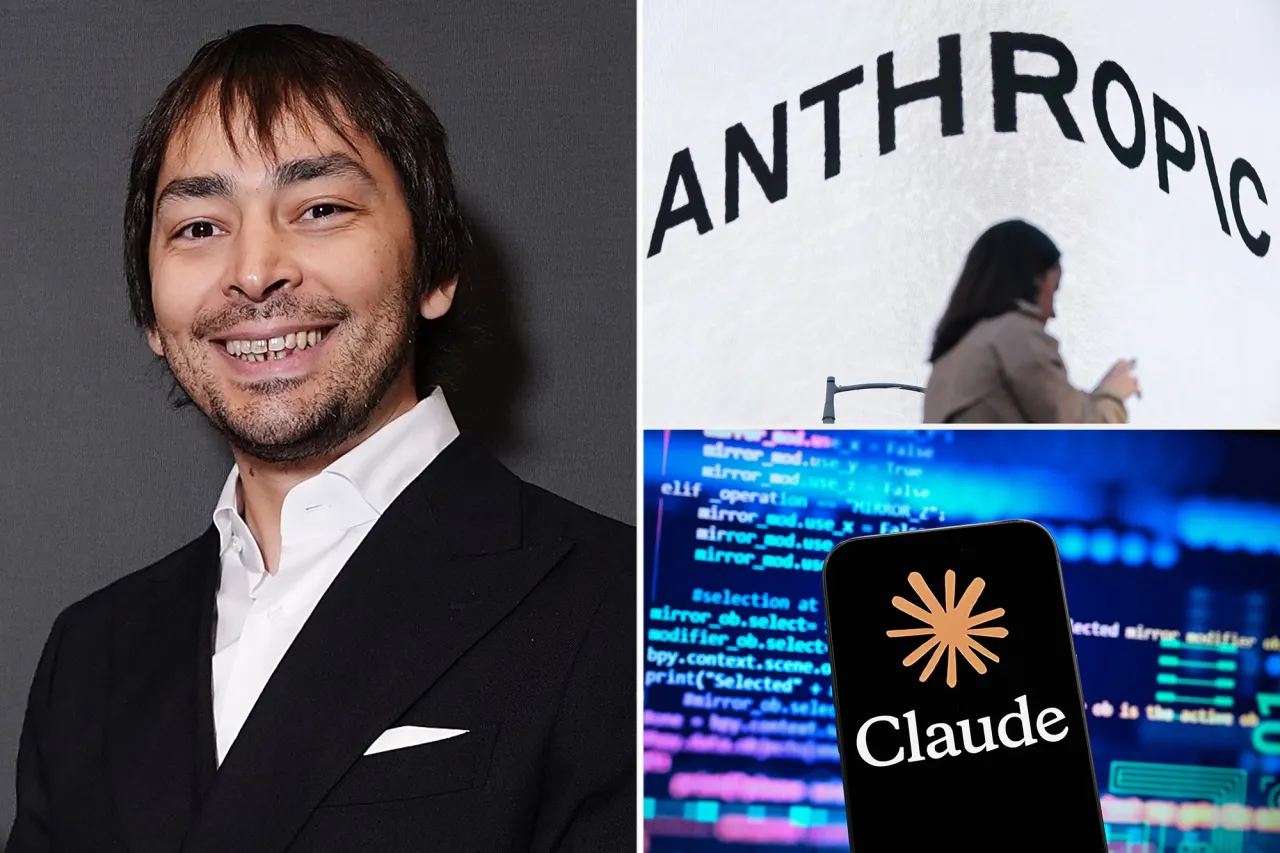
Newly added details describe how Anthropic researcher Levent Alpöge says Claude made key breakthroughs in a claimed proof of the Generalized Riemann Hypothesis, a broader form of the famous Riemann Hypothesis. The claim remains unverified, but if established, it would address a problem about prime numbers that has challenged mathematicians for more than 150 years and could qualify for a $1 million prize.
Alpöge says the argument was checked using Lean, software that verifies mathematical proofs, and that a conventional written explanation grew beyond 250,000 pages. He acknowledged he has not yet mastered all the mathematics and said Claude outpaced him near the finish. The claim comes amid competition with OpenAI, which announced in September that its AI had solved another Millennium Prize problem, the Navier-Stokes challenge; that announcement prompted a dispute over whether prior research was used.
- Sources
- 2
- Outlets
- 2
- Left · Centre · Right
- 0 · 0 · 2
In short
- Anthropic researcher says Claude helped prove a broader Riemann hypothesis.
- The claim is unverified and the argument was checked using Lean.
- A confirmed solution could qualify for a $1 million prize.
How this story developed
- 1 hour ago Alpöge said he had released the Lean proof because a conventional written explanation ran to more than 250,000 pages, while acknowledging he had not mastered all the mathematics and that Claude had outpaced his understanding.
- 1 hour ago Anthropic researcher Levent Alpöge said Claude had made key breakthroughs towards a proof of the Generalized Riemann Hypothesis, which he said was checked with Lean, although the claim remained unverified and could be eligible for a $1 million prize if confirmed.
Full account
Anthropic researcher Levent Alpöge says he and the company’s Claude chatbot have produced a proof of the Riemann hypothesis, a famous unsolved problem about the distribution of prime numbers. The claim has not been independently verified, so the problem remains unconfirmed as solved. The hypothesis dates to 1859 and is one of seven Millennium Prize Problems, each carrying a $1 million award for a valid solution.
Alpöge said he had wanted to tackle the problem since his student days. In his account, he and Claude combined mathematical approaches, and the chatbot made key advances that went beyond what he could follow. He describes work involving number theory, automorphic forms and theta lifts. He says the effort also addresses the Generalized Riemann Hypothesis, a broader version of the conjecture.
The proof has been released in Lean, software used to check mathematical arguments for logical errors. Alpöge says a conventional written account would have run to more than 250,000 pages, and acknowledges that he has not yet mastered all the mathematics in the work. Formal checking in Lean may help establish that the argument is internally valid, but the claim still requires scrutiny by other mathematicians.
The announcement came close to Anthropic’s stock market debut, as the company competes with OpenAI to demonstrate AI’s ability to tackle difficult mathematical problems. Alpöge says he discussed the timing with chief executive Dario Amodei and rejects the suggestion that he chose the moment for publicity. He also credits mathematical work by people associated with OpenAI. The reports place the claim in a high-profile corporate context, but neither provides independent confirmation of the proof.
Where outlets differ
From the full account, which is AI-written from the sources:
Source 1 gives more detail about the claimed scope, saying both the Riemann hypothesis and its generalised form were formally verified using Lean, and outlines the mathematical techniques and sequence of breakthroughs.
Source 2 foregrounds the timing around Anthropic’s public listing, including the company’s reported $81 billion IPO and Alpöge’s discussion with Amodei. It also includes his thanks to OpenAI-affiliated mathematicians.
The accounts describe the reported 250,000-page length somewhat differently: Source 1 says a conventional written explanation grew beyond that scale, while Source 2 characterises the AI-generated answer as that long. Both say Alpöge released the work in Lean and that outside verification remains necessary.
Steelman: both sides, in good faith
The strongest fair case each way — we don't pick a winner.
The case for
If independently verified, a formal proof of the Generalized Riemann Hypothesis would be a major mathematical advance, and Lean verification could help experts check a long, complex argument. AI may also be useful as a research partner when it produces ideas that human mathematicians can scrutinise and build upon.
The case against
The claim remains unconfirmed, and a Lean-checked proof still needs expert scrutiny to establish that its formalisation correctly captures the intended mathematics and that no errors or gaps remain. Treating the announcement as a breakthrough before that review could overstate what the AI has achieved, particularly amid competing claims about AI’s role in solving major problems.
Explained simply
The Riemann hypothesis is a famous unsolved question about how prime numbers are distributed. The Generalized Riemann Hypothesis extends it to a wider family of mathematical functions, and has remained open for more than 150 years.
Levent Alpöge is an Anthropic researcher, and Claude is the company’s AI assistant. Lean is software that can check whether the steps in a mathematical proof follow formal rules; a checked proof still needs to be examined and understood by mathematicians.
The Clay Mathematics Institute offers a $1 million Millennium Prize for a correct solution to the problem. Claims that AI systems have solved major mathematical problems have drawn attention, but they require independent scrutiny before the results are established.
Coverage · 2 sources
Bias meters
From 2 rated sources.
Read the full article at the source →
Originally published by New York Post as “Anthropic researcher claims Claude cracked legendary $1M math problem — and left him struggling to keep up”.