Bringing the war to Putin’s front door: Is Ukraine’s energy strike strategy working?
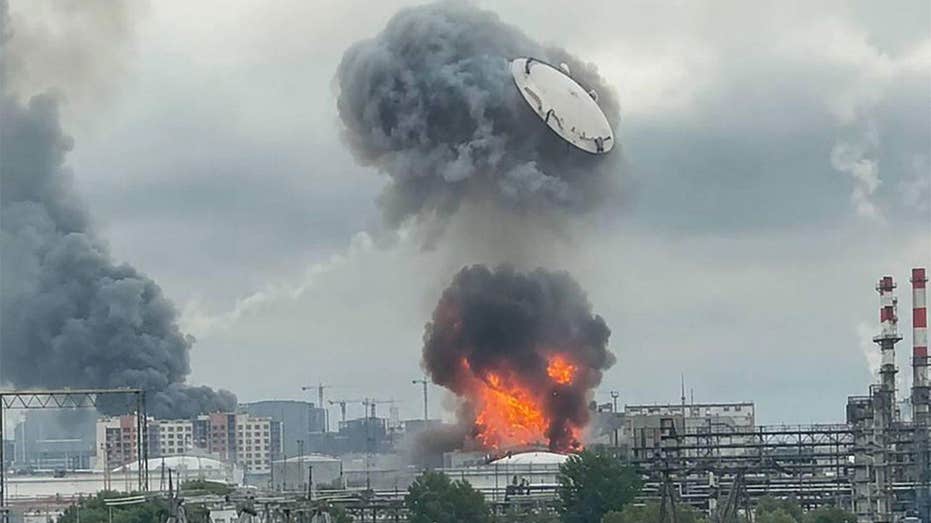
Ukraine's escalating drone and missile campaign against Russia's oil and gas industry is increasingly being felt inside Russia itself, according to a Fox News report drawing on Russian opposition figure Maxim Katz. The strikes have reportedly forced Moscow to restrict diesel exports, seek fuel imports and grapple with shortages spanning occupied Crimea and cities deep within Russian territory, raising the question of whether the strategy is meaningfully exposing President Putin's vulnerabilities.
Katz told Fox News Digital that the resulting fuel shortages are revealing weaknesses in Russia's position, even though Moscow remains able to keep supplying its own military. The report frames the campaign as an "industrial scale" offensive hitting Russian oil tankers and refineries, coinciding with a Russian ban on diesel exports, alongside related Ukrainian drone attacks on Russian-linked shipping in the Sea of Azov. The full extent of the domestic consequences is presented as growing, though the article text is truncated before providing further specifics.
In short
- Ukraine's strikes on Russian oil are causing shortages inside Russia.
- Moscow has restricted diesel exports and is seeking fuel imports.
- Putin can still supply his military despite the disruption.
Steelman: both sides, in good faith
The strongest fair case each way — we don't pick a winner.
The case for
Supporters argue that Ukraine's escalating strikes against Russia's oil and gas infrastructure represent a strategically sound and proportionate response to Russia's systematic destruction of Ukrainian civilian infrastructure. By targeting the economic foundation sustaining Moscow's war effort, Ukraine progressively constrains military logistics, exposes vulnerabilities in Russia's ability to maintain distant occupation zones, and imposes cumulative costs—all whilst avoiding direct combat and aligning with international law principles governing military-industrial targets.
The case against
Critics contend that whilst the strikes may cause economic disruption, their translation into meaningful military advantage remains unclear, and the strategy risks dangerous escalation without proportionate returns. Given Russia's substantial energy reserves, capacity to prioritise military fuel supplies, and demonstrated willingness to intensify civilian attacks in response, sceptics argue that Ukraine's resources would achieve greater protective benefit directed towards defensive capabilities, where the impact on civilian suffering would be more immediately controllable.
Explained simply
Ukraine has launched a campaign of drone and missile strikes targeting Russia's oil and gas infrastructure, including refineries and fuel facilities. These attacks form part of the broader conflict between Ukraine and Russia, aimed at disrupting Russia's energy supplies and production capacity.
According to reports, the strikes have caused fuel shortages within Russian territory, affecting both occupied Crimea and cities deep within Russia. Russia has also restricted its diesel exports and sought fuel imports from elsewhere, indicating increased pressure on its energy supplies.
The campaign represents one approach Ukraine is using to undermine Russia's capacity to sustain military operations. Assessments of whether energy infrastructure strikes can meaningfully affect Russia's military capabilities and the conflict's trajectory are ongoing.