Brit boffins boast of beating barriers to building fusion power
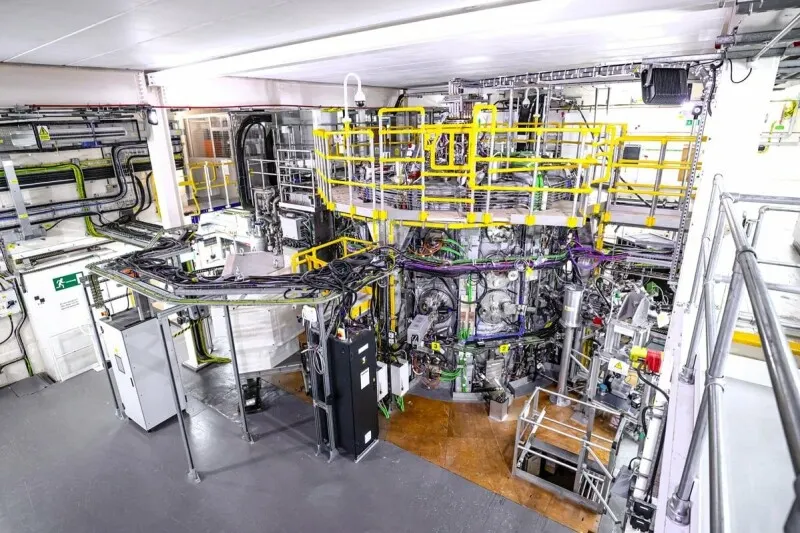
Scientists at the UK Atomic Energy Authority say experiments at the MAST Upgrade fusion facility in Oxfordshire have reduced key plasma instabilities that could otherwise hinder commercial fusion power. The work matters because sudden edge bursts can damage a reactor’s internal components and undermine the stable, long-duration operation needed for a power plant.
During experiments in 2025 and 2026, the team produced more than 1,100 fusion plasmas and reported MAST Upgrade’s highest stable plasma pressure. They tested several approaches, including magnetic perturbations and operating modes designed to release excess pressure gradually, as well as improved methods for monitoring plasma position. Further upgrades this year will double heating capacity and add 1.6 MW from an Electron Bernstein Wave system, ahead of another experiment series planned for 2028.
In short
- UK scientists report progress controlling damaging fusion plasma instabilities.
- MAST Upgrade produced over 1,100 plasmas during 2025–26 experiments.
- More heating upgrades are planned before 2028 tests.
Explained simply
Fusion joins light atomic nuclei to release energy, and the Sun is powered by this process. Researchers are studying whether it can be used to generate electricity on Earth, but doing so requires extremely hot gas, called plasma, to be held steady inside a reactor.
The UK Atomic Energy Authority runs MAST Upgrade, an experimental fusion facility in Oxfordshire. Its researchers study how plasma behaves, including sudden bursts at its edge that could damage reactor components and make sustained operation harder.
Fusion research involves scientists and engineers in the UK and around the world, with facilities testing different ways to control plasma. Reliable control matters because a future power plant would need to operate steadily while producing useful energy; experiments such as those at MAST Upgrade are part of assessing that challenge.