Burnham warned against ‘stupid’ capital gains tax decision
Developed over time first seen 2 months ago
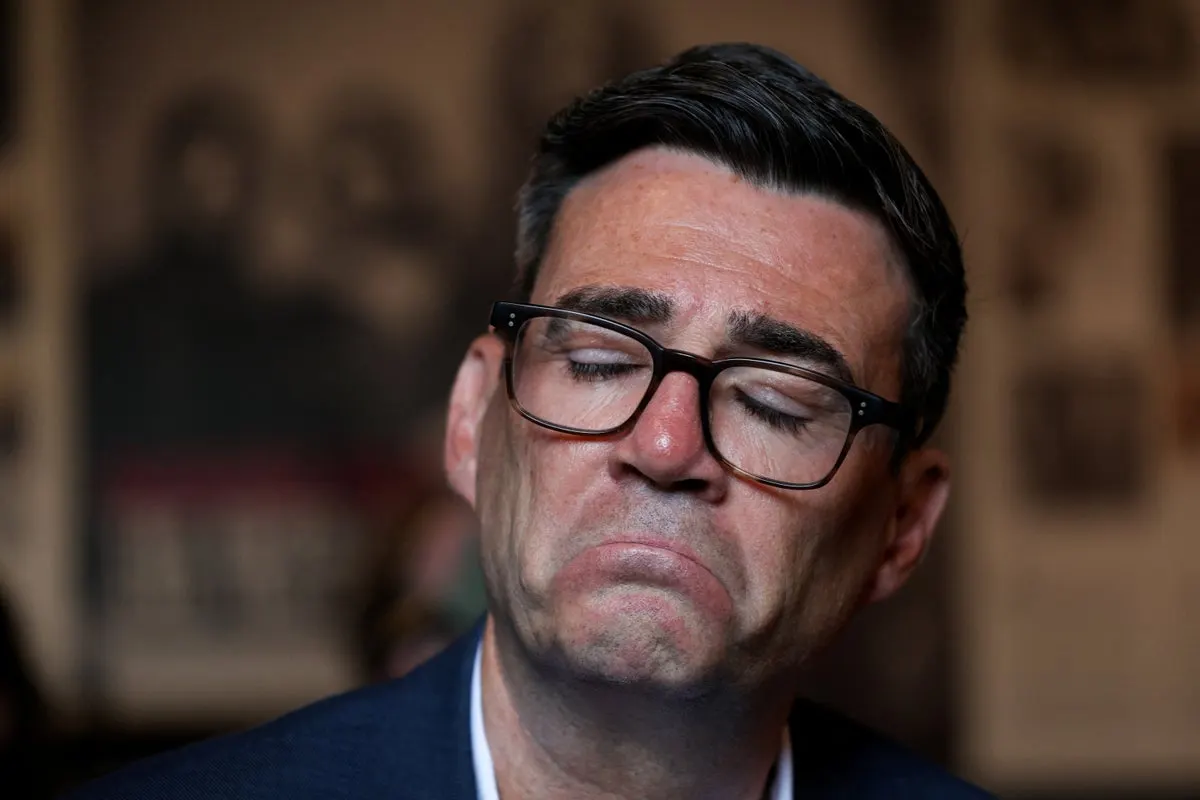
Former Conservative Treasury minister Lord O’Neill has urged Prime Minister Andy Burnham not to raise capital gains tax in the 28 October Budget, calling such a move “stupid”. He argued that higher rates could discourage business owners from selling companies or encourage them to move money overseas, potentially reducing rather than increasing tax receipts at a time of weak economic growth.
Lord O’Neill said businesses were already dealing with the effects of Brexit, national insurance changes and labour-market reforms, alongside possible inheritance-tax changes. While praising Burnham’s positive tone and economic vision, he said the Government should concentrate growth policies on London, the West Midlands and the Northern Powerhouse, arguing that London alone is economically larger than the next eight major urban areas combined.
- Lord O’Neill warns against a capital gains tax rise.
- He says higher rates could reduce Treasury revenue.
- He urges a sharper focus on high-growth regions.
New here? Start with this
Capital gains tax is paid on the profit people make when they sell certain assets, such as shares, second homes or businesses. It is separate from tax on wages or company profits, and the rate can affect decisions about when to sell an asset or invest money.
Andy Burnham is the Prime Minister, while Lord O’Neill previously served as a Treasury minister under a Conservative government. The Treasury is responsible for tax and spending policy, and the annual Budget is where governments set out planned changes to both.
The debate reflects a wider question over how to raise money for public services while encouraging investment and economic growth. Supporters of higher taxes may see them as a way to increase revenue, while critics argue that large increases can change behaviour and leave the government collecting less than expected.
Both sides, in good faith
The strongest fair case each way — we don't pick a winner.
The case for
Supporters of a capital gains tax rise argue that gains from wealth should be taxed more fairly alongside earnings from work, particularly when public services face sustained funding pressures. They contend that a carefully designed increase, with sensible reliefs for genuine entrepreneurs and long-term investment, could raise revenue while reducing incentives to reclassify income as capital gains. They may also argue that broader regional investment is essential to durable national prosperity, rather than concentrating policy chiefly on already stronger city-regions.
The case against
Opponents argue that raising capital gains tax in a weak-growth environment could deter founders and investors from selling, reinvesting or building businesses in the UK. They warn that the tax base is mobile and behavioural responses, including delayed disposals or investment moving overseas, may mean a higher headline rate produces less revenue than expected. From this perspective, ministers should prioritise predictable tax policy and growth measures, with particular focus on economically productive regions able to generate wider gains for the country.
Full account
Lord Jim O’Neill of Gatley, a former Conservative Treasury minister and crossbench peer, has urged Andy Burnham not to raise capital gains tax in the Budget scheduled for 28 October. Speaking to The Times, according to both reports, he argued that an increase would be a mistake at a time of weak growth and continuing pressures on businesses from Brexit, changes to national insurance and labour-market policy.
Lord O’Neill said higher taxes on gains, alongside possible inheritance-tax changes, could discourage owners from selling businesses or prompt them to move capital overseas. In his view, that response could reduce rather than increase receipts for the Treasury. Drawing on his experience as a venture-capital investor, he stressed that investment and entrepreneurship involve substantial risk and said capital gains have traditionally been taxed differently from income partly for that reason.
He also framed the issue as a test of the government’s stated focus on growth. Lord O’Neill said a decision to raise such taxes would suggest ministers were avoiding more difficult reforms, particularly to welfare spending. He praised Burnham for fostering what he described as a more positive national mood, but said that approach would be at odds with measures that could unsettle business owners and investors.
The reports also describe Lord O’Neill as having declined, or recently turned down, a possible economic-adviser role. Source 1 gives greater attention to his wider prescription for concentrating growth policy on London, the West Midlands and the Northern Powerhouse, despite the political difficulty of moving away from a promise of growth in every postcode. Source 2 instead foregrounds fiscal pressures, welfare costs, defence commitments and the reported reduction in fiscal headroom, presenting the tax debate as part of the government’s wider Budget dilemma.
Where outlets differ
Source 1 focuses on Lord O’Neill’s comments about regional growth, especially the economic importance of London and northern cities, and says he had declined an adviser role.
Source 2 places more emphasis on welfare reform, pressure on the public finances and the political significance of Lord O’Neill’s reported refusal of a government post. It also refers more broadly to ‘wealth taxes’, rather than concentrating solely on capital gains tax.
Both accounts attribute the central remarks to an interview with The Times, but neither supplied extract provides a direct URL for the underlying interview.