Burnham’s First Parliamentary Appearance as Prime Minister Faces Scrutiny on Prisoner Releases and Public Services
Developed over time first seen 2 months ago
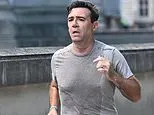
Andy Burnham used his first Commons statement as Prime Minister to call for greater public control over water, energy and transport, arguing these services have become unreliable and unaffordable under the current model and that public ownership could drive economic growth. The appearance, his first at the despatch box in 16 years, gave MPs their first opportunity to question him on policies announced during the summer recess, including an October VAT cut on energy bills and reduced business rates for pubs and clubs, ahead of a Prime Minister's Questions clash with new Conservative leader Kemi Badenoch. His justice secretary, Alex Norris, also used the day to confirm plans for an early-release scheme to ease prison overcrowding, after Burnham confirmed over the weekend that the killers of PC Andrew Harper would be excluded following public backlash.
Burnham faces a packed autumn agenda, including decisions on bringing Thames Water into public ownership, the future of the Rosebank and Jackdaw North Sea oil fields, a contentious immigration bill and a £4.7 billion shortfall in the defence budget inherited from Sir Keir Starmer. Chancellor John Healey has pledged to set a clear path towards the Nato target of 2.5% of GDP on defence by 2035, with a 3% target date to follow, after previously declining to confirm a 2030 deadline. Badenoch reshuffled her shadow cabinet beforehand, dropping senior figures including Sir Mel Stride and Dame Priti Patel, as Parliament returned from recess.
- Burnham's first Commons statement pushed public control of water, energy, transport
- Early prison release scheme confirmed, excluding PC Harper's killers
- Autumn agenda: Thames Water, North Sea fields, immigration bill, defence funding gap
New here? Start with this
Andy Burnham became Prime Minister after Sir Keir Starmer, and his statement to MPs marked his first big set-piece moment in the job, as well as his first Commons appearance in 16 years. In it, he set out an argument for bringing services such as water, energy and transport back under greater public control, saying the current system leaves them too unreliable and expensive.
Burnham inherits a full in-tray. Decisions loom on Thames Water's ownership, oil and gas drilling at the Rosebank and Jackdaw fields, a disputed immigration bill, and a defence budget with a £4.7 billion gap that Chancellor John Healey must address while committing to raise defence spending over the coming decade. He also faces early tests on cost-of-living measures announced over the summer, including a planned VAT cut on energy bills and business rate relief for pubs and clubs.
Adding to the pressure is a prisoner early-release scheme, put forward by Justice Secretary Alex Norris to relieve overcrowding in jails, which has drawn public criticism, including over whether it should apply to those convicted of killing PC Andrew Harper. Burnham's handling of these issues, alongside his first head-to-head Prime Minister's Questions against new Conservative leader Kemi Badenoch, will shape early perceptions of his leadership.
Both sides, in good faith
The strongest fair case each way — we don't pick a winner.
The case for
Advocates of bringing water, energy and transport back under public control argue that decades of privatisation have left essential services expensive, poorly maintained and driven by shareholder returns rather than public need, pointing to leaking water infrastructure, volatile energy bills and patchy rail services as evidence of market failure in what are effectively natural monopolies. They contend that public ownership would let profits be reinvested in infrastructure and lower bills rather than distributed to investors, and that a government able to coordinate strategic decisions on pricing and investment could deliver more reliable, affordable services while stimulating growth through lower costs for households and businesses. For supporters, this is fundamentally about accountability and fairness: services people cannot choose to opt out of should serve the public interest, not private profit.
The case against
Sceptics of renationalisation argue that taking utilities into public hands would impose vast upfront costs, through compensation to shareholders and increased borrowing, at a moment when the public finances are already strained by a £4.7 billion defence shortfall and competing spending pressures. They warn that state-run utilities have historically suffered from underinvestment, political interference and weaker efficiency incentives than regulated private operators, and that nationalisation could deter the private capital needed to modernise ageing infrastructure. For these critics, the better path lies in tighter regulation, stronger consumer protections and targeted intervention where markets fail, rather than wholesale ownership change, preserving the discipline and investment capacity that private capital can bring while addressing genuine grievances over cost and reliability.
Full account
Andy Burnham will make his first appearance at the Commons despatch box as prime minister on Tuesday afternoon, some six weeks after taking over from Sir Keir Starmer and marking his first turn at the box since he was a minister sixteen years ago. The timing means the transition largely coincided with the summer recess, giving him what has been described as a quiet introduction to the role while public attention was elsewhere. After chairing a Cabinet meeting in Downing Street, Mr Burnham is due to deliver a statement to MPs shortly after 3.30pm, with a first head-to-head at Prime Minister's Questions against Conservative leader Kemi Badenoch following on Wednesday.
Downing Street has indicated that the statement will set out Mr Burnham's broader vision rather than unveil major new policy, with the prime minister expected to argue that greater public control over services such as water, energy and transport could help drive economic growth. He is reported to believe that these essential services have not been managed in the public interest, leaving them neither reliable nor affordable and, in turn, holding back households and the wider economy. A No 10 source said Mr Burnham was 'optimistic about our country's future' and determined to use the moment to 'bring back hope', though achieving this ambition would likely carry a substantial cost to the public purse.
MPs are expected to use the session to press the prime minister on a run of measures announced while Parliament was in recess, including a cut to VAT on energy bills due to take effect in October and reduced business rates for pubs and clubs, with critics questioning how these will be paid for. Further scrutiny is anticipated over a reported £4.7 billion shortfall in the defence investment plan inherited from Sir Keir Starmer, at a time when the Chancellor, John Healey, has acknowledged that difficult choices lie ahead of next month's Budget. That backdrop has been sharpened by rising government borrowing costs, with the yield on ten-year gilts reported to have reached an 18-year high amid wider market unease linked to Middle East-driven inflation fears and concerns over an artificial intelligence-related downturn. Separately, anger has been building over the early release scheme for prisoners, adding to the pressures the prime minister faces as he meets MPs in person for the first time.
The political backdrop has shifted in other ways too: Mrs Badenoch used the Bank Holiday to overhaul her shadow cabinet, removing senior figures including Sir Mel Stride and Dame Priti Patel and installing Andrew Griffith as shadow chancellor, a figure who held a Treasury post during Liz Truss's mini-Budget and was publicly congratulated by her on his appointment. Mr Healey, meanwhile, has faced questions over defence spending commitments after President Donald Trump suggested he was reviewing the United States' stance on British sovereignty over the Falkland Islands, reportedly as leverage to push for higher UK defence spending; Mr Healey responded by reaffirming a commitment to a target of 3 per cent of GDP on defence, to be detailed at a future spending review, while stressing the importance of the US relationship. Beyond Tuesday's statement, Mr Burnham faces a wider set of decisions in the coming months, including the possible public ownership of Thames Water, the future of the Rosebank and Jackdaw North Sea oil and gas fields, a contested immigration bill, and calls for changes to electoral law — all against a backdrop of poll gains for Labour since Mr Burnham took office that some reports suggest may already be starting to fade.
Where outlets differ
The Daily Mail frames the day in more dramatic, personality-driven terms — emphasising Burnham's pre-statement run, talk of a 'torrid' session, fading poll gains, market turmoil (gilt yields, AI-crash fears, Middle East-driven inflation), and anger over prisoner early releases — details largely absent from the two Independent pieces.
One Independent report centres on the Trump/Falklands sovereignty remarks and Healey's defence-spending pledge, plus the Truss-linked background of new shadow chancellor Andrew Griffith, treating Burnham's Commons statement as context rather than the main story.
The other Independent report focuses squarely on the substance of Burnham's planned statement (the case for public ownership of water, energy and transport) and lists a broader forward agenda — Thames Water, North Sea licensing, immigration legislation, electoral law — that the other two sources do not mention.
Only the Mail explicitly raises the prisoner early-release controversy and describes the political optics (a 'soft launch', bounce in polls fading); the Independent pieces do not mention prisoner releases at all despite it appearing in the given headline.
Coverage
- Daily Mail — The honeymoon’s over, Andy! Burnham under fire on prisoner release and tax as he finally faces MPs today – six weeks after becoming PM
- The Independent — UK politics latest: Burnham to tell MPs he wants to ‘bring back hope’ in first PM speech in Commons
- The Independent — Burnham to seek greater public control of services in Commons debut as PM