Chemicals at former fuel depot ‘have been removed’
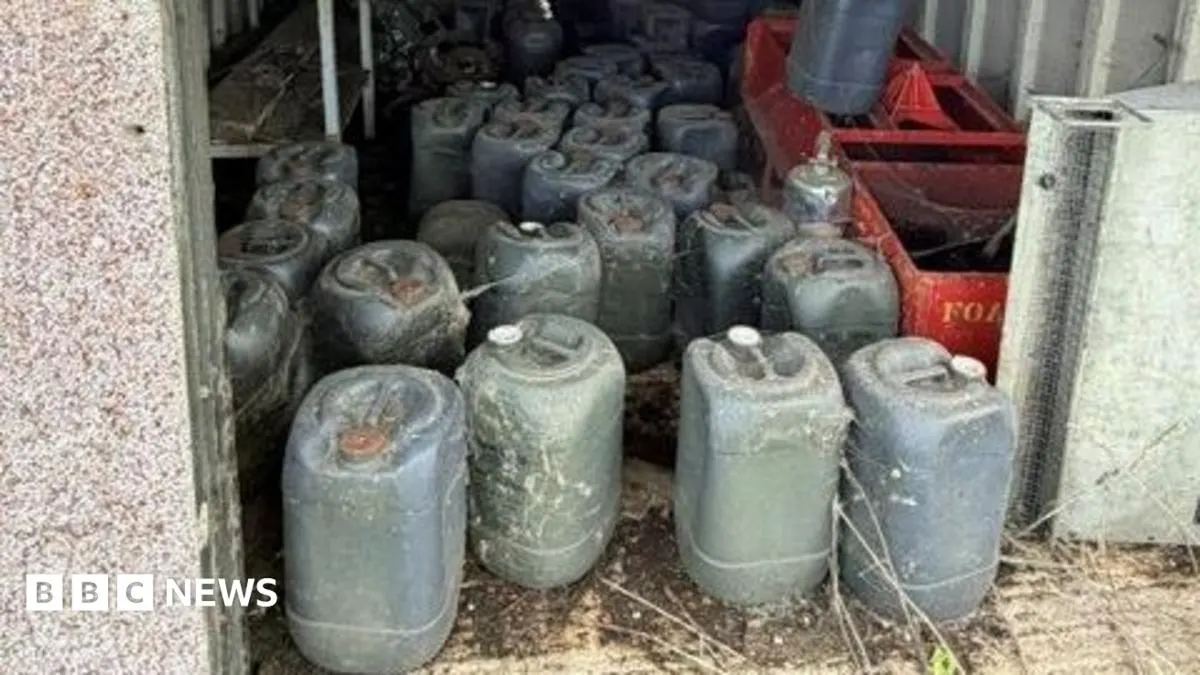
A developer says about 40 barrels of firefighting foam, left at the former Islip Fuel Depot in Oxfordshire for decades, have been removed and testing has been carried out. The site has outline planning permission for homes, and the discovery has raised concerns because the foam contains PFAS, chemicals that can persist in the environment.
Newcore says the sealed containers were not used and that a recent assessment identified possible contamination, which it says will be cleaned up if found. Campaigners reported 3.74325 micrograms of PFAS per kilogram in a soil sample and said PFOS exceeded the safe residential limit by 205 times; the developer reported 0.0641 micrograms per kilogram from its own testing. The BBC says it has not seen the lab reports to verify either set of results independently. Newcore plans a development with 50% affordable housing.
- Barrels of PFAS-containing firefighting foam have been removed.
- Campaigners and the developer report sharply different soil results.
- The former depot is planned for housing, half of it affordable.
New here? Start with this
The Islip Fuel Depot in Oxfordshire has permission to be developed into homes, but firefighting foam containing harmful chemicals has been discovered on the site, left there for decades. The foam contains PFAS, a group of chemicals that can persist in soil and water for many years, raising environmental and health concerns for anyone living there.
Testing of the site has produced starkly different results. Campaigners found PFAS levels they say far exceed safe limits for residential areas, whilst the developer's own tests showed much lower contamination. Neither set of findings has been independently verified by the BBC, making it unclear what the actual risk is.
The developer, Newcore, says the containers were sealed and unused, and that it will clean up any contamination that is confirmed. The proposed development includes 50% affordable housing. The discrepancy in test results means the true extent of any problem remains uncertain.
Both sides, in good faith
The strongest fair case each way — we don't pick a winner.
The case for
Environmental campaigners contend that PFAS contamination at dangerous levels represents a genuine public health hazard, particularly for children and residents of affordable housing who may be vulnerable to long-term exposure. Their testing revealed PFOS concentrations roughly 205 times above safe residential limits, and the vast discrepancy with the developer's figures suggests either inadequate sampling by Newcore or misleading methodology. Persistent chemicals like PFAS bioaccumulate and cannot be safely ignored; allowing residential development on such a contaminated site—especially affordable housing for lower-income families—prioritises profit over wellbeing.
The case against
The developer argues it has followed proper assessment protocols, discovered sealed containers that posed no active risk, and committed to remediation before residential use. The substantial difference in test results likely reflects differing sampling locations, depths, or methodologies rather than dishonesty, and without independent verification, a single campaigner sample should not define site-wide conditions. Moreover, the development addresses critical housing demand with 50 per cent affordable housing; rejecting legitimate schemes on remediable contamination would set a damaging precedent preventing necessary housing across many post-industrial sites, whilst environmental cleanup remains a solvable technical challenge.