China to pump $54bn into state banks and insurers to boost economy
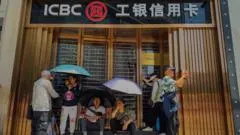
China is injecting 360 billion yuan ($53.6bn; £39.7bn) into eight state-owned banks and insurers, a move led by the finance ministry to strengthen the financial system as economic growth slows. The package comes as Beijing grapples with weak domestic demand, a shrinking workforce, a prolonged property market downturn, and trade and technology tensions with the United States, all of which have put pressure on the world's second-largest economy.
The funds will go to three major lenders and five insurers, including the Industrial and Commercial Bank of China, the Agricultural Bank of China and China Export & Credit Insurance Corporation, with state media saying it will boost their capacity to lend and withstand external shocks. It follows figures showing GDP growth slowed to 4.3% in the second quarter, down from 5% in the first quarter and below Beijing's official target range of 4.5%-5%, which was itself cut in March to its lowest level since 1991.
In short
- China injects $53.6bn into eight state banks and insurers.
- Move aims to bolster finances amid slowing economic growth.
- Follows GDP growth dropping to 4.3% in Q2.
Steelman: both sides, in good faith
The strongest fair case each way — we don't pick a winner.
The case for
A capital injection could help systemically important banks and insurers absorb losses, maintain confidence and keep credit flowing to households and businesses while growth is weak. Supporters may argue that strengthening state lenders now gives policymakers room to cushion the property downturn and external shocks, protecting jobs and economic stability.
The case against
Critics may argue that adding state capital treats the symptoms of weak demand and property-sector stress while leaving their underlying causes unresolved. They may also worry that repeated support could encourage poor lending, shift financial risks onto the public and direct credit towards state priorities rather than more productive uses.
Explained simply
China’s economy depends heavily on state-owned banks, which lend to businesses and households, and insurers, which cover financial risks. The finance ministry is the government department responsible for public money, and it is directing funds to three major banks and five insurers, including the Industrial and Commercial Bank of China and China Export & Credit Insurance Corporation.
The economy is facing weak spending at home, a prolonged property downturn and a shrinking workforce. Trade and technology tensions with the United States add to the pressures on growth.
Stronger financial institutions may be better placed to keep lending and absorb losses when conditions are difficult. Their role matters because a slowdown in lending or financial instability could affect businesses, jobs and household finances across China.