US assessment flags Pacific cables backed by Google and Meta as vulnerable to sabotage
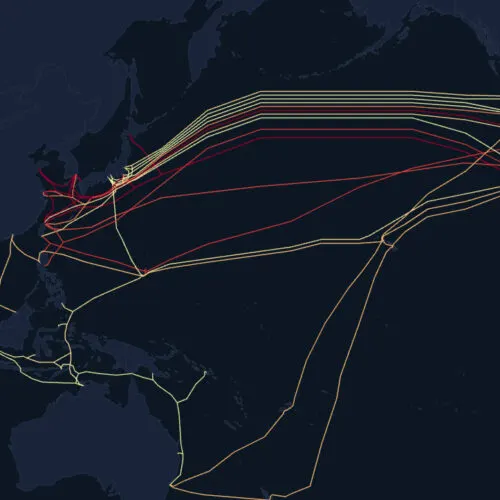
A US government commission’s new assessment identifies several planned trans-Pacific cables backed by Google, Meta and Verizon among those most exposed to possible sabotage. The findings matter because the cables carry internet traffic between the United States and the Indo-Pacific, and disruption could affect cloud services, communications and financial trading.
The index ranks risk using factors including cable depth, shipping traffic, ownership and proximity to China’s claims, with the highest risks around Taiwan, Japan and the Philippines. Three projects, Google’s TPU, Meta’s ORCA and the jointly owned E2A, scored in the top five; the report warns that damage to one cable could push traffic onto slower routes, while several failures could strain capacity across the region. Most cable damage is accidental, but researchers have raised concern about possible “grey-zone” activity amid reports of Chinese research vessels surveying seabed infrastructure.
In short
- Google, Meta and Verizon-backed cables rank among the Pacific’s most exposed.
- The highest assessed risks are near Taiwan, Japan and the Philippines.
- Multiple cable failures could strain capacity and disrupt regional services.
Steelman: both sides, in good faith
The strongest fair case each way — we don't pick a winner.
The case for
The assessment can be seen as a prudent warning about infrastructure whose disruption could impair communications, cloud services and financial trading across the Indo-Pacific. Given the cables’ strategic importance and reported seabed surveys by Chinese vessels, identifying vulnerable routes may help governments and operators improve monitoring, protection and backup capacity before a crisis.
The case against
A risk ranking based partly on location, shipping traffic and ownership does not establish that sabotage is planned or that any named project faces an imminent threat; most cable damage is accidental. Publicly highlighting particular routes could also heighten alarm or expose sensitive vulnerabilities, while responses based on unproven suspicions could worsen regional tensions or divert resources from broader resilience measures.
Explained simply
Undersea cables carry most international internet data, linking countries and the networks used by cloud services, businesses and financial markets. They are laid across the seabed and connect to landing stations on shore; routes across the Pacific link the United States with countries in the Indo-Pacific.
Technology companies and telecoms firms, including Google, Meta and Verizon, invest in or own cable projects. The routes pass through busy waters and areas of strategic tension, including near Taiwan, Japan and the Philippines, where seabed access and shipping activity can affect the risk of damage.
Most cable faults are caused by accidents, such as fishing or ship anchors. But governments and researchers also consider the possibility of deliberate interference, which can be hard to attribute; a damaged cable can divert traffic to slower routes, while multiple failures could put pressure on the region’s remaining capacity.
Read the full article at the source →
Originally published by Ars Technica as “China’s snooping around Pacific undersea cables raises risks for Big Tech”.