Deloitte Cyprus accused of concealing Abramovich’s £508m fortune through falsified accounts
Developing story first seen 28 minutes ago
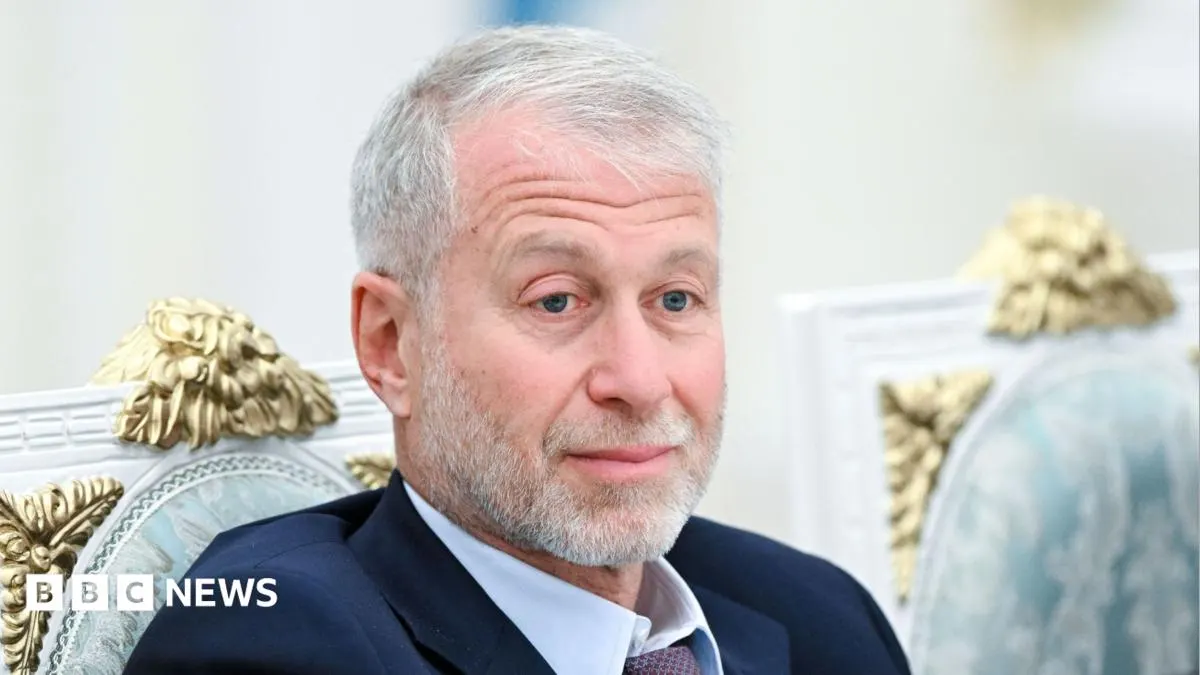
Newly analysed documents from the Cyprus Confidential leak reveal that Abramovich's closest aide, Eugene Tenenbaum, may have provided false evidence to the UK high court, with specific Deloitte Cyprus partners now identified as having allegedly coordinated the scheme. This development raises critical questions about the accountability of major professional firms, with the investigation by the Guardian, BBC and Bureau of Investigative Journalism showing how the then-chair Demetris Ioannides and colleagues Antonis Taliotis and Nicos Charalambous facilitated the concealment of £508m through backdated financial documents between 1999 and 2013.
The scheme operated through companies like Kravin Investments, which received a $3bn windfall in 2003 but retained approximately $2bn that generated taxable interest. Internal emails from August 2005 show Ioannides discussing how to alter historical financial statements to eliminate the resulting tax liability, with the apparent support of Deloitte Cyprus partners. The arrangement allowed Abramovich's vast fortune to remain hidden from authorities for over a decade, whilst Ioannides later spun out advisory firm Meritservus, which was subsequently sanctioned by the UK in 2023 for assisting Russian oligarchs in wealth concealment.
- New evidence suggests Abramovich's aide gave false court evidence
- Deloitte Cyprus partners allegedly coordinated backdating of financial documents
- The scheme concealed £508m in assets for over a decade
New here? Start with this
Roman Abramovich is a Russian billionaire whose wealth comes from oil and mining interests. He has had close associations with Kremlin leadership.
Deloitte Cyprus is part of Deloitte, one of the world's largest accountancy firms. These firms are hired to verify that financial records are accurate and comply with tax regulations.
Accusations that Deloitte falsified financial records rather than verifying their accuracy raise questions about professional accountability. The case illustrates the potential for wealthy individuals to exploit trusted advisers to hide assets, reduce tax liabilities and evade regulatory oversight.
Full account
The international accountancy firm Deloitte Cyprus has been accused of facilitating the concealment of Roman Abramovich's multi-billion-pound financial holdings through systematic falsification of corporate records. An investigation based on leaked documents has revealed that the firm oversaw the disappearance of assets including superyachts, French châteaux and private aircraft, collectively valued at approximately $672 million (£508 million), from the balance sheets of the oligarch's offshore business vehicles.
The concealment mechanism involved the deliberate backdating and falsification of documents across Abramovich's sprawling network of Cyprus-registered companies spanning more than two decades. This carefully orchestrated strategy appears to have been designed to prevent tax authorities from accessing accurate information about the oligarch's true wealth and asset ownership. The approach allegedly involved close associates of Abramovich working in tandem with professional advisers to systematically restructure and obscure the provenance of his financial holdings.
The extraordinary scale of Abramovich's wealth originated from his acquisition of Sibneft during the chaotic post-Soviet privatisation era. Having obtained the major oil company for approximately $250 million, he subsequently generated roughly $16 billion in proceeds through its eventual divestment to Gazprom in 2005. These vast sums were subsequently channelled through an intricate web of offshore jurisdictions, with Cyprus serving as a principal administrative centre owing to its former status as a preferred financial destination for Russian wealth.
The findings emerge from the Cyprus Confidential investigation by the International Consortium of Investigative Journalists, involving reporting by the BBC, the Guardian, the Bureau of Investigative Journalism and other media organisations. Abramovich's legal team has denied all allegations of tax evasion, whilst Deloitte Cyprus maintains that it operates in compliance with applicable laws. The investigation's revelations arrive as Abramovich remains subject to sanctions imposed by UK and European authorities in response to Russia's invasion of Ukraine.
Where outlets differ
Source 1 emphasises Deloitte's status as the 'world's biggest accountancy firm' and features specific legal analysis from Andrew Mitchell KC describing the scheme as 'straightforward tax evasion'; Source 2 offers limited legal commentary but provides greater operational detail about the falsification methodology
Source 2 explicitly names Eugene Tenenbaum, Abramovich's London-based aide, and alleges he may have submitted false evidence to the UK High Court; Source 1 makes no mention of these specific allegations
Source 1 contextualises the story within recent international sanctions, Abramovich's forced sale of Chelsea Football Club and his current location in Turkey; Source 2 concentrates primarily on the historical concealment strategy without discussing recent developments
Source 2 provides substantially more detail regarding the original Sibneft acquisition, specifying the purchase price, profit realised and subsequent sale to Gazprom; Source 1 references only the controversial oil deal briefly
Source 1 references a separate four-year criminal investigation in Jersey involving £5.4 billion in frozen assets; Source 2 does not mention this parallel investigation
Coverage
- BBC World — Deloitte Cyprus signed off accounts hiding Abramovich’s £508m in assets
- The Guardian — Leaked records suggest Abramovich aides backdated paperwork to reduce tax liabilities