Democratic senate hopeful makes OUTRAGEOUS claim about Trump’s marriage to Melania… after president posted surly photo of his Muslim wife
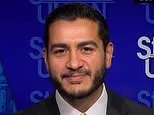
Democratic US Senate candidate Abdul El-Sayed has made a pointed claim about Donald Trump's marriage to Melania Trump, responding after the president shared an unflattering photograph referring to his wife. The remark has drawn attention as part of the broader political sparring between Trump and Democratic figures ahead of upcoming elections, though the full substance of El-Sayed's claim was not detailed in the available report.
The dispute stems from a social media post by Trump featuring a photograph of Melania Trump, which El-Sayed, a Michigan Senate hopeful, seized upon to make a critical comment about the Trumps' marriage. Beyond the headline exchange, specific details of El-Sayed's remarks and any response from the Trump camp were not provided in the source material.
In short
- Abdul El-Sayed criticised Trump's marriage to Melania Trump
- Comment followed Trump posting an unflattering photo of her
- Part of ongoing political sparring ahead of Senate race
Steelman: both sides, in good faith
The strongest fair case each way — we don't pick a winner.
The case for
Supporters of El-Sayed's remarks would argue that public figures who post images of themselves and their families on official or personal accounts invite scrutiny and commentary, and that pointing out visible tension in a photo is a legitimate, if pointed, form of political observation rather than a fabricated attack. They would say that highlighting perceived incongruities in a political opponent's public persona is a long-standing rhetorical tactic, and that voters are entitled to draw their own conclusions from what a candidate or president chooses to share publicly. From this view, robust and even provocative commentary is part of vigorous political debate, especially when aimed at a figure who has himself made pointed remarks about others' personal lives.
The case against
Critics would argue that speculating publicly about the state of a rival's marriage based on a single photograph is an unfair and invasive line to cross, reducing serious political discourse to personal mockery and unverifiable conjecture about someone's private relationship. They would contend that such remarks distract from substantive policy debate, risk normalising personal attacks in place of argument, and are especially inappropriate when they invite readers to draw conclusions about a spouse who has not chosen to be a public commentator on the exchange. From this perspective, candidates should be held to a standard that keeps political contests focused on records and policy rather than speculation about private family life.
Explained simply
Donald Trump is a Republican politician who served as US president, while Melania Trump is his wife and was first lady during his presidency. Abdul El-Sayed is a Democrat from Michigan who is seeking election to the US Senate.
The Senate is one of the two chambers of the US Congress, which makes federal laws and scrutinises the government. Political figures often use social media to criticise one another, and disputes involving prominent people can become part of wider campaigning ahead of elections.
Americas Government Politics World