Elon Musk reveals ‘world’s first flying car’ at Tesla event
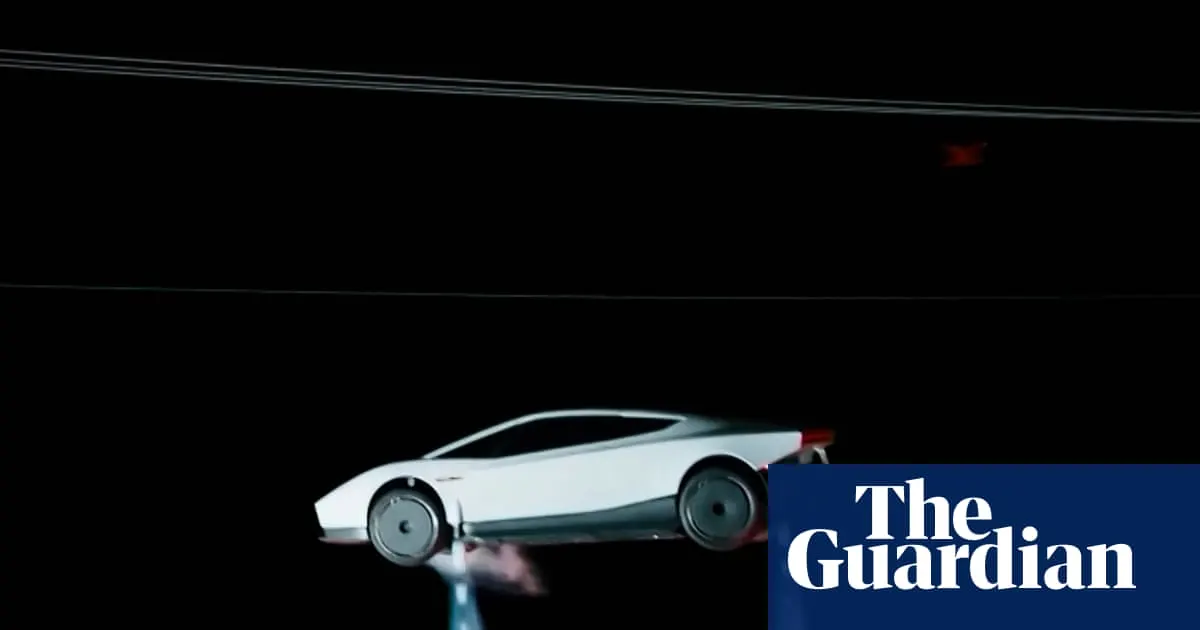
Elon Musk unveiled a Tesla Roadster 2 prototype that uses SpaceX rocket thrusters to perform stunts, including flipping and briefly flying. He described it as a flying car, but Tesla says it cannot be flown on public roads, and Musk cautioned that it may not be legal everywhere.
At a Texas demonstration, a remotely controlled car drove up a curved ramp, flipped and landed, then leapt over other Teslas. Musk claimed it could accelerate from 0 to 60mph in under a second. Production is planned for 2028, with prices above $200,000; reservations list deposits of £50,000 for a performance version and $250,000 for a thrust version, while the flight-equipped rocket variant is invitation-only.
- Musk showed a Roadster prototype using rocket thrusters to fly and perform stunts.
- Tesla says flying it is not permitted on public roads.
- Production is planned for 2028, with prices above $200,000.
New here? Start with this
Tesla is the electric car company founded by Elon Musk, who also leads SpaceX, a company that builds rockets. The Roadster is Tesla’s high-performance sports car; the version shown was a prototype fitted with rocket thrusters developed by SpaceX.
Rocket thrusters produce force by expelling gas, and can be used to push a vehicle in a particular direction. Stunts such as jumping or briefly lifting off do not make a car an aircraft: rules on where such a vehicle can operate depend on local laws and safety requirements.
The Roadster has been presented as a future product, with production planned for 2028 and prices above $200,000. Its proposed features and performance matter to buyers and regulators, while the prototype demonstration does not establish what the production car will be able to do.
Both sides, in good faith
The strongest fair case each way — we don't pick a winner.
The case for
Supporters could see the prototype as an ambitious demonstration of engineering that may push the boundaries of electric vehicles and rocket technology. They may argue that spectacular tests can attract investment and interest in innovation, while a limited, high-priced model allows enthusiasts to choose whether its performance is worth the cost.
The case against
Critics could argue that calling it a flying car risks overstating what was shown: the demonstration was remotely controlled, involved brief stunts, and the vehicle cannot be flown on public roads. They may also question the value of promoting extreme performance and costly reservations before production, especially when legality and practical use remain uncertain.