‘Environmental violence’: inside the fight to save indigenous land from becoming a nuclear dumping ground
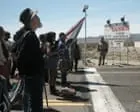
A new avant-garde documentary, To Use a Mountain, examines America's decades-long failure to find a permanent home for its nuclear waste, focusing on rural and indigenous communities who fought government plans to turn their land into disposal sites. Director Casey Carter builds the film around the 1982 Nuclear Waste Policy Act, which pitted six rural US communities against each other to host over 90,000 tons of high-level nuclear waste, ultimately settling on Nevada's Yucca Mountain before the project was halted amid legal and political opposition. The film matters because it reframes nuclear waste disposal not just as a technical problem but as an ongoing act of "environmental violence" against the communities forced to bear the risk indefinitely.
Rather than using conventional documentary techniques such as narration, expert interviews or on-screen captions, Carter combines Department of Energy documents with footage of decaying storage sites and unnamed community members describing the personal toll of these failed projects. The waste was meant to be safely isolated for 10,000 years, but affected communities fear contamination of groundwater, air and food long before then, while the US government currently pays utility companies billions of dollars annually to store spent fuel with no permanent site available. The film draws visual and thematic parallels to Oppenheimer, tracing a line from the Manhattan Project's bomb tests to the unresolved legacy of nuclear waste today.
- Documentary To Use a Mountain examines US nuclear waste disposal fights on rural land
- 1982 law pitted six communities against each other to host 90,000+ tons of waste
- Yucca Mountain site was selected then halted, leaving no permanent US repository
New here? Start with this
The United States has no permanent site for its high-level nuclear waste, including spent fuel from power stations. The 1982 Nuclear Waste Policy Act set out a process to find one, and six rural communities were considered as possible hosts.
Yucca Mountain in Nevada was selected, but legal and political opposition halted the project. Indigenous and other local communities have challenged plans to store waste on or near their land, raising concerns about possible effects on water, air and food.
The waste must be isolated for thousands of years, while spent fuel remains in temporary storage and the government pays utilities to keep it there. The dispute involves how to manage that long-term risk and which communities may have to live with it.
Both sides, in good faith
The strongest fair case each way — we don't pick a winner.
The case for
These communities argue that hosting nuclear waste represents a disproportionate burden imposed without meaningful consent, particularly on indigenous peoples with histories of dispossession. They contend that storing radioactive material for millennia poses unacceptable risks to groundwater, air and food systems, and that no compensation justifies accepting such indefinite environmental hazards on their ancestral lands. This framing reflects their view that using their territory as a dumping ground for others' energy consumption constitutes fundamental injustice.
The case against
Proponents of permanent geological repositories counter that nuclear power is essential to national energy security, and that the waste already exists and must be stored somewhere safely. They argue that deep sites like Yucca Mountain, selected by rigorous scientific criteria, offer far superior long-term isolation compared to keeping spent fuel in temporary surface storage indefinitely. They contend that with proper engineering, monitoring, community consultation and compensation, such repositories represent the most responsible solution to an inevitable problem.
Americas Art Culture Environment Government Politics Science World