Epic reportedly plans AI-led development for delayed Disney game project
Developing story first seen 2 hours ago
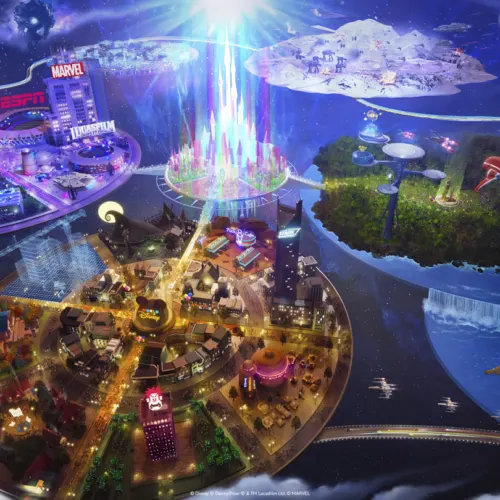
Epic Games is reportedly moving its Disney collaboration to an “AI first” development model, with AI generating all code and guiding artwork for a planned Marvel and Star Wars shooter. The shift matters because it would make AI central to production, while human developers oversee the generated work.
The $1.5 billion collaboration was announced in early 2024, and the shooter had been scheduled for March 2027; it is now reportedly delayed indefinitely. Epic says developers will remain the creative leads, and CEO Tim Sweeney says the aim is to help teams build more and better games. Epic laid off more than 1,000 staff in March, while a survey found 30 per cent of game studio workers used generative AI at work, often for research and brainstorming.
- Epic is reportedly putting AI at the centre of a Disney game project.
- The Marvel and Star Wars shooter has been delayed indefinitely.
- Epic says developers will guide AI-generated work.
New here? Start with this
Epic Games, a major video game developer, partnered with Disney in early 2024 on a $1.5 billion collaboration to create a new game featuring characters from Marvel and Star Wars. The game was originally scheduled to release in March 2027.
That timeline has slipped and the game is now reportedly delayed indefinitely. Rather than proceeding with traditional game development methods, Epic is reportedly shifting to use artificial intelligence more extensively, with AI handling code generation and artwork guidance whilst human developers oversee the process.
This decision reflects broader economic pressures in the games industry, where rising development costs are pushing studios to explore new approaches. Around 30 per cent of game studio workers now use generative AI tools in their work, often for research and brainstorming. Epic laid off more than 1,000 staff earlier this year as part of industry-wide cost-cutting measures.
Both sides, in good faith
The strongest fair case each way — we don't pick a winner.
The case for
The most thoughtful case for AI-led development emphasises that AI tools can dramatically accelerate production cycles and enable smaller teams to accomplish more, potentially democratising game development. Proponents note that many developers already use AI for brainstorming and research, and that human oversight of AI-generated output maintains creative control whilst reducing repetitive technical work, ultimately allowing developers to focus on higher-level creative decisions. This approach could help studios deliver ambitious projects more efficiently and sustainably, particularly given the intense resource demands of modern game development.
The case against
Critics raise serious concerns about the timing and implications of AI-led development following Epic's massive layoffs, which suggests a shift from augmenting human creativity to replacing workers outright. They worry that AI-generated code and artwork, however supervised, may lack the sophisticated artistic vision and technical craftsmanship essential to AAA game development, and that moving to this model without demonstrated track record undermines developer trust and expertise that took years to build. The indefinite delay of the flagship Marvel and Star Wars title raises questions about whether the AI approach is actually delivering the promised speed and quality benefits.
Full account
Epic Games has announced a fundamental shift in development strategy for an undisclosed collaborative project with Disney, prioritising artificial intelligence to generate both code and visual assets rather than relying on human programmers writing source code from scratch. According to reports citing internal communications, the company has instructed development teams to implement AI-driven workflows across all technical and creative functions.
The project in question is an unannounced action game featuring intellectual property from Marvel and Star Wars, developed under a $1.5 billion partnership with The Walt Disney Company established in early 2024. Originally scheduled for completion in March 2027, the venture has now been delayed indefinitely as the new development methodology is implemented. Previous reports attributed slower-than-expected progress to staffing constraints and development challenges.
Under the revised approach, developers will utilise AI systems including Anthropic's Claude to handle the majority of coding and asset generation, with human staff assuming oversight roles to evaluate and refine machine-produced work. Epic's leadership has defended the strategy as a mechanism for accelerating productivity and enabling teams to achieve greater ambition, rather than as a cost-reduction initiative. Chief executive Tim Sweeney has previously articulated an expansive vision of artificial intelligence fundamentally transforming game development capabilities.
This strategic reorientation occurs amid acknowledged operational difficulties at the company, including substantial workforce reductions earlier in 2026 attributed to declining user engagement with Fortnite, the company's primary revenue source. The heightened commitment to AI-led development follows the company's previous substantial investments in alternative strategic directions that yielded disappointing commercial results. Industry observers have expressed mixed reactions to whether the artificial intelligence approach will prove sufficient to overcome the project's current developmental obstacles.
Where outlets differ
Source 1 frames the shift as part of broader industry adoption of AI tools with relatively neutral tone; Source 2 presents the development with scepticism, questioning whether the strategy will succeed given Epic's track record
Source 2 explicitly raises questions about whether this Marvel/Star Wars project represents a continuation of previously announced initiatives or a separate undertaking; Source 1 treats it as a discrete project
Source 2 provides extensive historical context regarding Epic's failed metaverse investments; Source 1 focuses primarily on current developments without substantial retrospective analysis
Source 1 attributes statements to an unnamed Epic Games spokesperson; Source 2 specifically names Jake Jones as the communications director
Source 1 includes industry-wide data regarding generative AI adoption; Source 2 concentrates on Epic's specific strategic positioning relative to competitor platforms like Steam
More coverage
Art Celebrity Culture Entertainment
Read the full article at the source →
Originally published by Ars Technica as “Epic Games reportedly pivoting to “AI first” game development model”.