Everything you need to know about Googlebooks
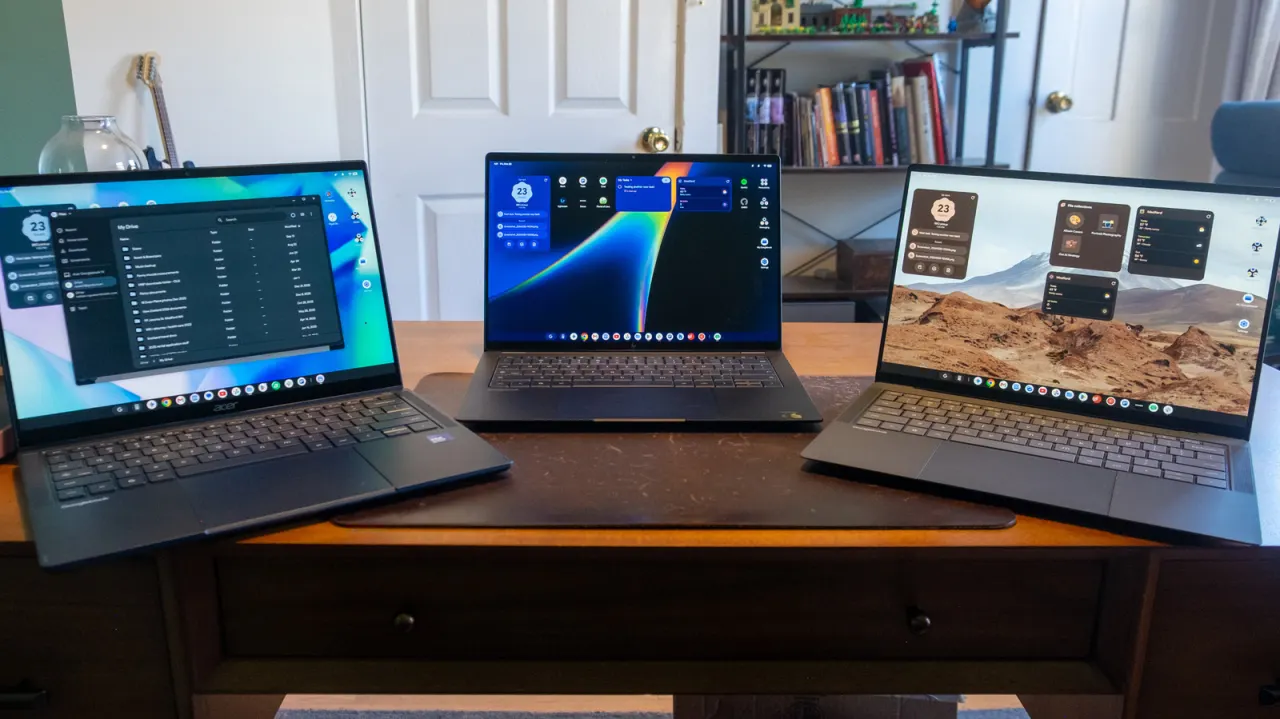
Google has launched Googlebooks, laptops running an Android-based operating system intended eventually to replace ChromeOS. The move promises closer links with Android phones and more AI features, but early testing suggests the software has yet to offer enough advantages for buyers to justify the high prices.
The tested ASUS Googlebook 14 costs $1,299 and has an OLED touchscreen, an Intel Core Ultra 5 processor, 16GB of RAM and 512GB of storage; Acer’s model starts at $899, the only one below $1,000. Testing found similar performance on Intel and Qualcomm models, with the HP’s Snapdragon version seeming to offer better battery life and quieter fans. Setup can transfer some apps and data from a phone, including through a QR-code connection, though the article says little appeared to be transferred by default.
In short
- Googlebooks run Android and are expected to replace ChromeOS.
- The cheapest model starts at $899.
- Phone integration is promising, but the software still needs work.
Steelman: both sides, in good faith
The strongest fair case each way — we don't pick a winner.
The case for
Googlebooks could make laptops more useful by bringing Android phones, apps and services closer together, while adding AI features to everyday computing. A shared ecosystem may simplify setup and create a more consistent experience for people already using Android, and early tests suggest the hardware can perform well, with some models offering longer battery life and quieter fans.
The case against
The case for caution is that the new software has not yet shown clear advantages over existing laptops, while prices are high: the tested ASUS costs $1,299 and Acer’s entry model is $899. If phone data and apps do not transfer smoothly and the promised AI or Android integration adds little in practice, buyers may be paying a premium for a platform that is still unproven.
Explained simply
Googlebooks are laptops using an operating system based on Android, the software found on many phones. They are intended eventually to take the place of ChromeOS, which runs Google’s Chromebook laptops.
Google is aiming to link the laptops more closely with Android phones and add more artificial intelligence features. The key players are Google, which makes the software, and laptop makers such as ASUS, Acer and HP, which sell devices using it.
The change matters to people choosing a laptop because it could affect how their computers work with their phones and what software they can use. Prices and features vary between models, so buyers may weigh those differences against the benefits of the new system.