FIFA introduces first World Cup final halftime show featuring global stars
Developed over time first seen 3 months ago


-
41'
Yellow card Lisandro MARTINEZ (Argentina) is booked by
-
52'
Yellow card Leandro PAREDES (Argentina) is booked by
-
82'
Yellow card Enzo FERNANDEZ (Argentina) is booked by
-
90'+2'
Yellow card Cristian ROMERO (Argentina) is booked by
-
90'+3'
Red card Enzo FERNANDEZ (Argentina) is booked for
-
105'
Yellow card Lionel SCALONI (Argentina) is booked by
-
106'
Goal Ferran TORRES (Spain) scores!!
-
111'
Yellow card Alexis MAC ALLISTER (Argentina) is booked
Spain squad
- Selected
-
8 Fabian RUIZ Midfielder
-
10 Dani OLMO Forward
-
12 Pedro PORRO Defender
-
14 Aymeric LAPORTE Defender
-
15 Alex BAENA Midfielder
-
16 RODRI C Midfielder
-
19 Lamine YAMAL Forward
-
21 Mikel OYARZABAL Forward
-
22 Pau CUBARSI Defender
-
23 Unai SIMON Goalkeeper
-
24 Marc CUCURELLA Defender
-
1 David RAYA Goalkeeper
-
2 Marc PUBILL Defender
-
3 Alex GRIMALDO Defender
-
4 Eric GARCIA Defender
-
5 Marcos LLORENTE Defender
-
6 Mikel MERINO Midfielder
-
7 Ferran TORRES Forward
-
9 GAVI Midfielder
-
11 Yeremy PINO Forward
-
13 Joan GARCIA Goalkeeper
-
17 Nico WILLIAMS Forward
-
18 Martin ZUBIMENDI Midfielder
-
20 PEDRI Midfielder
-
25 Victor MUNOZ Forward
-
26 Borja IGLESIAS Forward
Argentina squad
- Selected
-
3 Nicolas TAGLIAFICO Defender
-
4 Gonzalo MONTIEL Defender
-
6 Lisandro MARTINEZ Defender
-
7 Rodrigo DE PAUL Midfielder
-
9 Julian ALVAREZ Forward
-
10 Lionel MESSI C Forward
-
13 Cristian ROMERO Defender
-
15 Nico GONZALEZ Midfielder
-
20 Alexis MAC ALLISTER Midfielder
-
23 Emiliano MARTINEZ Goalkeeper
-
24 Enzo FERNANDEZ Midfielder
-
1 Juan MUSSO Goalkeeper
-
2 Marcos SENESI Defender
-
5 Leandro PAREDES Midfielder
-
8 Valentin BARCO Midfielder
-
11 Giovani Lo Celso Midfielder
-
12 Geronimo RULLI Goalkeeper
-
14 Exequiel PALACIOS Midfielder
-
16 Thiago ALMADA Forward
-
17 Giuliano SIMEONE Forward
-
18 Nico PAZ Forward
-
19 Nicolas OTAMENDI Defender
-
21 Jose Manuel LOPEZ Forward
-
22 Lautaro MARTINEZ Forward
-
25 Facundo MEDINA Defender
-
26 Nahuel MOLINA Defender
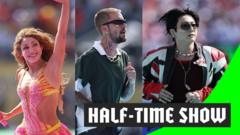
The 2026 FIFA World Cup final between Spain and Argentina featured football's first-ever official halftime show, staged on 19 July at MetLife Stadium in New Jersey. The 11-minute performance brought together a striking line-up of global stars, including Madonna, BTS, Shakira, Justin Bieber, Coldplay's Chris Martin, Burna Boy and the Muppets, reflecting a deliberate push by FIFA to elevate the entertainment profile of football's biggest match to rival the spectacle traditionally associated with events such as the Super Bowl.
The move broke with 96 years of tradition, during which the World Cup final had retained a standard 15-minute interval with no scheduled entertainment. FIFA extended the break specifically to accommodate the production, underlining its ambition to weave global pop culture into the sport's showcase fixture, and the eclectic, multi-generational line-up was widely seen as a signal of the organisation's intent to broaden the tournament's appeal beyond traditional football audiences.
- Sources
- 6
- Outlets
- 5
- Left · Centre · Right
- 0 · 1 · 0
In short
- FIFA staged its first-ever World Cup final halftime show on 19 July.
- Performers included Madonna, BTS, Shakira, Bieber, Coldplay and Burna Boy.
- The move ends 96 years without scheduled final-interval entertainment.
How this story developed
- 3 months ago Later reporting pulled back from the Ted Lasso cameo detail, instead noting that audience reaction and other confirmed elements of the show were still being gathered as coverage continued.
- 3 months ago Follow-up coverage added that Ted Lasso stars Jason Sudeikis and Brendan Hunt made a surprise motivational cameo alongside Justin Bieber, layering a comedic film crossover onto the musical spectacle already reported.
- 3 months ago FIFA staged football's first-ever official World Cup final halftime show on 19 July at MetLife Stadium, an 11-minute set uniting Madonna, BTS, Shakira, Justin Bieber, Chris Martin, Burna Boy and the Muppets and ending 96 years without a formal interval production.
- Consequence The 2026 FIFA Halftime Show Was a Spectacular, Chaotic Mess
- Billboard How Similar Was the World Cup Halftime Show to the Super Bowl?
- Billboard BTS bring Dynamite energy to World Cup final halftime show
- Pitchfork Madonna, BTS and Muppets headline first World Cup halftime show
- BBC Sport Star-studded half-time show caps World Cup final in New Jersey
- The Hollywood Reporter Ted Lasso surprises Justin Bieber during World Cup final halftime show
Steelman: both sides, in good faith
The strongest fair case each way — we don't pick a winner.
The case for
Supporters of the new format argue that football's showcase match deserves the kind of spectacle already associated with events like the Super Bowl, and that a globally recognised line-up helps the sport reach wider, younger and more diverse audiences beyond its traditional base. They see it as a natural evolution for a tournament competing for attention in a crowded entertainment landscape, generating additional revenue and cultural relevance that can ultimately benefit the game. For this camp, blending pop culture with football's biggest stage is a confident, forward-looking statement rather than a betrayal of the sport.
The case against
Critics who value the tradition of the World Cup final counter that the match itself, not a concert, should remain the sole focus of football's most important occasion, and that 96 years without scheduled entertainment reflects a deliberate discipline worth preserving. They worry that lengthening the interval and foregrounding global celebrities risks disrupting player preparation and recovery, diluting the sporting drama with commercial spectacle, and edging an intensely global game toward an American sports-entertainment model that many fans never asked for. For them, the final's dignity lies precisely in its restraint, not in matching the razzmatazz of other sporting events.
Explained simply
FIFA's men's World Cup is football's biggest single-nation tournament, held every four years, and the final is traditionally the sport's showpiece match watched by hundreds of millions worldwide. In 2026 the tournament was jointly hosted by the United States, Mexico and Canada, with the final between Spain and Argentina played at MetLife Stadium in New Jersey. FIFA is football's global governing body, responsible for organising the World Cup and setting its format.
Unlike American sports such as the Super Bowl, the World Cup final has never featured a scheduled entertainment segment during its interval, sticking to a standard 15-minute break for 96 years. This year FIFA changed that, extending the halftime period to stage the tournament's first official entertainment show, featuring performers including Madonna, BTS, Shakira, Justin Bieber, Chris Martin of Coldplay, Burna Boy and the Muppets.
The change matters because it signals FIFA's ambition to make the World Cup final a bigger cultural and commercial spectacle, drawing on the model of events like the Super Bowl halftime show, which has long combined sport with mainstream entertainment and drawn huge global audiences of its own.
Coverage · 6 sources
- BBC SportCentreStar-studded half-time show caps World Cup final in New Jersey
- BillboardBTS bring Dynamite energy to World Cup final halftime show
- ConsequenceThe 2026 FIFA Halftime Show Was a Spectacular, Chaotic Mess
- The Hollywood ReporterTed Lasso surprises Justin Bieber during World Cup final halftime show
- PitchforkMadonna, BTS and Muppets headline first World Cup halftime show
- BillboardHow Similar Was the World Cup Halftime Show to the Super Bowl?
Art Asia Celebrity Culture Entertainment Europe Football Music Sport TV World