Florida Democrat Senate nominee Angie Nixon insists ‘I’m not a socialist’ after joining DSA
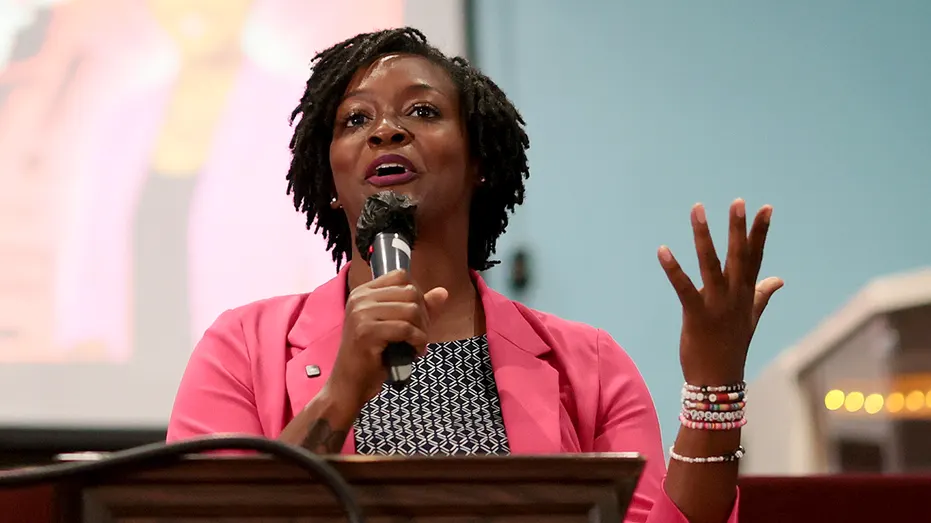
Florida Democratic Senate nominee Angie Nixon rejected accusations of being a "socialist" during a "Meet the Press NOW" interview on Thursday, after host Kristen Welker questioned her membership of the Democratic Socialists of America (DSA), a group whose national programme calls for abolishing the very Senate seat she is seeking. Nixon said she joined the DSA over its support for public housing, healthcare and veterans' welfare, but explicitly distanced herself from several of its more radical positions, including scrapping the Senate, drafting a new constitution and defunding the military. The exchange matters because it highlights the tension facing progressive Democratic candidates trying to reconcile grassroots activist affiliations with mainstream electoral appeal ahead of a competitive general election.
Nixon described herself as "a capitalist who believes we need some strong regulation" and did not directly answer questions on lifting sanctions on Iran. The Republican National Committee seized on her DSA links, with spokeswoman Emma Hall branding her a "socialist lunatic," while her Republican opponent, incumbent Senator Ashley Moody, has framed the race as a fight against Nixon and her "comrades." Nixon secured the Democratic nomination by defeating Alexander Vindman by nearly 12 points despite being outspent roughly 16-to-1; the winner in November's election will complete the final two years of Marco Rubio's term after Moody was appointed to replace him.
- Nixon denies being a socialist despite DSA membership, in TV interview.
- She rejects DSA's calls to abolish Senate, defund military.
- Republicans, including opponent Moody, brand her a socialist ahead of November vote.
New here? Start with this
Nixon is a Democratic state legislator who won her party's nomination to challenge for a US Senate seat in Florida this year. She recently became a member of the Democratic Socialists of America (DSA), a left-wing political organisation whose national platform includes positions such as abolishing the Senate and cutting military funding. Her decision to join has put her under pressure to explain what it does and doesn't mean for her own politics.
The story matters because Republicans have long used the "socialist" label to attack Democratic candidates, particularly in competitive states like Florida, arguing it shows they hold extreme views out of step with most voters. Nixon has pushed back on this by saying she personally identifies as a capitalist who supports strong regulation, while distancing herself from some of the DSA's more radical policy positions, even as she remains a member of the group.
This tension between party affiliation, personal political identity and how opponents characterise a candidate is a recurring feature of American elections, and it sits within the wider run-up to the US midterm elections, when control of the Senate is at stake.
Both sides, in good faith
The strongest fair case each way — we don't pick a winner.
The case for
Nixon's defenders argue that she has explicitly rejected the DSA's most radical positions whilst maintaining membership because she supports the organisation's real-world policy advocacy on housing, healthcare and veterans' welfare. These are mainstream progressive positions, and her self-description as "a capitalist who believes we need strong regulation" reflects genuine moderate-left politics. Critics who conflate her with the DSA's constitutional ambitions commit a category error: people routinely support organisations for specific policies whilst disagreeing with broader ideological positions. Her primary victory despite a 16-to-1 spending disadvantage demonstrates substantive grassroots appeal beyond fringe activist circles.
The case against
Critics contend that DSA membership itself signals alignment with socialist principles regardless of her nuanced public statements. If Nixon genuinely embraces capitalism with regulation, her choice to join an explicitly socialist organisation raises legitimate questions about consistency or authenticity. The DSA's core programme—including abolishing the Senate itself—represents fundamental opposition to the political system she seeks to enter, creating an unresolved tension. Her evasion regarding Iran sanctions compounds concerns about transparency. Voters deserve clarity on whether her grassroots affiliations represent her genuine policy aspirations or strategic positioning.