Funeral held for one of five teenage boys who died in head-on crash after driving wrong way down Irish motorway
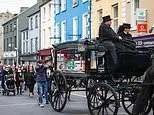
The funeral of 17-year-old Jack Kennedy was held today in Athy, County Kildare, marking the last of five funerals for teenage boys killed in a wrong-way motorway crash in the Republic of Ireland. Jack, along with Joey Carthy (15), Alex McCarthy (16), Kamil Pustkowski (17) and Jeremy O'Brien (18), died after the car they were travelling in was driven the wrong way down the M9 and collided head-on with another vehicle. The tragedy has prompted wider debate in Ireland about dangerous driving content online and how social media platforms handle illegal material, with deputy prime minister Simon Harris citing a "breakdown in respect for authority" and for "the value of life".
The crash happened at around 3am on 16 August at junction three of the M9 near Athy. Three sisters and a young boy from another family, who were in the second car and had been heading to the airport for a holiday, suffered serious injuries. TikTok recently declined a public appearance before an Oireachtas committee investigating the incident, offering lawmakers a private briefing instead, while gardaí maintained a visible presence at the funerals amid public anger and concern over potential disorder.
- Final funeral held for last of five teens killed in M9 crash
- Car driven wrong way collided head-on, injuring another family
- Tragedy sparks debate over social media and road safety in Ireland
New here? Start with this
The funeral of Jack Kennedy, 17, took place in Athy, County Kildare, completing a series of five funerals for teenage boys killed together in a road crash in the Republic of Ireland. Jack died alongside Joey Carthy, 15, Alex McCarthy, 16, Kamil Pustkowski, 17, and Jeremy O'Brien, 18, when the car carrying them went the wrong way down the M9 motorway near Athy in the early hours of 16 August and hit another vehicle head-on. Occupants of that second car, including three sisters and a young boy from another family who were on their way to the airport, were seriously injured.
The deaths have caused widespread shock and grief in Ireland and sparked a broader conversation about online videos glorifying dangerous or illegal driving, and about how platforms such as TikTok respond to such content. This has drawn in senior figures, including deputy prime minister Simon Harris, and led to scrutiny from an Oireachtas committee, the Irish parliament's investigative body, which has been examining the circumstances of the crash and social media's role.
Given the scale of loss to two young families and the public attention around it, gardaí, the Irish police, have kept a visible presence at the funerals as communities continue to process the tragedy.
Both sides, in good faith
The strongest fair case each way — we don't pick a winner.
The case for
Advocates for stronger platform accountability argue that social media companies have a duty of care once they host content glamorising or encouraging illegal, dangerous driving, given the enormous influence such platforms have over impressionable young viewers. They contend that TikTok's decision to offer only a private briefing rather than face public questioning from elected representatives shows an unacceptable lack of transparency on an issue of serious public safety, and that companies profiting from engagement should be compelled to explain and improve their moderation systems in full public view. For them, the deaths of five teenagers make clear that self-regulation has failed and that firmer oversight, including mandatory public accountability, is a proportionate and necessary response.
The case against
Others argue that while the tragedy is heart-breaking, caution is needed before assigning platforms primary responsibility for the actions of individuals, and that companies can reasonably choose to engage with lawmakers through detailed private briefings, which may allow for more substantive and legally careful discussion than a short public hearing. They point out that the ultimate causes of the crash, dangerous driving decisions made by those in the car, are matters of personal responsibility and road safety education rather than something a platform's moderation policy could realistically have prevented. From this perspective, demanding public spectacle from a company already cooperating privately risks conflating accountability with performative blame, and broader solutions around driver education, parental guidance and road safety may deserve equal focus alongside platform regulation.