Germany puts Ukrainian on trial accused of blowing up Nord Stream pipelines
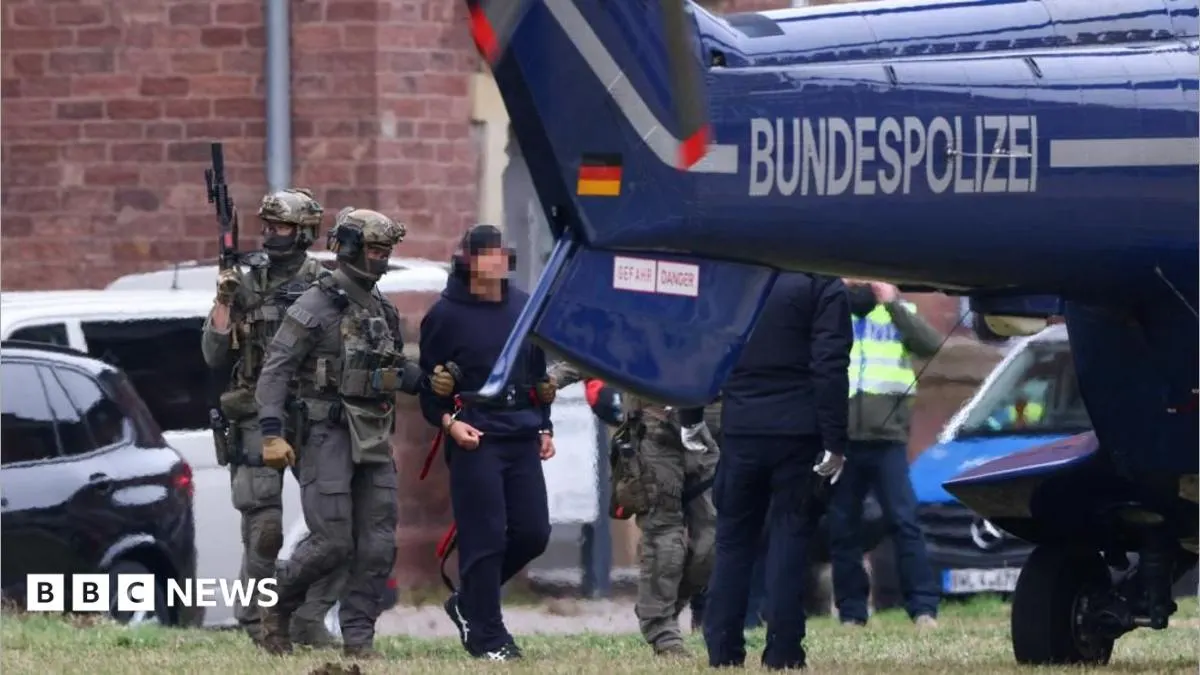
A Ukrainian man identified by German prosecutors as Serhii K has gone on trial in Hamburg, accused of helping plan the 2022 explosions that ruptured three Nord Stream gas pipelines. He denies the charges; the case is politically sensitive because Germany has strongly supported Ukraine since Russia’s full-scale invasion, while prosecutors allege the operation was ordered by Ukrainian state agencies.
The blasts took place in the Baltic Sea near Bornholm on 26 September 2022, weeks after Russia had halted gas flows through Nord Stream 1 and before Nord Stream 2 had entered service. German investigators focused on deep-sea divers who had rented the yacht Andromeda, citing traces of explosives found on board; Serhii K was extradited from Italy after his arrest in August 2025. A second suspect is contesting extradition from Croatia, and Ukraine says it had no involvement.
- A Ukrainian man denies charges over the Nord Stream pipeline blasts.
- Three of four pipelines were ruptured in September 2022.
- Germany says the case concerns its security and civilian infrastructure.
New here? Start with this
Nord Stream was a pair of undersea pipeline projects built to carry Russian natural gas to Germany beneath the Baltic Sea. Nord Stream 1 had been operating, but Russia halted its gas deliveries in 2022; Nord Stream 2 had been completed but never entered service.
The explosions happened near the Danish island of Bornholm in September 2022 and damaged three pipelines. German investigators have focused on a group of divers who travelled on a rented yacht, while Ukraine has said it was not involved.
The case matters because Germany has backed Ukraine since Russia’s full-scale invasion, and prosecutors allege Ukrainian state agencies ordered the operation. The allegation is disputed, and the accused denies the charges.
Both sides, in good faith
The strongest fair case each way — we don't pick a winner.
The case for
The prosecution’s case, if proved, would show that a covert operation allegedly organised by Ukrainian state agencies caused major damage to critical infrastructure in European waters. Supporters of the charges can argue that serious allegations deserve a fair trial regardless of Ukraine’s wartime alliance with Germany, and that accountability helps uphold the rule of law.
The case against
The accused denies the charges, and the allegation that he helped plan the blasts must be tested against the evidence in court rather than treated as established fact. A defence case may question whether the traces on the yacht reliably link him to the explosions or prove state direction, while stressing the risks of drawing conclusions from a politically charged investigation.