Giant statues of pharaoh with Moses link discovered after farmer finds inscribed stone
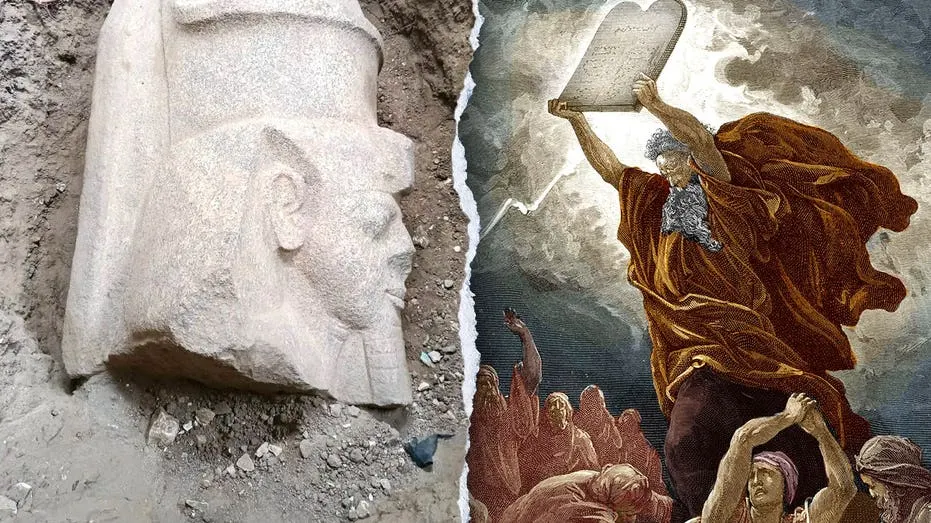
An Egyptian farmer found an inscribed stone while tending cucumbers in Behbeit El-Hagar, prompting archaeologists to excavate the site and uncover parts of two colossal statues believed to depict Ramses II. The discovery adds to evidence about the pharaoh’s presence and influence in ancient Egypt, though his possible connection to the Exodus story remains a scholarly theory.
One statue’s head is more than five feet tall and bears a royal name; officials estimate the complete figure, including its base, may have stood nearly 28 feet high. The second statue is nearly eight feet long, missing its legs and base, but its head and facial features are well preserved. Researchers say excavations and studies are continuing.
In short
- Farmer’s inscribed stone led to two statue discoveries.
- Both statues are believed to depict Ramses II.
- One may originally have stood nearly 28 feet tall.
Explained simply
Ramses II ruled Egypt more than 3,000 years ago and is often called Ramses the Great. He built temples and monuments across the country, using them to display royal power and religious devotion.
The Exodus is the biblical account of Moses leading the Israelites out of Egypt. Some people have proposed that Ramses II was the pharaoh in the story, but scholars have not established that link. Discoveries at ancient sites can help researchers understand the reach of his rule and how Egyptians commemorated their kings.
Art Culture Research Science World