Government brings British Steel under public ownership; UK economy grows 0.1% in May – business live
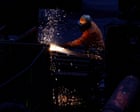
The UK government has formally brought British Steel into public ownership, saying the move will "protect the future of steel production" at the Scunthorpe site. The company employs around 2,700 people and had been under government operational control since April last year, after fears that Chinese owner Jingye Group was preparing to shut down its two blast furnaces. Prime Minister Keir Starmer said the decision safeguards a "cornerstone of Britain's industrial strength" and protects skilled jobs, while business secretary Peter Kyle said the focus now shifts to stabilising the business and building a decarbonised steel sector.
Parliament passed legislation on Wednesday enabling nationalisation where a public interest test is met. Jingye has already indicated it will seek compensation, having said in June last year it would try to recover up to £711m in debts owed by British Steel; an independent valuer will assess any compensation payable, with a scheme due in autumn. The National Audit Office found in March that running the Scunthorpe works was costing the government about £1.3m a day. Separately, official figures showed the UK economy grew 0.1% in May despite the impact of the Iran war.
In short
- British Steel formally nationalised to protect jobs and steelmaking
- Jingye seeking compensation; independent valuer to assess payout
- UK GDP grew 0.1% in May amid Iran war impact
Steelman: both sides, in good faith
The strongest fair case each way — we don't pick a winner.
The case for
Steel production is critical infrastructure underpinning defence, manufacturing, construction and automotive sectors. With 2,700 skilled jobs in a region with limited alternatives and expertise that takes years to develop, allowing closure would permanently weaken Britain's industrial capacity. Jingye's threat to shut furnaces demonstrated that private ownership prioritises Chinese interests over British capability. Decarbonisation of steel requires patient, long-term investment that market forces alone cannot guarantee, making public ownership essential for both immediate job protection and Britain's strategic industrial resilience.
The case against
At £1.3m daily running costs plus potentially £711m in compensation, taxpayers face an enormous burden for an economically unviable operation. Nationalising loss-making businesses removes market discipline and creates moral hazard: it signals that persistent losses are acceptable and crowds out private investment in healthier sectors. Rather than perpetually subsidising Scunthorpe, resources should have been directed toward finding a serious private buyer or helping workers transition to sustainable industries. Government ownership typically entrenches inefficiency precisely where market pressure could drive necessary restructuring.
Explained simply
British Steel is one of the UK's largest steel manufacturers, operating a major plant at Scunthorpe in the East Midlands with around 2,700 employees. Steel production is considered strategically important to the British economy and supply chains, providing essential materials for construction, manufacturing and other industries.
The company was acquired by Chinese firm Jingye Group in 2016 but later faced severe financial difficulties. Last year the British government became concerned that Jingye intended to shut down the Scunthorpe site and took operational control of the business to protect production and jobs.
Running the Scunthorpe site costs the government approximately £1.3 million per day, raising questions about long-term viability. The steel industry faces intense global competition and must transition to cleaner production methods, whilst Jingye Group continues to seek compensation for its lost investment.
Business Economy Government Politics UK World